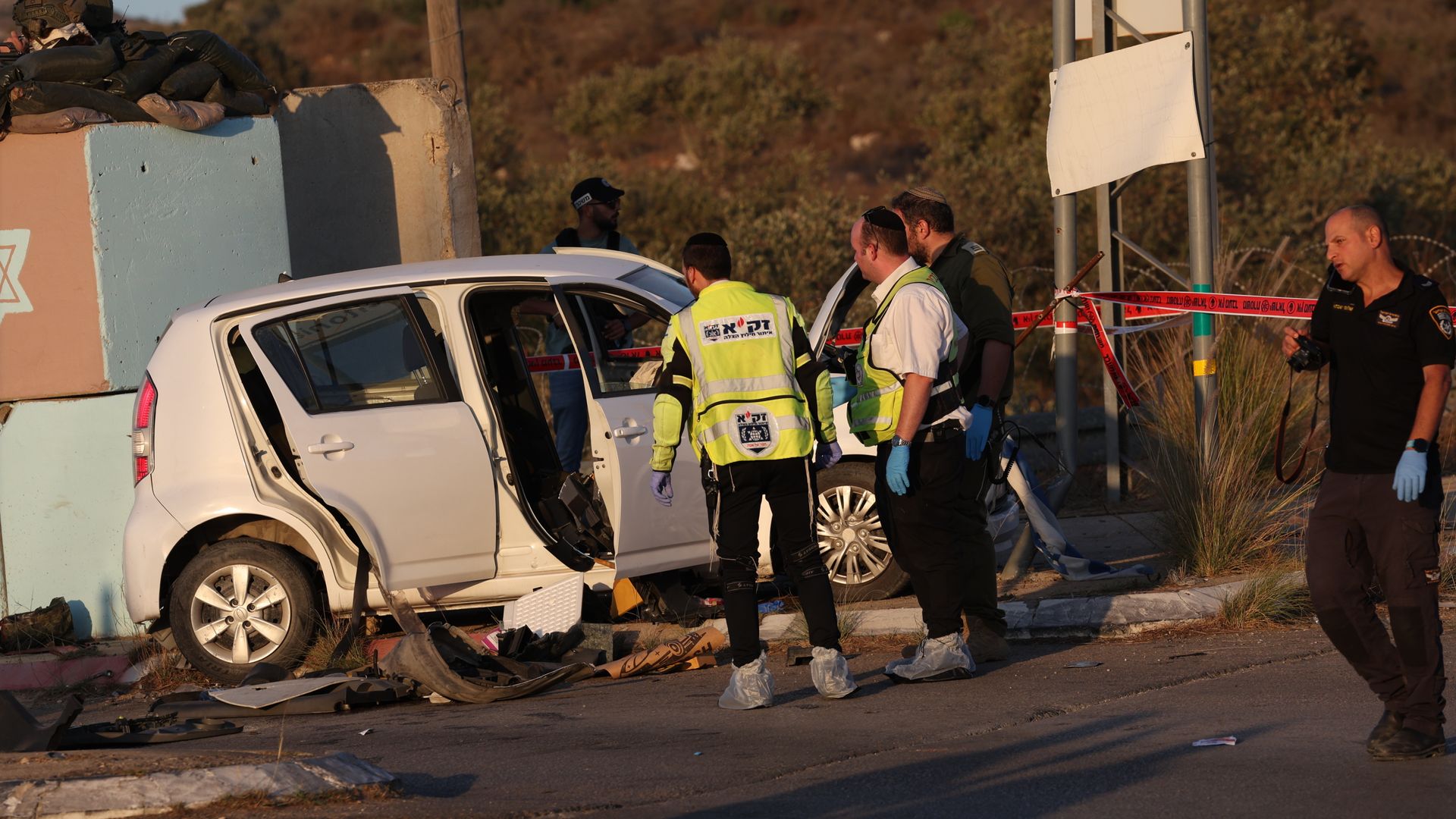
The checkpoint at al-Funduq does not look like a front line. To the casual observer passing through the northern West Bank, it is merely a bottleneck of concrete barriers, razor wire, and bored soldiers checking identification papers under the unrelenting Mediterranean sun. Yet, asphalt has become a theater of asymmetric warfare. When a vehicular assault pierced that routine security posture, leaving the son of Israel’s ambassador to the United States seriously injured, the shockwave traveled far beyond the immediate flashpoint. It bridged the gap between localized insurgency tactics and high-level international diplomacy.
Military analysts often categorize vehicular ramming operations as low-technology, opportunistic acts. They require no sophisticated supply chain, no smuggled electronics, and no complex communication networks. A steering wheel and a heavy chassis transform a civilian vehicle into a kinetic weapon in seconds. This inherent simplicity makes traditional intelligence gathering nearly useless. You cannot intercept encrypted chat logs when the decision to turn a steering wheel into an attacker's trajectory is made in a split second by an individual operating completely off the grid.
Security forces across the region have struggled to counter this specific threat vector for decades. Concrete blocks and speed bumps slow traffic down, but they cannot eliminate the vulnerability of soldiers and civilians lingering near transit nodes. Every bus stop, every junction, and every temporary roadblock represents an open invitation to asymmetric exploitation. When the target bears a surname connected to Washington corridors, the strategic calculus shifts instantly. What starts as a localized security incident transforms into a diplomatic stress test.
Ambassadorial families live in a strange geopolitical purgatory. They represent sovereign power while frequently residing in the crosshairs of localized animosities. When an ambassador's child is struck down on a West Bank highway while serving in uniform or traveling through contested territory, the personal tragedy becomes an institutional crisis. It forces capitals thousands of miles away to confront the messy, unvarnished reality of an occupation that many foreign policy architects prefer to manage through sanitized talking points.
The immediate aftermath of such an event follows a predictable rhythm. Intelligence agencies sweep the surrounding villages. Checkpoints are locked down, causing economic paralysis for Palestinian commuters who rely on these arteries for daily labor. Punitive demolitions are threatened or executed. But behind the closed doors of defense ministries, a deeper frustration festers. How do you deter an adversary who views martyrdom or long-term imprisonment as an acceptable cost of asymmetric engagement?
Deterrence relies on rational actors calculating risks and rewards. When that framework breaks down, conventional military doctrine flounders. The West Bank has evolved into an environment where institutional strength meets decentralized fury. Young men, radicalized by continuous friction, administrative detention policies, and the relentless expansion of settlements, find inspiration in digital echo chambers. They do not need direct orders from a central command structure. They need only an opportunity, a vehicle, and a clear stretch of road.
Diplomatic fallout from domestic security failures is rarely graceful. In Washington, the incident placed foreign service officials in an awkward defensive posture. The United States maintains a delicate balancing act, publicly supporting Israeli security measures while privately expressing deep alarm over escalating violence in the territories. When that violence touches the immediate family of Israel's chief envoy to the American superpower, the friction between stated policy and ground-level reality becomes impossible to ignore. Ambassadors are supposed to shape the narrative, not become part of the casualty statistics.
The tactical evolution of these attacks deserves rigorous examination. Early intifadas relied heavily on stone-throwing and Molotov cocktails, which eventually gave way to firearms and explosive devices. Those methods triggered massive counter-terrorism sweeps and high-tech surveillance grids. In response, insurgent tactics adapted downward. Simplicity returned. A pickup truck bought on the open market carries no serial numbers linked to a weapons cache. It slips through traffic cameras unnoticed until the moment of acceleration.
Counter-terrorism experts call this the mitigation paradox. To stop every potential vehicular assault, authorities would have to militarize every inch of roadway, turning the West Bank into a completely stagnant zone of absolute control. Such a posture is logistically impossible and economically catastrophic. Instead, security apparatuses rely on post-incident reactions rather than foolproof prevention. They absorb the blow, retaliate with overwhelming force, and wait for the next occurrence.
This cycle of action and reaction creates an environment of permanent tension. Every motorist approaching a junction becomes a potential threat in the eyes of jittery soldiers. Every soldier standing guard becomes a target in the eyes of radicalized youth. Trust evaporates entirely, replaced by a mutual calculus of survival. In this climate, diplomatic immunities and high-level family ties offer no physical protection. Asphalt does not recognize passports.
Consider the ripple effects across regional alliances. Neighboring states watching these developments draw their own conclusions about internal stability. Intelligence chiefs in Cairo, Amman, and Riyadh analyze these incidents not merely as criminal acts, but as barometers of systemic decay. When security forces struggle to protect even the families of top diplomats, confidence in long-term containment strategies wanes.
The public narrative surrounding these events often focuses heavily on the victim's identity, obscuring the broader structural failure. Media outlets rush to report the pedigree of the injured individual, transforming a tragic data point into a headline-grabbing anomaly. Yet, dozens of similar attacks occur against lesser-known victims without ever making international broadcasts. The focus on high-profile targets exposes a persistent bias in how violence is weighted and valued within the international media ecosystem.
Military historians will likely look back at this era as a turning point in how low-tech insurgency redefined high-stakes politics. When a utility van can disrupt diplomatic channels between Washington and Jerusalem, the traditional hierarchy of power is upended. Infantrymen and reservists find themselves on the front lines of international relations simply by virtue of standing at the wrong intersection at the wrong time.
The response from political leaders remains locked in familiar scripts. Calls for harsher crackdowns alternate with muted appeals for calm. Neither approach addresses the root causes of the friction. As long as millions of people live under military occupation without political horizons, the incentive structure for asymmetric violence remains entirely intact. Concrete barriers and heightened alert levels treat the symptoms while ignoring the disease.
For the families caught in the middle, the geopolitical theories matter very little. They are left to grapple with recovery, rehabilitation, and the bitter realization that proximity to power does not insulate anyone from the dangers of the street. The ambassadorial residence in Washington feels very far away when a hospital monitor is beeping in Tel Aviv.
As security forces recalibrate their protocols following this breach, the fundamental vulnerability remains unchanged. A determined driver, a heavy vehicle, and a moment of inattention at a West Bank junction are all it takes to puncture the carefully constructed illusions of control. Until policymakers confront the structural rot at the heart of the conflict, more families, regardless of their political standing, will find themselves paying the price on the asphalt.