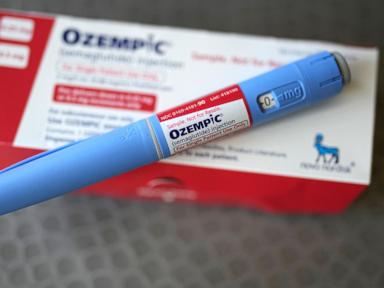
The U.S. Food and Drug Administration has updated the prescribing labels for GLP-1 receptor agonists—including blockbuster drugs containing semaglutide—to warn patients and doctors about a rare but irreversible form of vision loss known as non-arteritic anterior ischemic optic neuropathy (NAION). While the absolute risk remains small, the regulatory move forces an uncomfortable reckoning for a pharmaceutical sector valued in the hundreds of billions of dollars. Millions of patients have rushed to adopt these medications for type 2 diabetes and chronic weight management, often faster than post-market surveillance systems could track low-frequency adverse events.
For decades, watching blockbuster drugs transition from clinical trials to mass-market ubiquity has followed a predictable script. Phase 3 trials are designed to prove efficacy and catch common side effects among a few thousand carefully screened participants. They are statistically unequipped to detect a condition that strikes a fraction of one percent of users. That data only emerges when millions of real-world patients, carrying a messy spectrum of underlying vascular comorbidities, start injecting the medication every week. Building on this idea, you can also read: The Over-The-Counter Epinephrine Gamble Nobody Is Questioning.
Anatomy of an Ocular Stroke
To understand why regulators acted, you first have to understand what happens inside the eye when NAION strikes. Ophthalmologists often describe it as an "eye stroke." Unlike a classic retinal detachment or diabetic retinopathy, which develops gradually over years of poorly controlled blood sugar, NAION is sudden, painless, and permanent.
The optic nerve is a dense cable of more than a million nerve fibers connecting the back of the eye to the brain. It requires a constant, high-pressure supply of oxygenated blood delivered through tiny posterior ciliary arteries. In NAION, blood flow to the front portion of the optic nerve drops precipitously. Starved of oxygen, the nerve fibers swell within a tight anatomical space—a structural bottleneck doctors call a "crowded disc." That swelling further compresses the surrounding blood vessels, creating a vicious cycle of ischemia that kills the nerve tissue. Patients typically wake up with a dark shadow blocking the upper or lower half of their visual field in one eye. There is no proven treatment to reverse the damage. Analysts at CDC have shared their thoughts on this matter.
The biological link between GLP-1 medications and optic nerve ischemia remains a subject of intense debate among neuro-ophthalmologists and endocrinologists. Two primary hypotheses have emerged to explain the statistical signal.
The first centers on rapid metabolic shifts. GLP-1 drugs are remarkably effective at lowering blood glucose and driving down hemoglobin A1c levels quickly. Paradoxically, decades of endocrinology research show that rapid glycemic improvement can temporarily worsen microvascular blood flow in the eye—a phenomenon well-documented in early worsening of diabetic retinopathy. When blood sugar drops fast, osmotic pressure shifts, and fragile, autoregulated blood vessels in the optic nerve head may struggle to maintain perfusion.
The second hypothesis involves systemic hemodynamics. These medications induce modest drops in blood pressure and cause mild volume depletion through gastrointestinal side effects or reduced fluid intake. Consider a hypothetical example to see how this plays out in practice. Imagine a 58-year-old patient with sleep apnea, mild hypertension, and a naturally tight optic nerve head. If that patient takes blood pressure medication at night and starts a potent GLP-1 therapy that further lowers nocturnal blood pressure, perfusion to the optic nerve can dip below a critical threshold while they sleep. By morning, the damage is done.
The Harvard Signal and Regulatory Reality
The regulatory cascade did not begin inside a pharmaceutical boardroom. It started in a specialized clinic at Massachusetts Eye and Ear, a teaching hospital of Harvard Medical School.
In the summer of 2024, researchers published a retrospective cohort study in JAMA Ophthalmology after noticing an unusual spike in NAION cases among patients prescribed semaglutide. When they analyzed records from over 16,000 patients, the numbers caught the medical establishment off guard. Among patients with type 2 diabetes, those prescribed semaglutide were more than four times as likely to be diagnosed with NAION compared to those taking non-GLP-1 diabetes drugs. Among patients prescribed the medication strictly for overweight or obesity, the risk was more than seven times higher.
Critics immediately pointed out the flaws inherent in observational hospital data. Mass Eye and Ear is a tertiary referral center; doctors send their most complex, unusual cases there, which introduces referral bias. Furthermore, the study could not prove causation. Obesity, type 2 diabetes, hypertension, and obstructive sleep apnea are all independent risk factors for NAION. Separating the background noise of the disease from the signal of the drug is notoriously difficult.
Subsequent large-scale database studies across Denmark, Norway, and the United States yielded mixed results. Some analyses found a modest twofold increase in risk, while others found no statistically significant association at all. Yet regulatory agencies operate under a precautionary mandate. When an adverse event carries permanent disability—even if the incidence hovers around a few cases per 10,000 person-years—silence is not an option. By adding NAION to the warnings and precautions section of the label, the FDA shifted the legal and clinical burden onto prescribers to have an explicit conversation about ocular risk before writing the script.
Confounding Variables in a Messy Patient Population
Pharmaceutical manufacturers have rightly emphasized that the vast majority of patients taking GLP-1 therapies will never experience optic nerve ischemia. Clinical trial databases spanning tens of thousands of patients showed no clear imbalance in NAION cases prior to approval.
Why the discrepancy between pristine clinical trials and post-market reality? Exclusion criteria.
Phase 3 trials routinely screen out patients with unstable cardiovascular disease, severe uncontrolled hypertension, or significant pre-existing ocular pathology. Once the FDA approves a drug, those guardrails vanish. In the real world, GLP-1 medications are prescribed aggressively to the exact demographic most vulnerable to vascular events.
The Sleep Apnea Connection
Obstructive sleep apnea is wildly underdiagnosed in patients with obesity. Repeated nighttime drops in blood oxygen cause systemic inflammation and vascular dysregulation, making sleep apnea one of the strongest known triggers for NAION. When a patient with undiagnosed apnea begins rapid weight loss therapy, isolating a single culprit becomes nearly impossible.
Anatomical Vulnerability
Roughly 10 to 15 percent of the general population is born with a disc at risk—an optic nerve head with a very small cup-to-disc ratio. There is simply no extra room for the nerve fibers to swell if blood flow fluctuates. Without a dilated eye exam prior to starting therapy, neither the patient nor the prescribing primary care physician knows whether that anatomical time bomb is ticking.
The Prescribing Machine Meets Clinical Friction
The FDA label change lands directly in the path of the modern telehealth prescribing apparatus. Over the past three years, direct-to-consumer platforms and compounding pharmacies have turned weight-loss medications into a friction-free retail experience. A patient fills out an online questionnaire, uploads a photo, completes a brief asynchronous chat with a nurse practitioner, and receives a cold-packed box on their doorstep forty-eight hours later.
That assembly-line model was never built for nuanced risk stratification.
Primary care doctors and telehealth providers rarely ask patients about their last dilated fundus exam. They do not screen for a crowded optic disc, nor do they routinely coordinate with an optometrist or ophthalmologist before titrating a patient up to maximum doses of semaglutide or tirzepatide. The economic incentives of high-volume prescribing favor speed and scale, not multidisciplinary caution.
Even inside traditional healthcare systems, endocrinologists face a difficult balancing act. Untreated type 2 diabetes and severe obesity carry devastating, well-documented risks to vision, kidney function, and cardiovascular survival. Diabetic retinopathy remains a leading cause of blindness among working-age adults. Withholding a medication proven to cut major adverse cardiovascular events by 20 percent because of a fraction-of-a-percent risk of optic neuropathy would be medical malpractice on a population scale. The math overwhelmingly favors treatment for high-risk metabolic patients.
The calculus changes, however, when these drugs are prescribed off-label or at the margins of medical necessity—to patients looking to shed ten or fifteen vanity pounds without underlying metabolic disease. In that cohort, the risk-to-benefit ratio tilts sharply. When the clinical upside is cosmetic rather than lifesaving, a rare chance of permanent blindness ceases to be an acceptable statistical trade-off.
What Standard of Care Demands Now
The label update does not pull any GLP-1 medication off the market, nor should it. Instead, it establishes a new baseline for informed consent and clinical monitoring that both physicians and patients can no longer afford to ignore.
Before initiating therapy—especially in patients over age 50 or those with existing vascular risk factors—a baseline comprehensive eye exam is the logical first step. An optometrist or ophthalmologist can evaluate the optic nerve head within minutes and document whether a patient has a crowded disc. If anatomical vulnerability exists, the prescribing physician can adjust the titration schedule, slowing down the rate at which blood glucose and body weight drop to avoid shocking the microvascular system.
Patients also need clear, unambiguous instructions on warning signs. Sudden blurring, a dimming of color vision, or a shadow creeping into the peripheral or central visual field of one eye requires immediate evaluation by an eye specialist, not a routine message sent through a patient portal days later. If NAION is suspected, stopping the medication immediately under medical supervision is critical to protect the fellow eye, which carries a roughly 15 to 20 percent risk of suffering a similar event within five years.
Wall Street and the pharmaceutical industry have spent years treating GLP-1 drugs as a miracle cure with virtually limitless upside. The biology of human metabolism is rarely that simple. Every potent intervention alters multiple physiological systems simultaneously, and the optic nerve—sensitive, unforgiving, and entirely unable to regenerate—has just reminded the medical world that there is no such thing as a free metabolic lunch.


