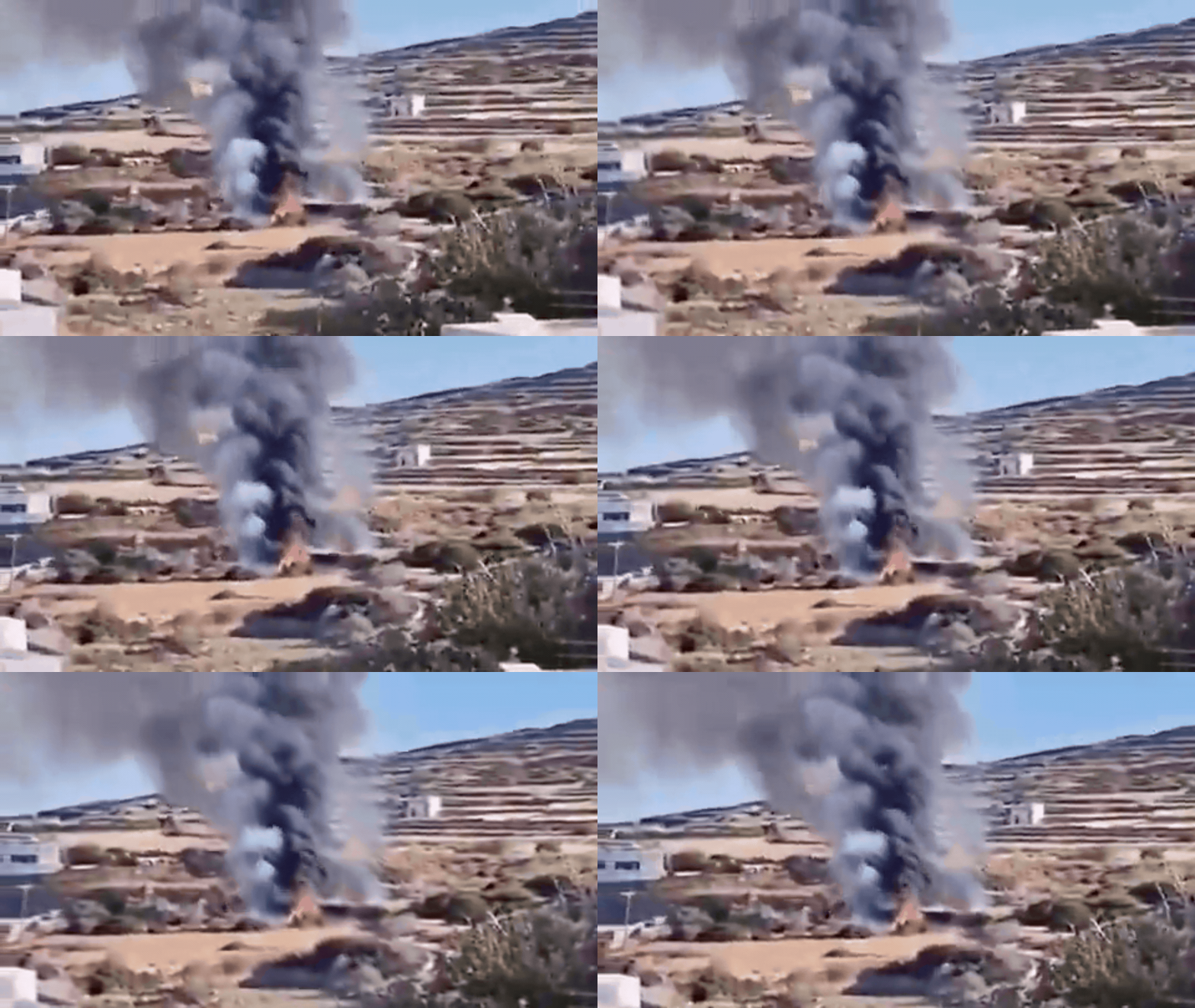
Whenever tragedy strikes the skies above the Aegean, the predictable chorus begins. Media outlets rush to publish breathless obituaries alongside shallow critiques of island aviation infrastructure, narrow landing pads, and high wind corridors. The knee-jerk narrative dictates that regional Greek tourism is hurtling toward disaster due to lax oversight and antiquated facilities.
This diagnosis is comforting. It provides a villain, a structural failure, and a neat path to bureaucratic outrage.
It is also completely wrong.
Focusing on island tarmac specs and regional regulatory oversight misses the mechanical reality of modern private aviation. I have spent years auditing risk management frameworks for high-net-worth charter operations across Southern Europe. I have watched organizations throw millions of dollars at ground-level safety theater while ignoring the critical variable that actually kills people in the air: human ego operating within unpredictable microclimates.
The Myth of the Dangerous Greek Island Air Corridor
The lazy consensus holds that Greek island geography is inherently hostile to aviation. Commentators point to sudden Aegean gusts, physical constraints on remote pads, and the sheer volume of summer traffic as structural hazards.
The data tells a starkly different story. Wind shear and thermals exist everywhere mountainous terrain meets the sea, from the Canary Islands to the Pacific Northwest. Commercial carriers navigate these exact corridors thousands of times a week without incident. Why? Because scheduled commercial aviation operates on strict Standard Operating Procedures, multi-pilot flight decks, and uncompromising go-no-go decision matrices.
Private and charter helicopter operations, however, exist in a psychological gray area. Clients pay for ultimate flexibility. They demand bespoke itineraries, tight schedules, and point-to-point transit that bypasses commercial bottlenecks. This commercial pressure creates a dangerous optimization trap. When a pilot faces a tightening weather window or an unforecasted gust front near a cliffside pad, the implicit contract of the charter forces a psychological tilt toward completion rather than cancellation.
Blaming the island geography is an excuse to avoid questioning the charter industry's tolerance for schedule creep and passenger pressure.
The Regulatory Illusion
Let us look closely at how the European Union Aviation Safety Agency regulates private rotorcraft. On paper, the rules are stringent. Pilot licensing requirements, maintenance logs, and aircraft age limits are monitored with bureaucratic zeal.
Yet regulation cannot legislate away cockpit pressure. Imagine a scenario where a charter pilot is flying a high-value couple on their honeymoon to a private resort pad on a remote Cycladic island. The wind indicator is flickering right at the edge of the aircraft's crosswind component limit. The passengers are relaxed, taking photographs, entirely oblivious to the atmospheric physics unfolding outside the bubble.
The pilot has two choices. They can abort, divert to a major airport, deal with angry clients, ruin the itinerary, and face potential blowback from an operator watching their profit margins. Or they can push through, relying on local knowledge and a hope that the gusts will momentarily drop.
Rules do not fail here; incentives do.
When an accident happens, investigators sift through twisted metal looking for mechanical failure or electrical anomalies. When none are found, they point vaguely to human error or environmental factors. They rarely indict the economic model that rewards pilots for taking marginal risks to keep luxury itineraries on track.
Dismantling the Safety Theater
If you want to understand why helicopter accidents happen in tourist hotspots, stop looking at the landing pads. Look at the dispatch culture.
The standard mitigation recommended by tourism boards is more oversight, more warning lights on remote pads, and stricter local weather reporting. This is operational noise. It acts as a placebo, convincing travelers that the system is tightening its grip while changing nothing about the fundamental mechanics of private flight decisions.
True safety in rotary-wing aviation requires adopting the uncompromising redundancy of offshore oil rig transport operations. In the oil and gas sector, flights are canceled routinely—often fifty percent of the time based on minor meteorological shifts—because corporate clients do not dictate the mission profile. The pilot is an absolute autocrat whose decision to stay on the ground cannot be questioned by anyone holding a credit card.
In luxury tourism, the power dynamic is inverted. The client holds the leverage. Until charter companies separate commercial compensation from mission completion, pilots will continue to fly into environments they know are marginal.
The Uncomfortable Truth About Risk
Travelers want absolute safety wrapped in absolute convenience. That combination is a technological impossibility.
When you step into a light helicopter for a point-to-point island transfer, you are bypassing the friction of public infrastructure. You are paying a premium to cheat distance. That privilege comes with inherent exposure to weather dynamics that cannot be engineered away by pouring more concrete or adding another layer of regional bureaucracy.
The tragedy in the Aegean was not caused by a lack of island infrastructure. It was the result of the quiet, grinding friction between the immutable laws of aerodynamics and the modern expectation that luxury should never be inconvenienced by weather.
Stop asking for better landing pads. Start demanding the courage to say no to the flight.


