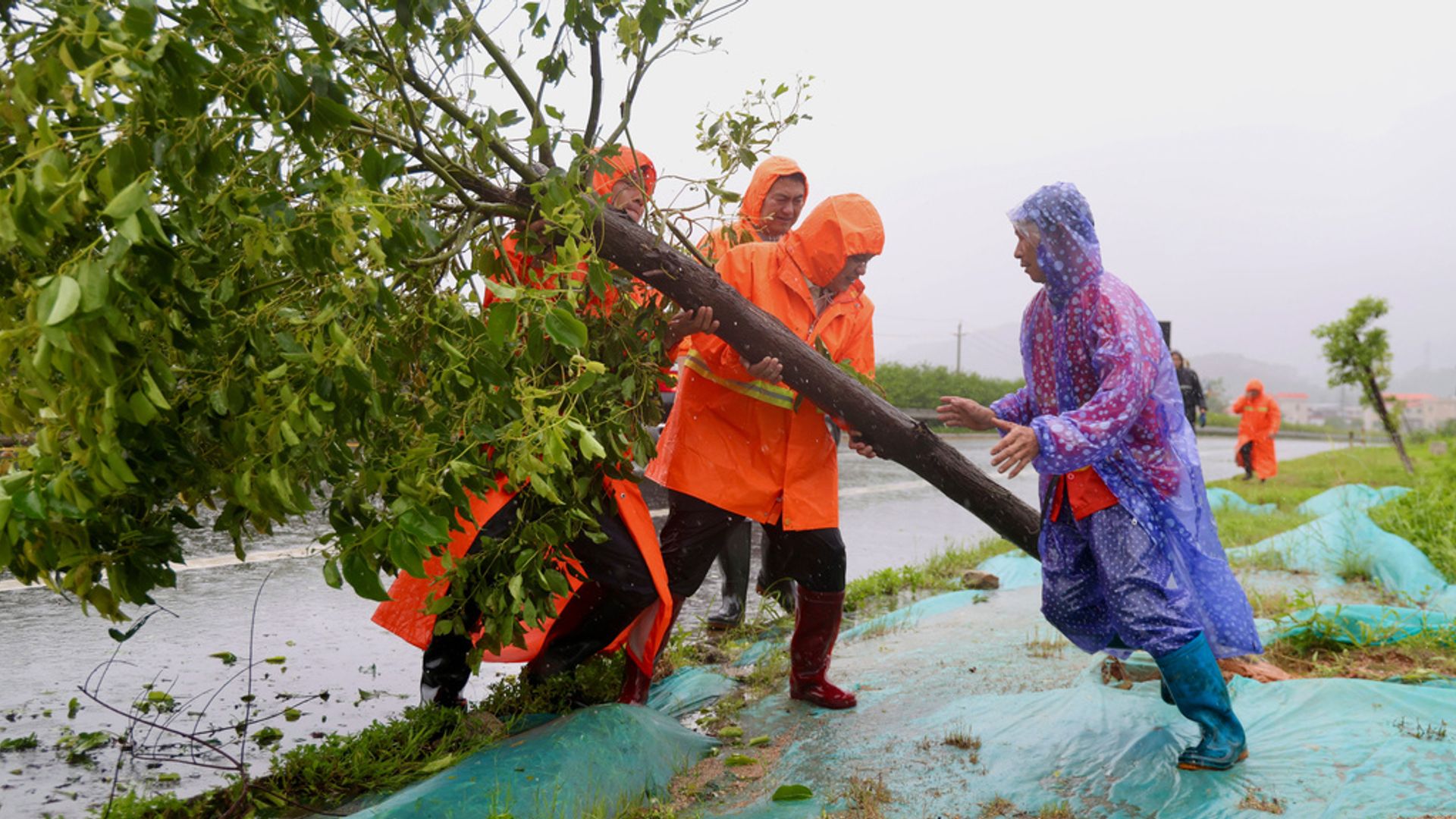
Headlines love a good monster story. Every time torrential rains slam urban centers in China, the media machine spins a familiar, comforting narrative of an unstoppable act of God. A typhoon hits, water rises, people die, and the collective commentary points an accusatory finger upward at the heavens.
It is a clean story. It requires zero critical thought. And it is entirely wrong.
When flash floods claim lives during seasonal storms, the lazy consensus blames the sheer volume of water. We are fed images of churning brown torrents sweeping away cars and streetlights, creating the illusion that no human infrastructure could possibly withstand such fury. This perspective lets urban planners, real estate developers, and municipal policy makers off the hook.
Rain is natural. Urban drowning is a design choice.
The Concrete Trap We Built Ourselves
Look at how modern cities expand. Over the past few decades, municipal growth across East Asia followed a relentless playbook of rapid industrialization. Concrete and asphalt replaced permeable earth, wetlands, and natural floodplains. When millions of square meters of soil are sealed beneath impermeable surfaces, precipitation has nowhere to go.
It cannot soak down. It must run off.
Water always wins gravity's math. When a typhoon dumps a month of rain in six hours, a landscape paved in concrete turns into a high-speed flume. The disaster is not the typhoon itself; the disaster is the hydrologic bottleneck we engineered into our own backyards.
I have walked through newly developed metropolitan zones hours after a storm, watching millions of gallons pool in low-lying intersections because drainage systems were sized for nineteenth-century weather patterns, not twenty-first-century climate realities. Engineers know how to build subterranean retention basins, permeable paving grids, and bioswales. Yet, cities prioritize vertical expansion and real estate density over the invisible, unglamorous physics of water management.
The Myth of the Unprecedented Storm
Every weather event is labeled unprecedented. Meteorologists record historical highs, and reporters breathlessly declare that nobody could have predicted this volume.
That defense expired decades ago.
Climate volatility is not a surprise anymore; it is the baseline operating environment. When journalists frame a typhoon as a bolt from the blue that defies human defense, they obscure systemic policy failures. The standard media report asks: How can we rescue people faster once the floods hit? That is the wrong question entirely.
The correct question is: Why did we permit high-density commercial construction in a natural drainage basin? When municipal governments issue building permits for sprawling developments on historic floodplains without mandating massive, redundant drainage upgrades, they are writing death warrants for future residents. The storm just executes the order.
Dismantling the Rescue Fetish
There is an obsession in disaster reporting with heroism. We celebrate the rescue boats, the dramatic rope lifts from rooftops, and the soldiers wading through chest-high water. These stories provide emotional catharsis, but they mask structural incompetence.
Heroism is a symptom of failure. If emergency services are constantly deploying watercraft down what used to be a primary downtown boulevard, the city planning department has already failed.
Consider the Sponge City initiative launched in various Chinese municipalities to combat this exact crisis. The theory is brilliant: build urban areas that absorb, filter, and reuse water rather than aggressively channeling it away through concrete pipes. Yet, implementation has stalled in many districts because retrofitting an existing megalopolis is expensive and disruptive to commercial activity.
Developers would rather pay lip service to green infrastructure while continuing business-as-usual construction that exacerbates runoff. Until financial penalties for poor water management outweigh the short-term profits of concrete expansion, the body counts from seasonal typhoons will continue.
The Cost of Convenient Ignorance
Blaming nature feels safe because it requires no structural change. We buy umbrellas, complain about municipal drainage on social media, wait for the water to recede, and rebuild in the exact same vulnerable footprint.
Stop accepting the weather as the primary culprit. Stop letting city planners hide behind the terrifying scale of a typhoon.
The water will keep coming. The storms will keep intensifying. Until we redesign our cities to work with the physics of water instead of waging a losing war against it, every flash flood remains a man-made tragedy wearing a natural mask.