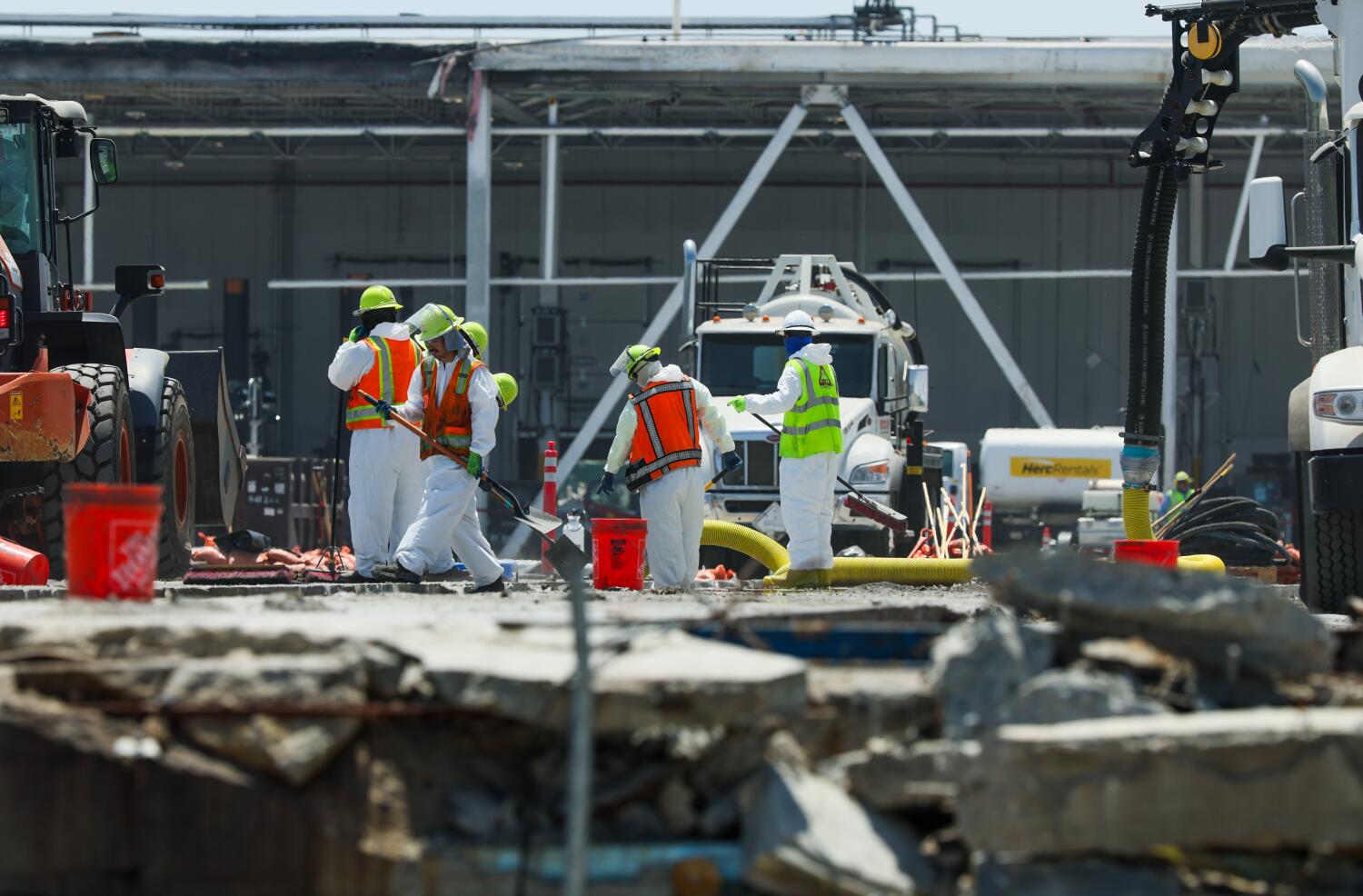
Everyone loves a corporate villain. Politicians thrive on them. Local activists need them to rally the neighborhood. So when council members step up to microphones to bemoan that Lineage is going to miss a cleanup deadline at the Boyle Heights warehouse site, the script writes itself. Big cold storage logistics company drags its feet. Community suffers. Bureaucrats express outrage.
It is a neat, tidy narrative. And it is entirely detached from how industrial remediation actually works.
I have spent two decades watching companies inherit contaminated brownfield sites, and I have seen municipal agencies blow millions of dollars while treating complex soil chemistry like a municipal parking ticket dispute. The lazy consensus says Lineage is simply stalling, thumbing its nose at East Los Angeles, or prioritizing profit margins over public health.
That perspective ignores the mechanics of urban environmental engineering. More importantly, it ignores the structural trap that local governments build for themselves when they try to legislate physics with arbitrary political timelines.
The Myth Of The Quick Environmental Fix
Let us start with the core misunderstanding driving the current outcry: the belief that a cleanup deadline is a project management target rather than a bureaucratic guess.
When a logistics giant acquires cold storage facilities or sprawling industrial footprints, they inherit decades of accumulated subterranean history. In an area like Boyle Heights, that history often includes heavy metals, solvent plumes, and hydrocarbons baked into the soil through generations of manufacturing and rail transport.
When a city council imposes a hard deadline for environmental remediation, they are operating under the dangerous illusion that dirt can be hurried. It cannot.
I have watched project teams hit unforeseen perched water tables, discover unexpected underground storage tanks buried beneath reinforced concrete slabs, and run into regional vapor intrusion pathways that require months of pilot testing just to understand. When you rush these phases to appease a politician facing a reelection cycle, you do not get a clean site. You get a botched containment job that fails its first heavy rain or seismic shift.
Lineage is taking the heat for missing a target date, but ask yourself a better question: what happens if they rush it?
If they slap together a rushed remediation plan just to satisfy a council member's press conference, they risk incomplete extraction. That leaves toxic residue lingering beneath a densely populated neighborhood for decades longer under a false sense of security. The real scandal is not that the cleanup is running late. The scandal is that politicians pretend environmental science respects city council agendas.
The Bureaucratic Maze Nobody Mentions
To understand why industrial site rehabilitation crawls, you have to look past the corporate boardrooms and straight into the regulatory bottleneck.
Environmental cleanup in Los Angeles does not happen in a vacuum. It requires simultaneous sign-offs, permits, and oversight from a dizzying alphabet soup of agencies: the Department of Toxic Substances Control, the Regional Water Quality Control Board, South Coast AQMD, and local fire departments. Each agency operates with its own bureaucratic inertia, its own backlog of reviews, and often, conflicting demands.
Imagine a scenario where a remediation contractor submits a dual-phase extraction design to mitigate volatile organic compounds. Agency A takes ninety days just to assign a reviewer. That reviewer kicks it back with revisions requiring hydrogeological modeling that takes another six weeks. By the time the permits are actually stamped, half of the council's arbitrary timeline has evaporated entirely before a single shovel breaks ground.
Politicians know this. They sit in the same chambers, receive the same agency reports, and yet they still stand at podiums pretending that a corporate entity can just wave a magic wand and bypass the very regulatory red tape the government itself manufactured.
Blaming the operator is easy. Admitting that city and state oversight mechanisms are structurally broken requires actual work.
The Cost Of Perfectionism In Heavy Logistics
There is another side to this equation that nobody in public office wants to admit, and it requires some brutal candor about how modern supply chains operate.
Cold storage facilities are critical infrastructure. They are the thermal anchors of the food supply chain, keeping perishable goods stable before they hit grocery shelves across Southern California. When you tie up an industrial asset in perpetual environmental litigation and public shaming, you do not just punish a multinational corporation. You constrain regional logistics capacity, inflate handling costs, and ultimately drive up food prices for the very working-class residents of Boyle Heights whom these politicians claim to protect.
Does this mean corporations should get a free pass to poison communities? Absolutely not.
The accountability mechanism, however, cannot be political theater. Fines and public scoldings do not pull trichloroethylene out of an aquifer. Real accountability looks like rigorous, uncompromised engineering, continuous transparent monitoring data shared directly with community stakeholders, and financial assurance bonds that guarantee the work gets finished right, regardless of corporate turnover or economic headwinds.
When councils demand arbitrary deadlines, they trade long-term safety for short-term headlines. They incentivize contractors to cut corners, hide anomalies, or push hazardous materials deeper into the substrate just to hit a calendar milestone.
What Actually Needs To Happen
If we want to fix industrial brownfields in urban centers like Los Angeles, we have to stop treating remediation as a political football.
First, we need to decouple cleanup oversight from political election cycles. Environmental milestones should be tied to engineering thresholds—such as parts-per-billion reduction targets verified by independent third-party laboratories—rather than arbitrary calendar dates pulled out of a hat by council members looking for a soundbite.
Second, regulatory agencies must streamline cross-jurisdictional approvals. If three different state and local bodies need to sign off on a soil vapor extraction system, those agencies should be forced into a single, unified review panel. Forcing a private operator to navigate a fragmented bureaucratic maze while simultaneously fining them for moving too slowly is peak regulatory hypocrisy.
Finally, the community needs actionable data, not political outrage. Residents deserve live telemetry feeds of air and soil vapor monitors around the perimeter of the Boyle Heights site. They deserve to know what is actually in the dirt and how extraction wells are performing, translated into plain English rather than buried in five-hundred-page environmental impact reports designed to obfuscate.
Lineage will miss its deadline. Write it down. Circle it on the calendar.
And when the politicians step up to the microphones to act shocked, remember what is actually happening behind the scenes: physics is winning a battle against politics, and for once, that might actually be the safest outcome for the neighborhood.
Stop pretending a timeline is a cleanup. Demand the engineering, drop the theater, and let the professionals finish the job.