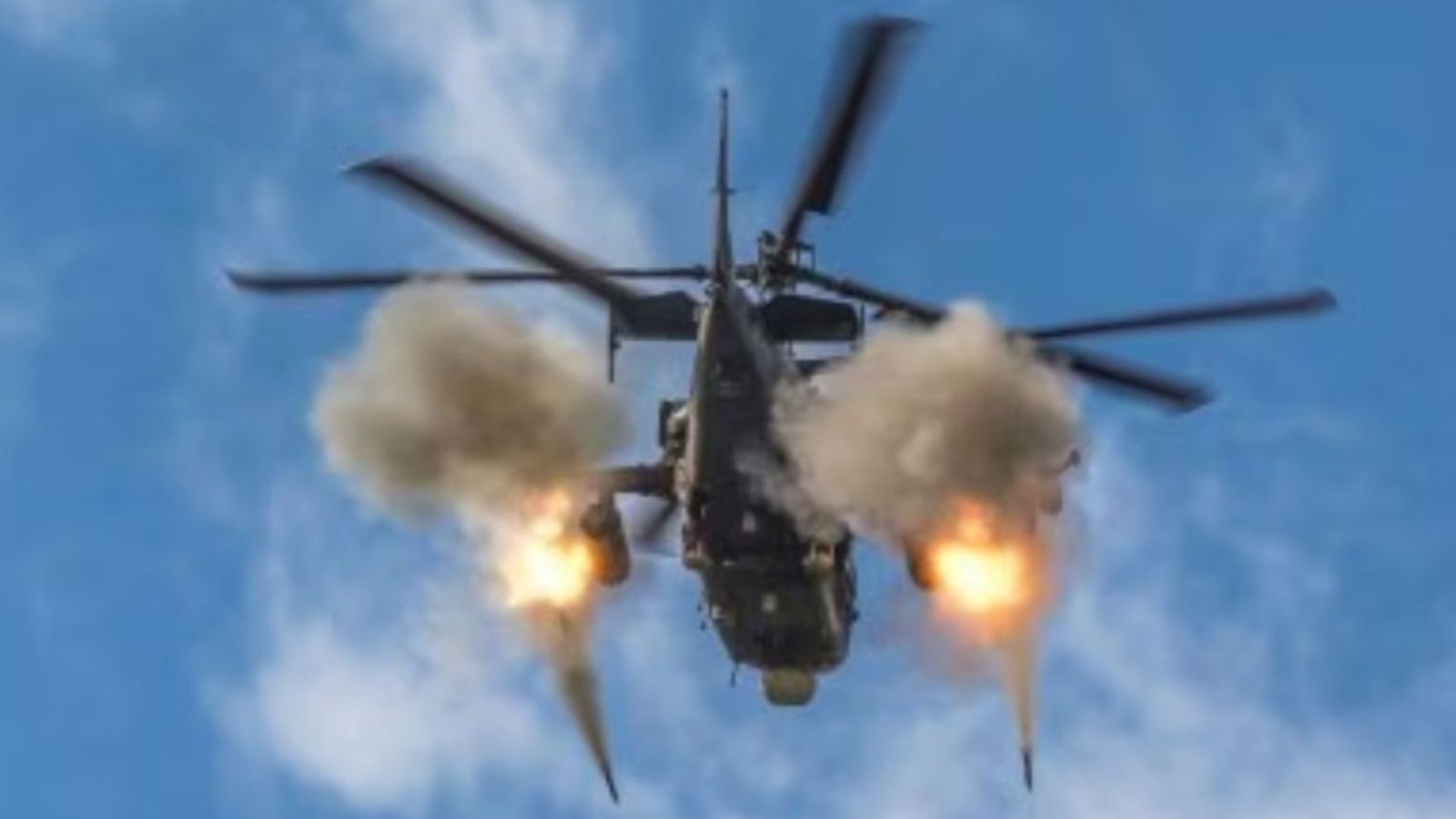
Every headline following the strike in Darfur follows the exact same lazy script. The reports roll in, the international bodies issue their stern condemnations, and the public nods along to a neat, digestible narrative: a rogue air asset targeted a civilian gathering, chalking up yet another atrocity in a brutal civil war.
It is a clean story. It is also dangerously wrong.
When a civil court in Darfur gets hit by a drone, the immediate instinct of human rights monitors and foreign desks is to isolate the technology. They treat the drone like an autonomous executioner dropped from the sky by malicious operators acting in a vacuum. This analytical laziness prevents anyone from understanding why Sudan keeps tearing itself apart. The weapon is never the disease; it is merely the symptom of a collapsed institutional monopoly on violence.
Focusing on the delivery mechanism of the kinetic energy rather than the structural decay of the state is a strategic error. I have spent years tracking conflict economics and state collapse across the Horn of Africa, and the pattern is always identical. Observers obsess over the hardware while ignoring the systemic rot that makes mass casualties inevitable, whether delivered by artillery, mortar, or an off-the-shelf commercial quadcopter modified for payload delivery.
The Myth of the Precision Exception
The prevailing consensus assumes that conventional warfare involves armies fighting armies, while modern drone warfare introduces a uniquely asymmetric terror against innocents. This is historically illiterate.
War in Sudan has never adhered to Geneva conventions or neat battlefields. The Sudanese Armed Forces and the Rapid Support Forces are not professional militaries executing doctrine; they are sprawling patronage networks backed by shifting ethnic militias and external sponsors. When a civil court in Darfur turns into a crater, it is not because a commander thousands of miles away misidentified a legal proceeding as a military encampment. It is because the distinction between combatant and civilian dissolved years ago.
Let us look at how these strikes actually happen.
- Target identification relies on porous human intelligence networks where local informants settle blood feuds by labeling rival clans as enemy combatants.
- Asset allocation involves commercial platforms adapted for reconnaissance and light munitions, democratizing air power to factions that previously lacked fixed-wing capabilities.
- The operational environment lacks centralized command structures, meaning accountability is effectively zero.
When you remove accountability from a conflict zone, every gathering becomes a potential military target depending on who holds the tablet. Blaming the drone ignores the human ecosystem of informants, corrupt logistics officers, and regional paymasters who fund the war economy. If you banned every unmanned aerial vehicle tomorrow, the death toll in Darfur would not drop by a single digit. The combatants would simply revert to mass arson, perimeter sieges, and blockaded supply routes to achieve the exact same demographic displacement.
Why the International Community Prefers the Drone Narrative
Foreign policy wonks love the drone story because it offers a clear villain and an easy policy fix. If the problem is "drones," the solution is simple: export controls, sanctions on dual-use technology, and diplomatic pressure on foreign suppliers.
It is a comforting illusion. It allows western capitals to pretend that the violence in Sudan is an engineering problem rather than a political implosion.
Imagine a scenario where every drone in Sudan vanishes tonight. The Rapid Support Forces still control the water infrastructure. The Sudan Armed Forces still control the airspace denial protocols. The ethnic militias still enforce local taxation at gunpoint. The famine indicators continue to spike because food security is used as a tactical weapon of siege.
Focusing on the aerial strike lets everyone off the hook. It converts a complex socio-political disintegration into a neat technical debate about remote-control warfare.
The Economics of Cheap Lethality
To understand why Darfur is burning under a swarm of low-cost munitions, look at the balance sheet. Advanced military jets cost tens of millions of dollars to maintain and require sophisticated runways, specialized fuel, and trained mechanics. A modified commercial drone costs less than a decent used sedan.
This democratization of air power breaks traditional deterrence models. In past decades, possessing an air force required state-level infrastructure. Today, any faction with a stable internet connection, a cryptocurrency wallet, and a smuggling route through a neighboring border can acquire tactical awareness from the clouds.
This brings us to an uncomfortable truth that human rights advocates refuse to say out loud: technology does not create cruelty; it merely accelerates logistics.
When combatants in Darfur use aerial assets to strike civil infrastructure, they are demonstrating that institutional governance no longer exists. A civil court only functions when both sides agree that a neutral arbiter has more legitimacy than a gun. The moment that social contract shatters, a courthouse is just a fortified building occupied by potential rivals.
Dismantling the Rescue Fantasy
Another favorite trope of the foreign press corps is the call for immediate international intervention to establish safe zones and no-fly zones.
This is dangerous magical thinking. Enforcing a no-fly zone over a territory the size of France, infested with decentralized militias and backed by competing regional petro-states, requires an occupying army of hundreds of thousands of troops. No country on earth is willing to pay that blood or treasure tax for Sudan.
Pretending that a strongly worded UN resolution or a targeted sanctions package against drone component suppliers will alter the calculus on the ground is worse than useless—it provides diplomatic cover for inaction while civilians starve and bleed.
The actors driving this conflict are rational agents responding to perverse incentives. Power in Sudan right now belongs to whoever can project terror most efficiently with the fewest resources. Until the economic lifelines feeding these militias are severed at the regional banking level, the hardware will keep changing, but the body counts will remain identical.
Stop mourning the loss of a clean war that never existed. Stop treating the weapon as the mastermind. The tragedy in Darfur is not that a drone flew over a courthouse. The tragedy is that there was nothing left inside that courthouse worth saving long before the first propeller started spinning.