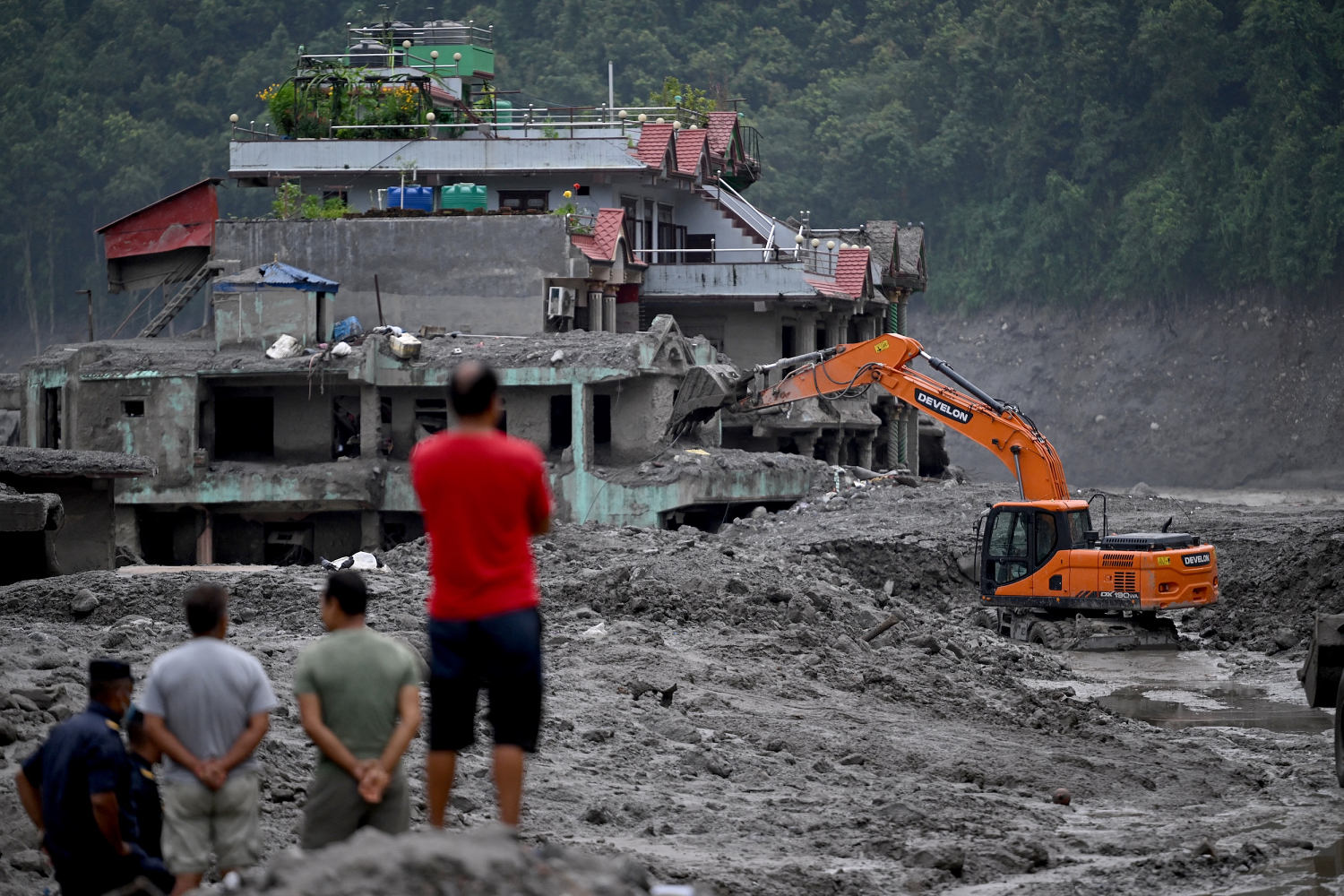
Every monsoon season, the media reaches for the exact same script. Heavy rains hit the Himalayas, rivers swell, towns wash away, and the headlines roll in like clockwork: Nepal and Tibet are facing a climate warning for the future. It is a neat, tidy narrative. It paints Mother Nature as the villain and absolves every human actor of actual accountability.
It is also deeply misleading.
I have walked these valleys, talked to the hydrologists mapping the Arun and Koshi basins, and watched millions of development dollars get funneled into the wrong places. The disaster unfolding across the roof of the world is not simply a weather event. It is a structural failure of engineering, corrupt land-use policy, and an addiction to high-altitude concrete. Calling every flash flood an inevitable act of climate vengeance lets bad planners off the hook.
The Myth of the Unpredictable Mountain
The standard briefing treats Himalayan floods as sudden, unknowable anomalies. They are not. Water volume in these trans-boundary rivers has followed predictable physics for millennia. What changed is not just the sky, but what we built underneath it.
Take the explosion of run-of-the-river hydroelectric projects choking Himalayan tributaries. Planners look at rushing water and see easy kilowatts. They cram narrow gorges with tunnels, diversion dams, and access roads, dumping millions of cubic meters of muck directly into riverbeds.
Debris accumulation is the silent killer. When a heavy cloudburst hits, it does not just bring water; it mobilizes loose, artificially dumped spoil material from upstream construction sites. A routine rain event transforms into a scouring slurry of boulders, mud, and industrial waste.
Geologists have warned about this for years. Yet, regional governments keep greenlighting projects in active seismic zones without cumulative environmental assessments. Blaming carbon emissions for a disaster exacerbated by reckless local excavation is like blaming global warming for a car crash caused by cutting the brakes.
Concrete in the Wrong Places
Drive through the middle hills of Nepal or the arterial corridors of the Tibetan Autonomous Region, and you will see the same manic race to pave paradise. Unscientific road construction has turned mountainsides into vertical slip-shod chutes.
Local politicians love roads. Roads equal votes. But dozing dirt tracks into fragile, unstable slopes without proper drainage or retaining walls triggers landslides at the first sign of saturation. These landslides choke river channels, creating temporary natural dams. When those makeshift dams inevitably burst, the downstream communities get obliterated by a wall of water they never saw coming.
This is not a climate crisis. This is a civil engineering crisis born of political expediency.
When international organizations step in with emergency aid, they reinforce the cycle. They fund band-aid rebuilds in the exact same hazardous floodplains. They repair the road in the exact same unstable notch of the mountain. Insanity is building a bridge in a geological bottleneck, watching it wash away, and then designing an identical bridge with a slightly larger budget.
The Trans-Boundary Data Black Hole
There is another elephant in the room that mainstream reporting routinely glosses over: the weaponization of hydro-meteorological data.
The major river systems feeding South Asia originate on the Tibetan Plateau. China controls the upper reaches; nations like Nepal, India, and Bangladesh bear the brunt downstream. Real-time data sharing on river flows and glacial lake outbursts should be absolute baseline diplomacy. Instead, it is treated as a state secret.
When early-warning systems fail, it is rarely because the technology does not exist. It fails because geopolitical distrust prevents upstream telemetry from reaching downstream villagers in time. If you want to save lives in the Ganges and Brahmaputra basins, stop holding climate conferences in European capitals and start forcing transparent data-sharing protocols between Beijing, New Delhi, and Kathmandu.
What Actually Needs to Happen
Fixing this requires abandoning the comfortable fiction that we are helpless victims of atmospheric carbon.
First, stop building in the active flood zones of young, growing mountains. The Himalaya are rising millimeters every year; they are chemically and physically unstable. Treating them like the flatlands of the American Midwest is sheer hubris.
Second, ban side-casting. Force construction companies hauling muck for hydro dams and highways to truck their waste to secure containment sites rather than dumping it over the side of the cliff into the nearest river.
Third, decentralize early-warning infrastructure. Local communities do not need another glossy UN report on resilience. They need low-cost, community-operated river gauges connected to sirens that work when the power grid goes down.
The floods in Nepal and Tibet are indeed warnings. But they are warning us about human arrogance, institutional inertia, and lazy reporting that looks at a shattered valley and blames the clouds instead of the contractors.