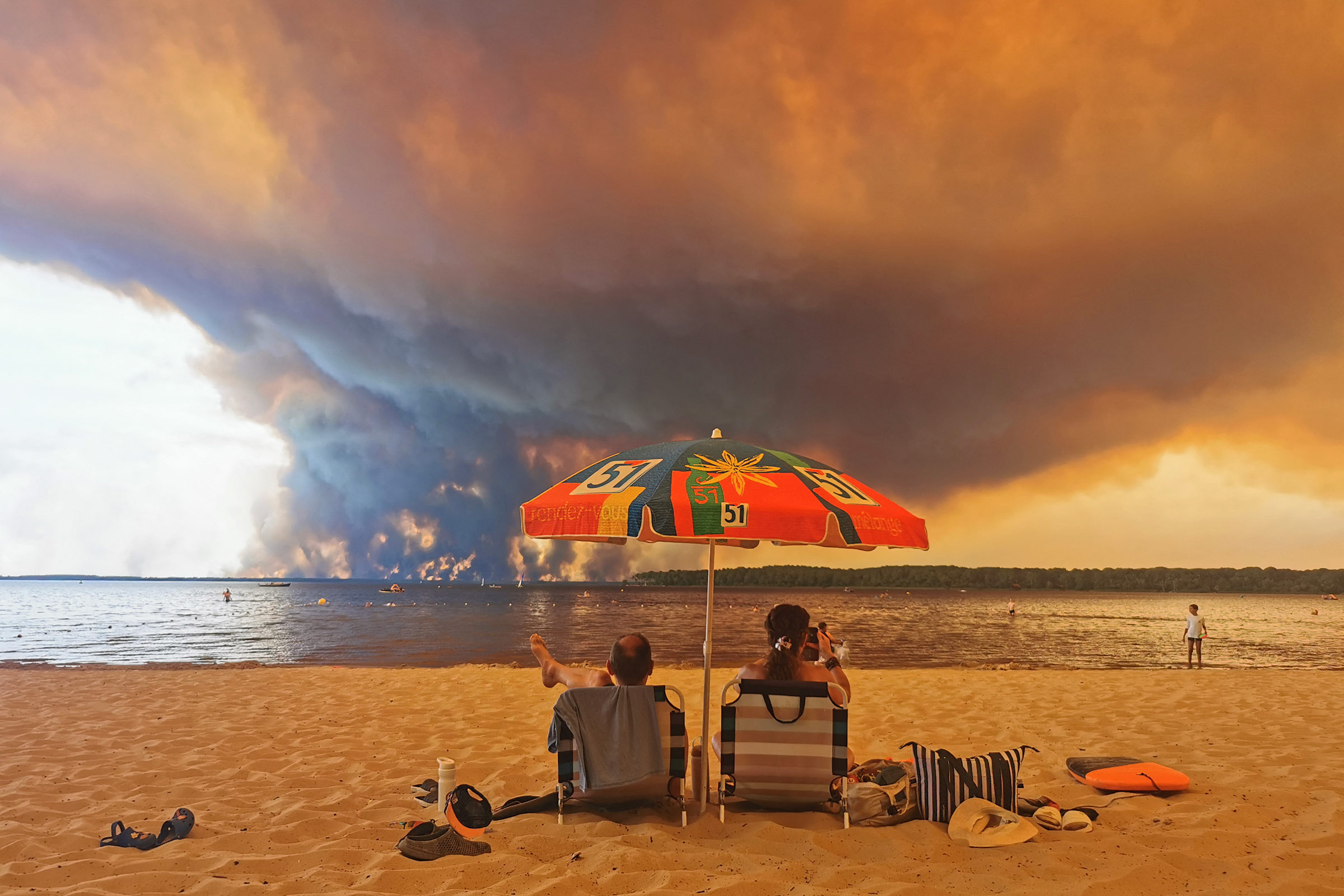
Every summer, the media template pulls itself off the shelf. Photos of orange skies over France and charred olive groves in Spain flood screens. The narrative is always identical, packaged neatly for quick consumption: ferocious European wildfires are destroying the continent, driven purely by an escalating climate crisis.
It is lazy, unscientific, and it gets people killed.
I have spent years analyzing land management policies and emergency responses across Southern Europe. I have watched billions of euros flow into reactive firefighting fleets while the actual root cause gets ignored because it lacks the simple emotional punch of a burning forest.
The lazy consensus tells you that hotter summers mean more fires, period. The reality is far more inconvenient. Europe is not burning because it is getting warm; Europe is burning because it spent decades abandoning the countryside.
The Rural Exodus Trap
To understand why France and Spain are turning into matchboxes, you have to look at demographics, not just thermometers. For centuries, rural communities in Southern Europe practiced active land stewardship. Grazing animals kept underbrush low. Small-scale farmers cleared deadwood, maintained firebreaks, and used controlled burns during cooler months.
Then came industrialization. People moved to cities. The mountains and valleys emptied out.
When you abandon the land, nature does not preserve it in a pristine, static museum state. Nature accumulates fuel. Millions of hectares of former pastureland and managed forests have transformed into dense, uninterrupted carpets of dry brush and dead timber.
When a spark hits a landscape packed with decades of unmanaged fuel, it does not matter if the temperature is thirty degrees Celsius or forty. It explodes. Fire is not a malfunction of nature; it is a cleaning mechanism. By suppressing every small fire for fifty years and ignoring the buildup of undergrowth, governments engineered the mega-fires they now cry about.
The Myth of Total Suppression
Politicians love buying bigger airplanes. Water-dropping planes make for fantastic television. They fly low, drop thousands of liters of water, and look like heroes fighting a war against nature.
It is a multi-million-dollar theater.
Aerial suppression puts out small fires that should have been left to burn out or managed locally. By prioritizing total suppression, emergency agencies ensure that fuel loads grow thicker every single year. You cannot bomb a tinderbox with water and expect permanent safety. You are simply deferring a bigger disaster with interest.
Look at traditional forestry data. Decades of fire suppression create a high-risk paradox. The more successful you are at stopping small fires today, the more catastrophic the inevitable mega-fire will be tomorrow.
The Policy Failure Nobody Wants to Name
Spain and France operate under heavily bureaucratic environmental regulations that often criminalize active management. Landowners are slapped with fines for clearing brush without environmental permits, or they face endless red tape when trying to reintroduce grazing goats to public lands.
Bureaucrats sitting in Paris or Madrid write rules designed to protect every single leaf, completely ignoring the macro-systemic health of the ecosystem. Their policies protect the individual tree while dooming the entire forest.
Real wildfire prevention looks boring. It looks like goats eating scrub grass in July. It looks like foresters cutting down healthy trees to create tactical gaps. It looks like local farmers lighting small, controlled fires in February so that July cannot do it for them.
None of these solutions fit on an Instagram infographic. None of them allow a politician to stand in front of a smoking ruin and point dramatically at a distant chimney pumping carbon.
What Actually Works
If we want to stop waking up to orange skies over the Mediterranean, we have to flip the script entirely.
First, decentralize forest management. Give local municipalities and rural populations the legal power and financial backing to manage their own backyards. They know the terrain better than any national forestry board.
Second, legalize and fund prescribed burning on a massive scale. We need to reintroduce fire to the landscape on our terms, not nature's terms.
Third, stop treating rural depopulation as an unrelated economic footnote. Subsidize farming and grazing in high-risk zones. A shepherd with a flock of sheep is a far more effective firebreak than a fleet of water bombers costing ten million euros a day.
The photos from France and Spain are tragic, but the real tragedy is our refusal to admit that we built the bonfires ourselves.
Stop waiting for the climate to cooperate. Start managing the fuel.


