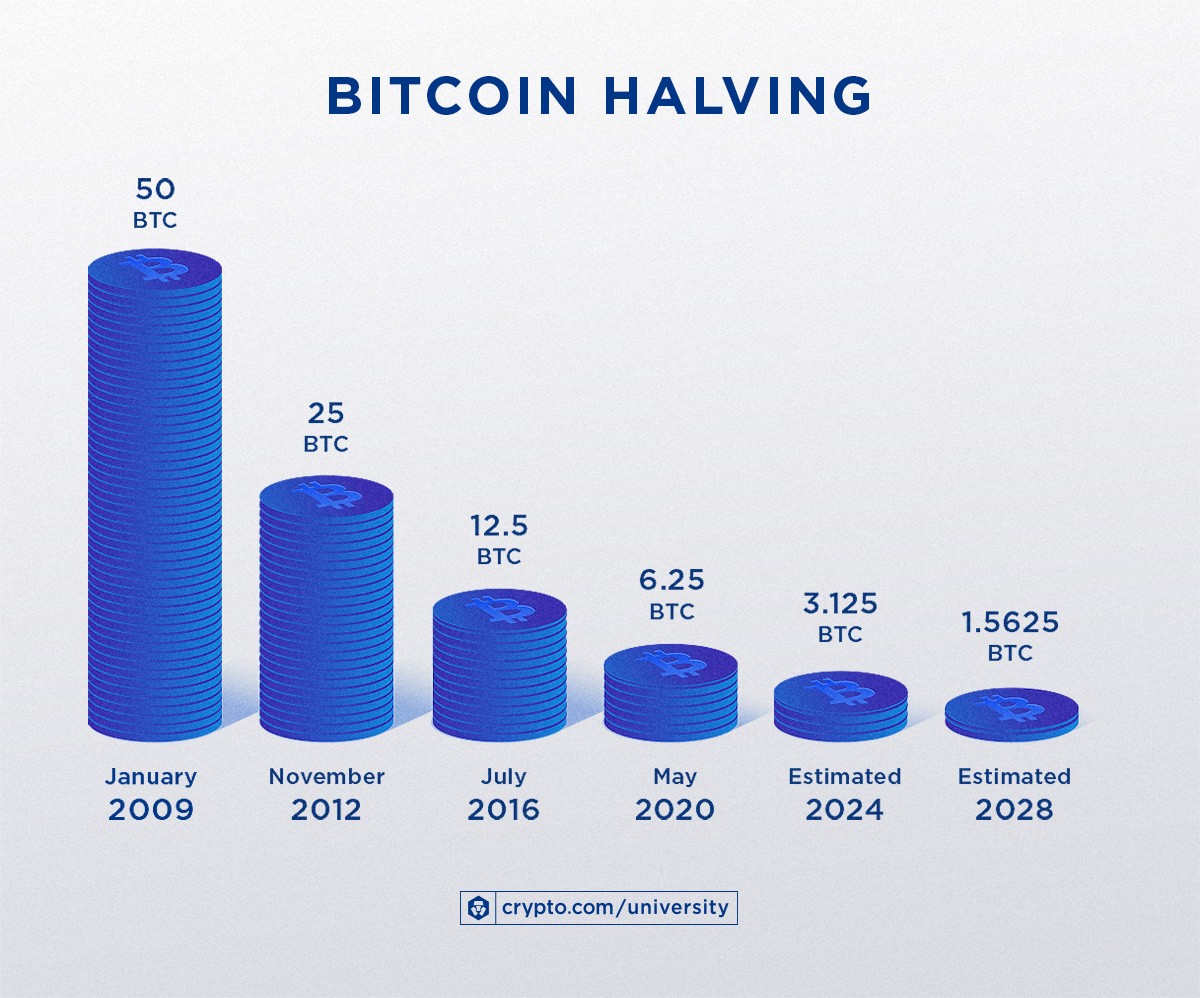
Bitcoin’s programmed scarcity functions not as a marketing tool, but as a deterministic stress test for the entire decentralized network. Every 210,000 blocks—roughly every four years—the block subsidy awarded to miners is reduced by 50%, a process colloquially known as "the halving." While speculative markets focus on the resulting supply shock, the true crisis is operational. The halving is a forced efficiency mandate that systematically purges high-cost producers from the ecosystem. This architectural constraint ensures the long-term deflationary nature of the asset but creates acute, predictable periods of structural instability.
The Triad of Network Equilibrium
To understand the current "existential crisis," one must analyze the interplay between three fundamental variables: Hash Rate, Difficulty Adjustment, and Operational Expenditure (OpEx).
- Hash Rate: The total computational power dedicated to securing the network.
- Difficulty Adjustment: A self-correcting algorithm that ensures blocks are found approximately every ten minutes, regardless of how much hash power is online.
- Miner Revenue: Composed of the block subsidy (the part that is slashed) and transaction fees.
When the subsidy drops, the immediate result is a compression of profit margins. If the price of Bitcoin does not double instantly to offset the 50% revenue cut, miners whose electricity costs exceed their production value become "underwater." This triggers a sequence of forced liquidations of held assets and the physical decommissioning of older hardware.
The Cost Function of Digital Gold
The floor price of Bitcoin is often anchored by the Production Cost Model. This is not a fixed number but a spectrum based on two primary inputs:
- Hardware Efficiency: Measured in Joules per Terahash ($J/TH$). Older units like the Antminer S19 series become liabilities when the subsidy drops, while newer models (e.g., S21 series) maintain viability.
- Electricity Arbitrage: The marginal cost of power. Miners operating at $0.06/kWh$ face immediate extinction compared to those with power purchase agreements (PPAs) at $0.03/kWh$ or those utilizing stranded energy (flared gas).
When the halving occurs, the network essentially "votes" on which miners are efficient enough to survive. This is the "existential" element: it is a recurring, automated Darwinian event.
The Mechanics of the Post-Halving Death Spiral Myth
Critics frequently cite the "Death Spiral" theory during price stagnations. The logic suggests that as rewards drop, miners quit; as miners quit, the hash rate falls; as the hash rate falls, block times slow down, making the network unusable and causing the price to crash further, leading to more miners quitting.
This theory fails because it ignores the Difficulty Adjustment.
If 25% of the network goes offline today, blocks will take 12.5 minutes instead of 10. However, after a maximum of 2,016 blocks (approximately two weeks), the network recalculates. It makes the "puzzle" easier to solve, restoring the 10-minute cadence and increasing the profitability for the remaining, more efficient miners. The crisis is therefore not existential for the network, but specifically for the inefficient capital that was misallocated during the "easy" subsidy era.
The Transition from Subsidy to Fee-Based Security
The long-term survival of Bitcoin depends on a fundamental shift in its economic engine. As the block subsidy approaches zero over the next century, transaction fees must replace it to incentivize miners to secure the chain.
The Fee Floor Requirement
For the network to maintain its current security spend—the amount paid to miners to prevent a 51% attack—transaction fees must grow to fill the vacuum left by the halving subsidy. We are currently seeing the emergence of two primary drivers for this:
- Layer 2 Evolution: Applications like the Lightning Network or Liquid, which handle high-volume, low-value transactions while settling periodically on the main chain.
- On-Chain Data Competition: Protocols like Ordinals and Runes have introduced a new demand for block space that is non-monetary. By treating block space as a finite commodity for data storage rather than just currency transfer, these protocols create a "fee floor" that supports miner revenue even when the subsidy is low.
Capital Structure and the Institutional Pivot
The current market cycle differs from previous halvings due to the professionalization of the mining sector. In 2012 and 2016, mining was dominated by hobbyists and private firms. Today, it is dominated by publicly traded entities (e.g., MARA, RIOT, CLSK) with access to equity markets.
These firms use a specific strategy to survive the "slash":
- HODL Strategy: Retaining mined Bitcoin on the balance sheet to use as collateral for USD-denominated debt, avoiding selling during low-price periods.
- Fleet Upgrades: Pre-ordering next-generation ASICs (Application-Specific Integrated Circuits) months before the halving to ensure their $J/TH$ efficiency is top-tier when the reward drops.
- Vertical Integration: Owning the power transformation and cooling infrastructure rather than renting space in third-party data centers.
This institutionalization reduces the volatility of the hash rate but increases the correlation between Bitcoin and traditional equity markets. The "crisis" is no longer about the technology failing; it is about the transition of Bitcoin from a counter-cultural experiment into a high-stakes industrial commodity.
Theoretical Limitations of Scarcity
While the halving reduces supply, it does not inherently create demand. The "Stock-to-Flow" model, which previously predicted price increases based solely on scarcity, has faced significant criticism. Scarcity is a multiplier of demand, not a substitute for it. If global liquidity tightens or regulatory pressure increases, the halving may not result in the traditional price appreciation.
The primary risk is Security Budget Attrition. If the price does not rise and transaction fees do not scale, the total dollar value of the rewards may eventually fall too low to deter state-level actors from attempting to reorganize the blockchain. This is the only true existential threat posed by the halving mechanism.
Operational Mandate for the Current Cycle
Strategic survival in the post-halving environment requires a three-pronged pivot. First, miners must move beyond simple "plug and play" operations and integrate into the energy grid as flexible loads that can earn revenue through "demand response" programs (getting paid by utility companies to turn off during peak demand). Second, investors must stop viewing the halving as a guaranteed "pump" event and instead view it as an audit of network health. Finally, the ecosystem must prioritize the development of "fee-dense" applications to ensure the security budget remains robust as the block subsidy fades toward irrelevance.
The focus must shift from the price of the asset to the cost of the security. If the cost of an attack remains higher than the potential gain, the network remains viable. The halving is simply the mechanism that forces this calculation into the light every four years. High-cost miners will fail, their hardware will be bought at a discount by more efficient operators, and the network will continue its ten-minute heartbeat, indifferent to the capital destroyed in the process.