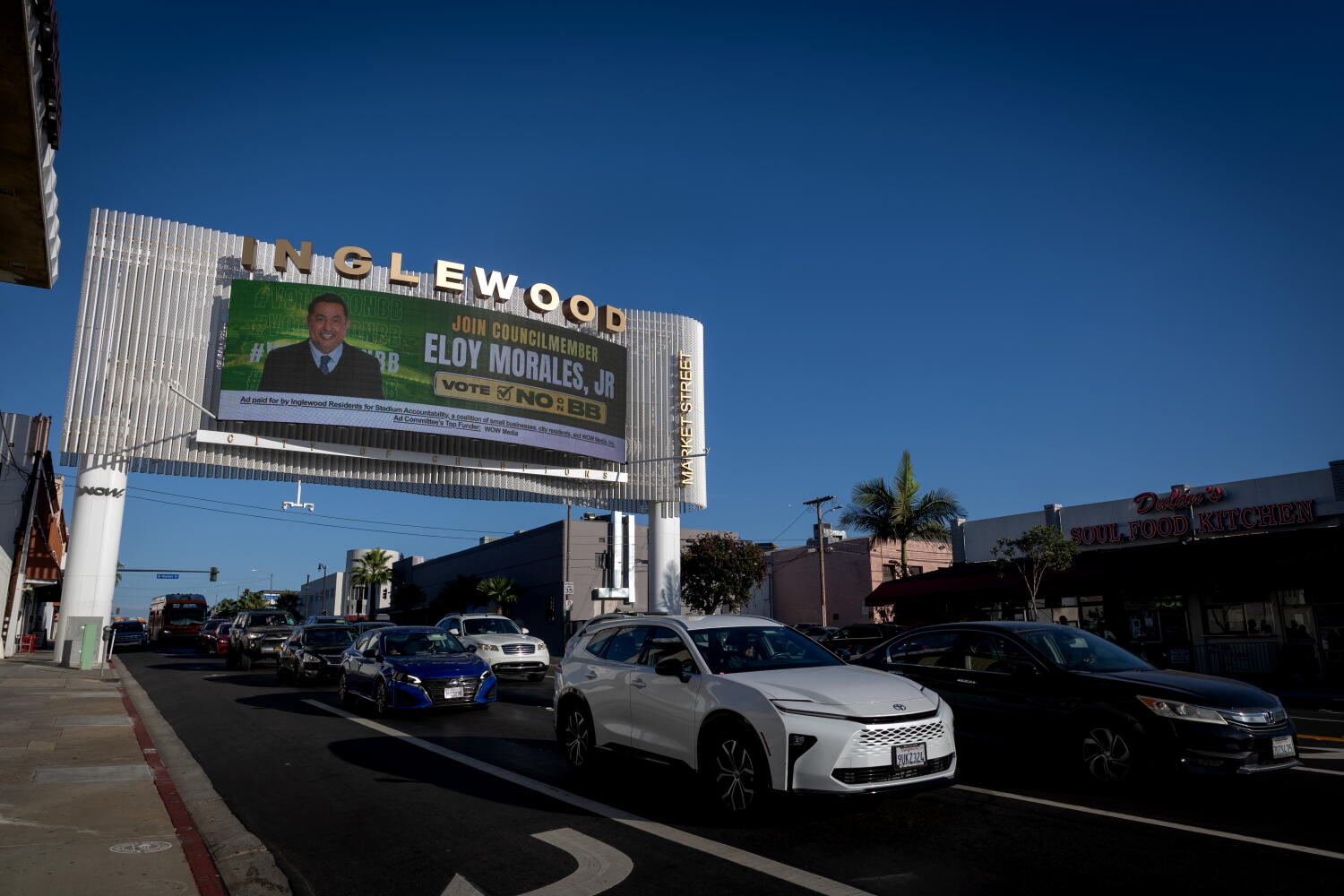
Stand on the corner of Century Boulevard and Prairie Avenue at midnight, and the sky does not belong to the stars anymore.
It belongs to a three-hundred-foot wall of shifting, high-definition luminescence. The light washes over the windshields of idling sedans, paints the stucco of low-slung tire shops in electric cyan, and bleeds through the venetian blinds of third-floor apartments three blocks away. Down the street, the sweeping, translucent canopy of SoFi Stadium rises out of the asphalt like a spaceship that landed in a working-class neighborhood and decided to stay.
For nearly a decade, the people of Inglewood were sold a shimmering promise. When billionaire Los Angeles Rams owner Stan Kroenke laid down five billion dollars of private money to build the crown jewel of modern sports entertainment on the old Hollywood Park racetrack site, the pitch was intoxicating. Jobs would flood the streets. Tax coffers would overflow. The "City of Champions," bruised by decades of economic neglect and the departure of the Lakers and Kings in 1999, would finally reclaim its throne.
Now, the bill has come due, and it is written in light and ledger lines.
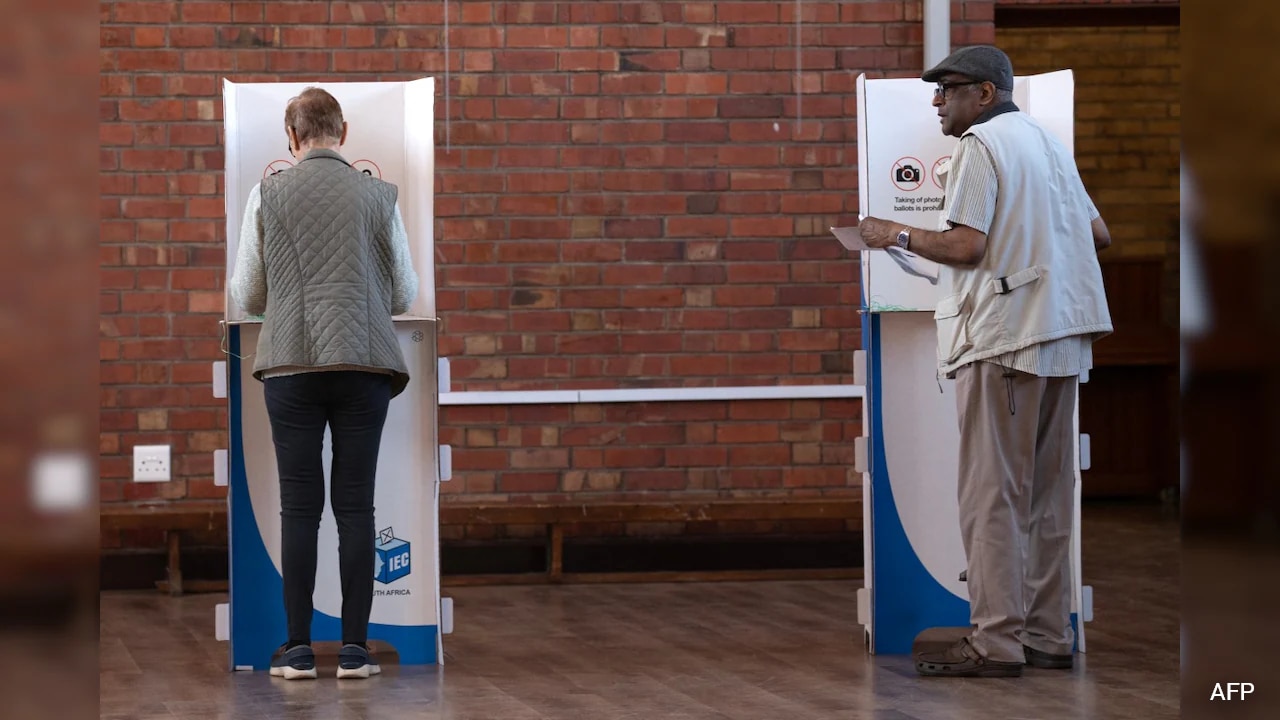
Consider a hypothetical resident—let’s call her Elena, a retired schoolteacher who has owned her two-bedroom bungalow half a mile from the stadium since 1988. Elena does not care about luxury suites or the economic multiplier effect of the Super Bowl. She cares about the fact that her property taxes have crept upward while her street turns into a gridlocked parking lot forty Sundays and concert nights a year. And when she walks to the ballot box to decide the fate of local billboard ordinances and stadium tax measures, she isn't voting on municipal zoning codes. She is voting on who actually owns the air above her head.
That tension is the beating heart of the split election reality confronting Inglewood and the Rams' empire. On one side sits an entertainment juggernaut pushing to expand its digital footprint through towering, revenue-generating super-graphics and electronic billboards—and fighting to shape the tax structures that govern them. On the other sits a fractured, fiercely protective electorate willing to tolerate the stadium's tax apparatus while drawing a hard, glowing line against turning their skyline into Times Square West.
The Architecture of a Divided Ballot
To understand why voters in Inglewood are poised to hand down a split decision—approving certain tax mechanisms while choking off unchecked digital billboard expansion—you have to stop looking at politics as a team sport and start looking at it as a kitchen-table negotiation.
When municipal ballot measures collide with sports real estate empires, analysts love to talk about voter apathy or political polarization. They miss the point entirely. Voters are remarkably pragmatic when the consequences literally shine into their bedrooms.
Think of a stadium district like a massive ocean liner docked in a quiet harbor. The town welcomes the ship because the passengers spend money at the local bakeries and the port fees fix the town's roads. That is the tax side of the equation. Residents understand that capturing revenue from wealthy out-of-town visitors—through ticket taxes, parking levies, or commercial assessments—keeps the city from reaching directly into their own pockets to pay for firefighters and street paving. When a tax measure is framed as a way to make the billionaire and his sixty-thousand Sunday guests pay their fair share, voters nod. They sign. They approve.
Billboards, however, are the ship's foghorn blasting at three in the morning.
Digital super-graphics are wildly profitable for stadium developers and media conglomerates. A single massive LED display along a major arterial corridor like Century Boulevard or near the flight path of Los Angeles International Airport can generate millions of dollars annually in advertising revenue, selling everything from luxury SUVs to streaming dramas to millions of eyeballs stuck in traffic. To Kroenke’s development arm, Hollywood Park, and the city leaders aligned with the stadium's growth engine, those signs are the natural wallpaper of a world-class entertainment district.
To the person living across the street, they are visual noise pollution that cannot be turned off.
Follow the Money, Watch the Sky
Let’s pull back the curtain on the mechanics of this standoff, because the numbers tell a story far more gripping than any campaign flyer.
Inglewood’s transformation over the past ten years is one of the most aggressive urban reinventions in American history. Alongside SoFi Stadium, the city welcomed the YouTube Theater, the Intuit Dome—the two-billion-dollar home of the Los Angeles Clippers just down Prairie Avenue—and hundreds of thousands of square feet of retail and office space. Overnight, a city of roughly one hundred thousand residents became the undisputed entertainment capital of Southern California.
Success, however, breeds an insatiable appetite for revenue.
Running a city that hosts the Olympics, the World Cup, and the Super Bowl requires staggering amounts of municipal cash. Police overtime alone during major event weekends runs into the hundreds of thousands of dollars. Street maintenance, sanitation, traffic control, and infrastructure upgrades demand permanent funding streams. City Hall, led by longtime Mayor James Butts, has consistently championed development-friendly policies, arguing that Inglewood must monetize its newfound global spotlight to survive and thrive without burdening working families.
In this ecosystem, taxes and billboards are deeply intertwined. City officials and stadium developers often view expanded signage districts not merely as aesthetic choices, but as economic engines—commercial assets whose revenues can be taxed, shared, or used to offset the astronomical costs of maintaining an entertainment hub.
Yet when these proposals hit the ballot, a fascinating psychological split occurs among the electorate.
- The Pragmatic Yes on Revenue: Voters have repeatedly shown a willingness to back tax measures aimed at corporate entities, admissions, or commercial developments, provided the money stays local. They want the libraries open. They want the potholes filled. If a ballot measure extracts revenue from the entertainment machine, residents see a tangible return on their daily inconvenience.
- The Visceral No on Encroachment: When proposals seek to loosen restrictions on giant digital billboards, allow off-site advertising corridors to bleed deeper into neighborhood boundaries, or grant sweeping exemptions to sign ordinances, the mood shifts instantly. You cannot spend a billboard at the grocery store. You only have to squint past it while backing out of your driveway.
I remember standing near the edge of the Hollywood Park perimeter a few winters ago, watching a crew test the brightness calibration on a massive exterior LED screen. It was a Tuesday night, hours after the crowds had gone home. Across the four-lane street, a row of modest 1950s apartment buildings sat dark, their residents asleep before early morning shifts at the airport and downtown warehouses. With a single keystroke from a technician's laptop, the screen flashed pure white, illuminating the bedroom curtains across the avenue like a camera flash going off in slow motion.
In that single instant, the abstract debate over municipal sign ordinances ceased to be about zoning. It became about dignity.
The Illusion of the Win-Win
In the glossy brochures mailed to Inglewood households ahead of every election cycle, campaign consultants work overtime to erase the distinction between civic pride and corporate profit. The language is always seductive. Approval means "vital funding for neighborhood safety." Rejection means "stalling Inglewood's renaissance."
It is a classic false binary, and voters are getting wise to it.
The truth is messy, uncomfortable, and rarely fits on a yard sign. Inglewood genuinely needs the tax base that the Rams, the Clippers, and their surrounding entertainment districts provide. Before the stadium boom, the city stared down the barrel of severe fiscal distress, flirting with municipal insolvency as pension obligations climbed and retail tax revenues stagnated. Today, Inglewood enjoys bond rating upgrades, revitalized parks, and a global profile that civic boosters in other mid-sized cities would trade their eye teeth to possess.
Pretending that Kroenke’s investment hasn't rescued the city's balance sheet is dishonest.
At the same time, pretending that a billion-dollar sports conglomerate acts out of pure civic altruism is naive. Stadium owners are master negotiators. They understand leverage better than almost anyone in American business. When they push for regulatory flexibility on signage, or when they battle over the precise structure of municipal taxes and business license fees, they are doing what empires always do: maximizing yield on their territory.
Consider another hypothetical scenario to see how this plays out behind closed doors. Imagine a city council negotiating a development agreement with a stadium operator. The developer wants twenty new digital billboard faces along the perimeter roads to sell ad space to global sponsors. The city wants five million dollars a year in new general fund revenue. If they strike a deal, both sides walk away smiling—until the residents living beneath those twenty glowing screens realize nobody asked them if they wanted to live inside a commercial.
When grassroots coalitions gather signatures to put billboard restrictions on the ballot, or when voters split their tickets to approve taxes while rejecting signage expansions, they are deploying the only counterweight they possess. They are rewriting the contract in real time.
Why a Split Verdict Terrifies Power Brokers
Politicians and billionaire developers hate a split election result far more than a clean loss.
A clean loss is easy to diagnose. You blame low turnout, a bad economy, or an opponent's messaging, and you come back two years later with a bigger war chest. A split decision—where voters say yes to taxing the entertainment complex and no to letting that complex dominate the visual skyline—sends a message that cannot be spun away. It proves the electorate is paying close attention.
It tells City Hall and the Rams' front office that the honeymoon is officially over.
For years, the sheer scale of the Inglewood renaissance created a kind of civic hypnosis. Cranes dotted the horizon; celebrities sat courtside and in luxury boxes; national broadcasts beamed aerial shots of the shimmering stadium roof to a hundred million living rooms. In the glow of that attention, questioning any piece of the development puzzle felt almost unpatriotic, like rooting against your own hometown's comeback.
That spell has broken. Residents have lived with the reality of the mega-events now. They know the exact rhythm of traffic gridlock on Manchester Boulevard. They know how much rideshare surge pricing spikes on concert nights. They have watched rents climb across historic neighborhoods where families have lived for three generations, forcing teachers, nurses, and barbers to pack up and move forty miles east to the Inland Empire.
When you live inside the machine, you stop admiring the chrome and start listening to the gears grind.
That lived reality explains why a voter can enthusiastically check the box to capture tax revenue from billion-dollar venues while furiously filling in the bubble to block a hundred-foot digital billboard down the block. There is no contradiction in that ballot. It is a coherent, deeply rational philosophy: If you are going to turn our neighborhood into an entertainment destination, you are going to pay for the wear and tear—and you don't get to blind us while you do it.
The Ripple Effect Beyond Prairie Avenue
What happens in Inglewood rarely stays in Inglewood.
Across North America, from Chicago to Nashville, from Las Vegas to suburban Atlanta, billionaire team owners are reading from the exact same blueprint. They are no longer building isolated stadiums surrounded by seas of asphalt parking lots. They are building "anchored mixed-use entertainment districts"—walled-off mini-cities packed with hotels, apartments, retail plazas, and towering digital advertising networks designed to capture every dollar a fan spends from three hours before kickoff until midnight.
And everywhere this model lands, the same friction ignites.
Municipalities hungry for tax revenue bend over backward to accommodate these megaprojects, granting zoning variances, waiving height limits, and carving out special sign districts that allow billboards unimaginable in any other neighborhood. For a while, the novelty holds. Then the lights turn on, the tax bills arrive, and the neighbors start organizing.
Inglewood is simply further down the road than everyone else. It is the living laboratory for what happens when a private sports empire drops five billion dollars into the middle of a dense, historic, working-class community.
I still don't know if there is a permanent truce to be found between a global entertainment brand that measures success in impressions per second and a neighborhood that measures success in quiet Sunday mornings. Maybe that tension is simply the price of admission for living in a modern metropolis. Maybe every city that invites a giant into its backyard eventually has to spend its evenings arguing over where the giant gets to put its feet.
Walk down Prairie Avenue tonight, past the shimmering glass of the arenas and the taco trucks parked under the streetlights, and look up at those massive glowing screens cycling through ads for luxury watches and blockbuster movies. Beneath them, in living rooms lit only by the faint blue flicker of the evening news, thousands of neighbors are sitting at their kitchen tables with sample ballots spread out beside their dinner plates, holding a pen, deciding exactly how bright they are willing to let the future shine.