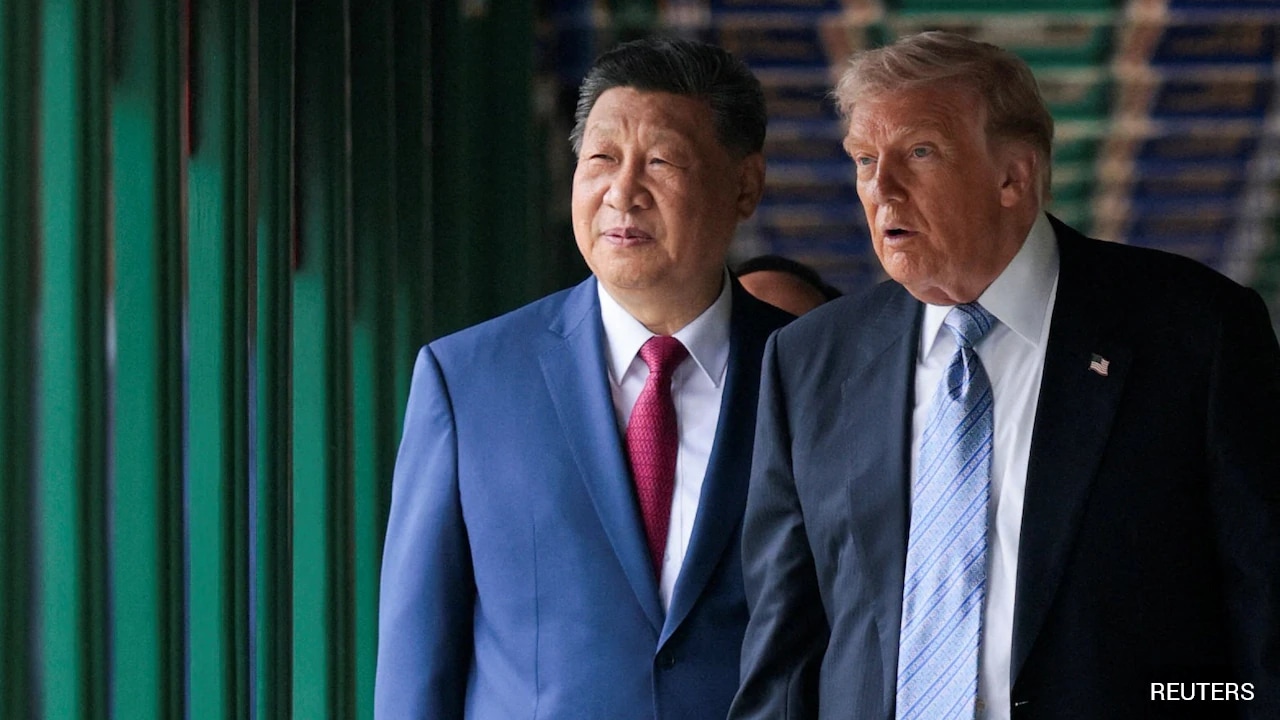
High-stakes bilateral summits are rarely about spontaneous breakthrough; they are calculated, high-density signaling exercises where outcomes are engineered months in advance. The announcement that Chinese President Xi Jinping will visit Washington on September 24 marks the second major head-of-state interaction between the two powers in four months, following the May Beijing summit.
Media coverage treats these meetings as binary events—either total diplomatic breakdowns or historic breakthroughs. That binary is flawed. The September 24 summit operates within a structured tri-fold framework: frontier artificial intelligence safety standards, trade tariff recalibration, and strategic stability along maritime flashpoints.
The Three Pillars of Executive Diplomacy
To evaluate what will occur on September 24, the bilateral relationship must be decomposed into three primary economic and strategic operational vectors.
+-----------------------------------------------------------------------+
|                 US-CHINA BILATERAL STABILITY MATRIX                  |
+-----------------------------------------------------------------------+
| 1. FRONTIER TECH & AI GOVERNANCE | Compute Caps, Model Weights, Safety|
| 2. TRADE & TARIFF REBALANCING     | Agricultural Commitments, Duties   |
| 3. GEOPOLITICAL BUFFERING         | Maritime Corridors, Escalation     |
+-----------------------------------------------------------------------+
1. Frontier Tech and AI Governance
Artificial intelligence has displaced traditional manufacturing as the central axis of security negotiations. The upcoming talks follow preliminary working groups led by US Treasury Secretary Scott Bessent and Chinese economic officials focused on frontier model risks.
The primary objective is establishing basic definitions for frontier models, thresholds for compute capabilities, and voluntary standards for model releases. Washington seeks to restrict Chinese open-weight models from destabilizing Western software markets while simultaneously limiting access to US compute hardware. Beijing, conversely, aims to decouple technology access from security sanctions, protecting its domestic semiconductor roadmap.
2. Trade Tariff Recalibration
Economic negotiations center on targeted trade duties and export controls. Rather than broad, indiscriminate tariffs, the strategy relies on asymmetric targeted pressure.
- US Objectives: Secure firm purchase commitments for domestic agricultural products and advanced manufacturing goods while preserving strategic export restrictions on high-end capital equipment.
- China Objectives: Obtain predictable duty structures, delay additional critical-mineral export bans, and normalize cross-border capital flows for non-sensitive commercial sectors.
3. Strategic Stability and Escalation Management
The third pillar establishes operational guardrails around contested maritime sectors and regional flashpoints. Diplomatic preparatory work by Secretary of State Marco Rubio and Foreign Minister Wang Yi indicates that maintaining open communication channels during operational incidents remains the primary objective.
Direct leader-level engagement prevents operational misunderstandings in maritime corridors from cascading into systemic economic disconnections.
The Cost Function of Summit Mechanics
Summits enforce hard trade-offs. Each concession in tech governance or trade policy directly impacts domestic political alignment and international posture.
       [ US Policy Vectors ]                   [ China Policy Vectors ]
+---------------------------------+     +---------------------------------+
| Fast-Track AI Capital Controls  |     | Protect Domestic Microchip Dev  |
| Protect IP & Hardware Supply    | <-> | Counter Foreign Export Limits   |
| Secure Agricultural Purchases   |     | Stabilize Export Economies      |
+---------------------------------+     +---------------------------------+
The US Trade-Off Matrix
Enforcing rigid export controls on dual-use technologies creates immediate revenue friction for domestic chip designers and equipment makers. Applying maximum pressure on tech supply chains risks retaliatory restrictions on critical industrial inputs like refined rare earth elements. The policy goal is maximizing technological lead-time without triggering severe supply chain disruptions.
The Chinese Strategic Constraint
China faces a structural balancing act. Pursuing aggressive industrial counter-measures hazards triggering broader capital outflows and reduced international market access. Coinciding with the UN General Assembly window in New York, the September meeting gives Beijing an opportunity to present itself as a stabilizing economic global manager while protecting its long-term domestic technology independence.
Structural Execution and Forecast
Diplomatic success on September 24 will not be measured by signing comprehensive, overarching treaties. Instead, tangible output will look like precise, low-visibility operational mechanisms:
- AI Technical Working Groups: Formalized, recurring technical exchanges between US and Chinese safety institutes to define compute thresholds ($10^{26}$ FLOPs and beyond) and benchmark model evaluation protocols.
- Targeted Sector Sanction Exemptions: Mutual, narrow carve-outs for specific agricultural exports, health technology, and non-sensitive consumer hardware.
- Crisis-Communication Protocols: Re-established bilateral direct lines between key operational commands to mitigate escalations in disputed regional waters.
The September 24 summit represents a shift toward structured operational competition. Both powers are establishing clear boundaries for technological rivalry, ensuring that economic competition remains bounded within manageable risk corridors.