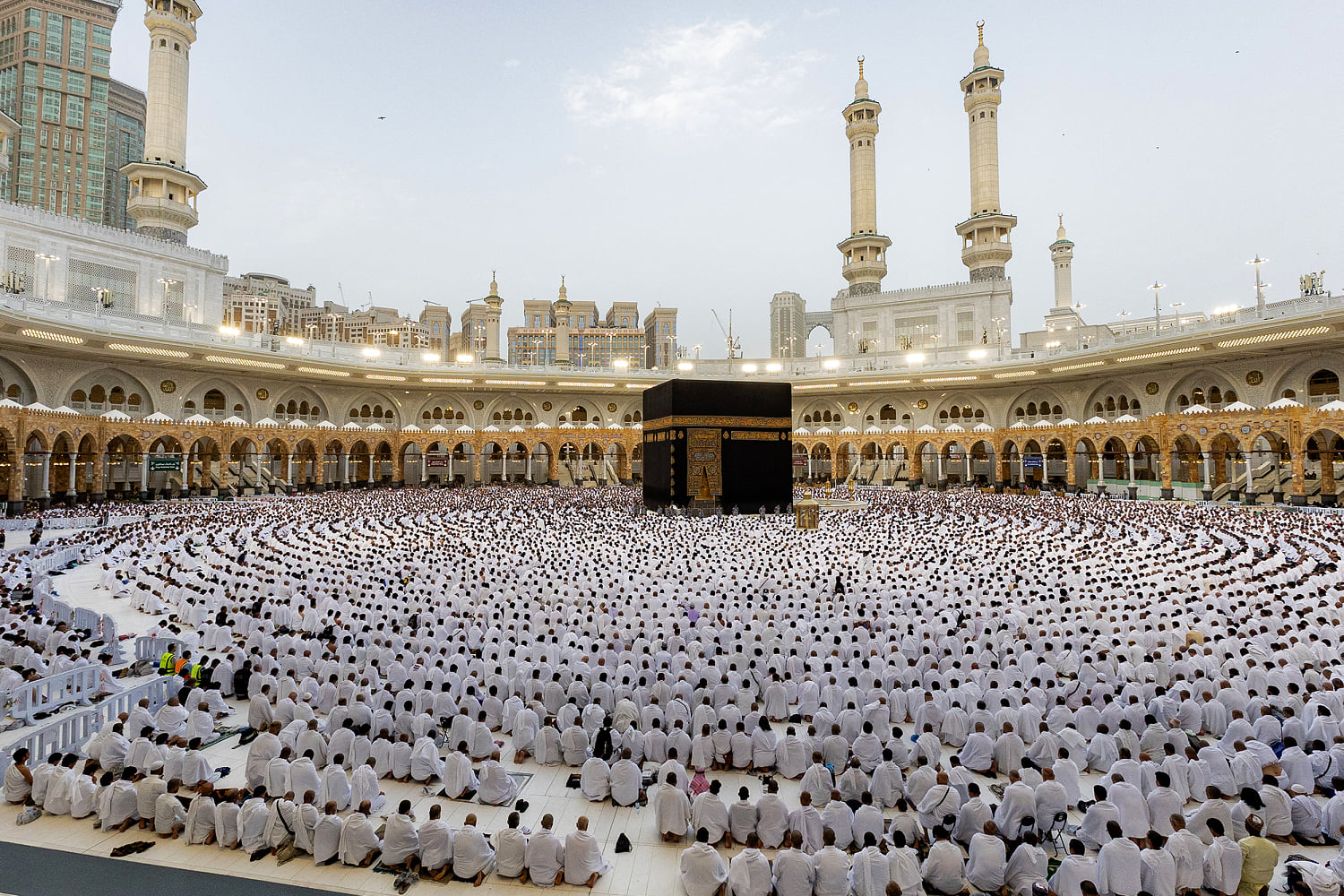
In the calculus of modern asymmetric warfare, certain thresholds carry existential weight. When Riyadh accused the Houthi movement of launching a ballistic missile toward Mecca, the conflict in Yemen crossed an invisible, highly volatile boundary. For the Kingdom of Saudi Arabia, targeting Islam's holiest sanctuary is not merely a military escalation or a tactical provocation. It strikes at the core of sovereign legitimacy, religious custodianship, and regional security architectures that have held sway for nearly a century.
The accusation, leveled by the Saudi-led coalition after air defense systems intercepted a missile over the Al-Wasla area in Taif province roughly sixty-five kilometers from Mecca, fundamentally shifted the diplomatic and military horizons of the war. Understanding why this accusation carries such gravity requires examining the intersection of theological symbolism, intelligence scarcity in active conflict zones, and the shifting dynamics of regional deterrence.
The Custodianship Imperative and the Sacred Threshold
To grasp the visceral reaction from the Saudi foreign policy apparatus, one must deconstruct the primary source of the ruling house's domestic legitimacy. The King of Saudi Arabia derives his formal title not merely from territorial conquest, but from the prestigious role of Custodian of the Two Holy Mosques. Mecca and Medina represent the spiritual epicenter of Islam, drawing millions of pilgrims annually and anchoring the religious identity of over a billion Muslims worldwide.
When a projectile approaches this perimeter, the challenge transcends military calculus. It becomes an attack on the foundational narrative of the state.
Security analysts examining the incident note that the coalition forces tracked the missile trajectory from northern Yemen, specifically from the Saada governorate, the historical stronghold of the Houthi movement formally known as Ansar Allah. The projectile was intercepted before reaching its destination, but the political fallout detonated instantly. Riyadh framed the strike not as a miscalculated tactical maneuver against military infrastructure, but as a deliberate ideological assault executed with Iranian assistance.
The Houthi leadership categorically denied the claim, countering that their forces targeted the King Abdulaziz International Airport in Jeddah, a major aviation hub located a significant distance away from the sacred site. In statements released through their political channels, insurgent spokesmen accused the coalition of fabricating the narrative to generate international sympathy and rally theological outrage across the Sunni Muslim world.
This divergence in narrative exposes the deep information vacuum characterizing the Yemeni theater. Independent verification of missile telemetry during active engagements remains exceptionally difficult, leaving observers to weigh competing strategic interests against available sensor data.
The Mechanics of Asymmetry and Strategic Escalation
To view the incident in isolation is to misread the broader trajectory of the conflict. The war in Yemen, which erupted into open regional confrontation in 2015, transformed from a localized domestic rebellion into a proxy struggle involving advanced ballistic technology, drone warfare, and maritime blockade.
The Houthi movement, through years of technical adaptation and external supply chains, developed a domestic missile assembly and modification capability that surprised Western intelligence agencies. Systems originally sourced from Soviet-era stockpiles were retrofitted with inertial guidance systems and extended fuel tanks, allowing them to strike targets deep inside Saudi territory, including oil infrastructure in Abha, Khamis Mushayt, and Riyadh itself.
Targeting urban centers or critical economic nodes is one tier of escalation. Targeting religious monuments crosses into a psychological domain where compromise becomes nearly impossible.
When a state actor or insurgent group tests the air defense perimeter of a holy city, the responding government faces domestic pressure to retaliate with disproportionate force. Riyadh intensified its aerial campaign across northern Yemen following the incident, targeting launch sites and command nodes in Saada. Yet, military force alone cannot resolve an insurgency rooted in rugged terrain, sectarian grievances, and deep-seated social mobilization.
The designation of Mecca as a red line alters the diplomatic calculus for international mediators, including the United Nations. Western capitals, which previously maintained nuanced stances on the coalition's campaign due to humanitarian concerns over civilian casualties, found themselves navigating a tighter diplomatic corridor. An attack perceived as threatening holy sites hardens Riyadh's resolve, making negotiated settlements harder to achieve and reinforcing the narrative of an existential struggle against external subversion.
Regional Ramifications Beyond the Border
The reverberations of the Mecca missile accusation extend far beyond the immediate Saudi-Yemeni frontier. Tehran, accused by Riyadh and Western intelligence of supplying components and technical expertise to the Houthi forces, has consistently denied direct operational control over insurgent target selection. However, the alignment of geopolitical interests remains clear.
For Iran, supporting resilient non-state actors provides a low-cost mechanism to tie down Saudi military resources and project power along the strategic Bab el-Mandeb strait, a crucial maritime chokepoint through which a significant portion of global commerce flows. When the conflict touches upon Mecca, the diplomatic cost for Tehran rises, drawing sharp condemnation from the broader Organization of Islamic Cooperation and isolating regional allies who might otherwise maintain neutral stances.
At the same time, domestic dynamics within Saudi Arabia experienced a noticeable hardening. Public opinion, generally insulated from the daily frontline realities of the southern border, rallied sharply behind state security narratives. The incident provided a unifying focal point for national resilience, overshadowing internal economic debates regarding the diversification goals of Vision 2030.
The Unresolved Horizon
As the conflict grinds forward through fluctuating ceasefires, fragile diplomatic channels, and localized skirmishes, the legacy of the Mecca accusation remains a permanent fixture of regional distrust. The phrase "red line" is frequently invoked in international diplomacy, but rarely does it carry the theological and emotional weight assigned to the sanctuary of the Kaaba.
Whether the projectile was intended for the holy city or diverted airspace near Jeddah, the political reality is unalterable. The perception of the threat has become more potent than the physical impact of the debris. Security planners in Riyadh have permanently integrated the defense of the holy sites into the upper echelons of national missile defense priorities, ensuring that any future escalation near the western province will meet an immediate, uncompromising response.
The conflict in Yemen remains a complex tapestry of local grievances, tribal loyalties, and regional ambition. Yet, moments where sanctuary boundaries are tested serve as stark reminders that modern warfare respects neither history nor sacred geography. When the red line is crossed in rhetoric or in reality, the path back to stability narrows considerably, leaving diplomacy to navigate a landscape scarred by suspicion and unyielding resolve.