Buying an outdoor sectional is usually a recipe for frustration. You spend two grand on something that looks like a luxury resort in the photos, only to have the cushions turn into soggy pancakes after one thunderstorm. Or worse, the "hand-woven" wicker starts unspooling like a cheap sweater within six months. I've spent years testing furniture materials and advising homeowners on how to build outdoor spaces that actually last. Most people focus on the aesthetics, but if you don't look at the frame construction and foam density, you're just throwing money into the wind.
You want a backyard that feels like an extension of your living room. That requires a sectional that balances comfort with raw durability. Whether you're working with a tiny balcony or a sprawling poolside deck, the market is currently flooded with options. Some are brilliant. Most are junk. Here is how to tell the difference and where to spend your cash.
Why Most Outdoor Sectionals Fail
Most patio furniture dies because of two things: moisture and UV rays. Cheap sets use powder-coated steel frames. Sounds fancy, right? It isn't. As soon as that coating gets a tiny nick, the steel underneath starts to rust. Within a season, you’ll see orange streaks on your patio stones. You need aluminum. Specifically, powder-coated, rust-proof aluminum. It’s light, it doesn't rust, and it handles salt air if you’re near the coast.
Then there’s the fabric. If the description doesn't say Sunbrella or an equivalent solution-dyed acrylic, be careful. Polyester cushions fade in weeks. You’ll go from "Navy Blue" to "Sad Grey" before the 4th of July. Solution-dyed means the color is baked into the fibers, not just printed on top. It’s the difference between a radish (red on the outside) and a carrot (orange all the way through).
High End Luxury Without the Designer Markups
If you have a healthy budget, you're looking for longevity. You want something that will look exactly the same in five years. Outer has been making waves because their "OuterShell" cover is built into the cushions. You just roll it over the seat when you’re done. No more hauling heavy cushions into the garage every time a cloud appears. Their teak and aluminum frames are incredibly overbuilt. They use multi-layer foam that feels like a real sofa, not a park bench.
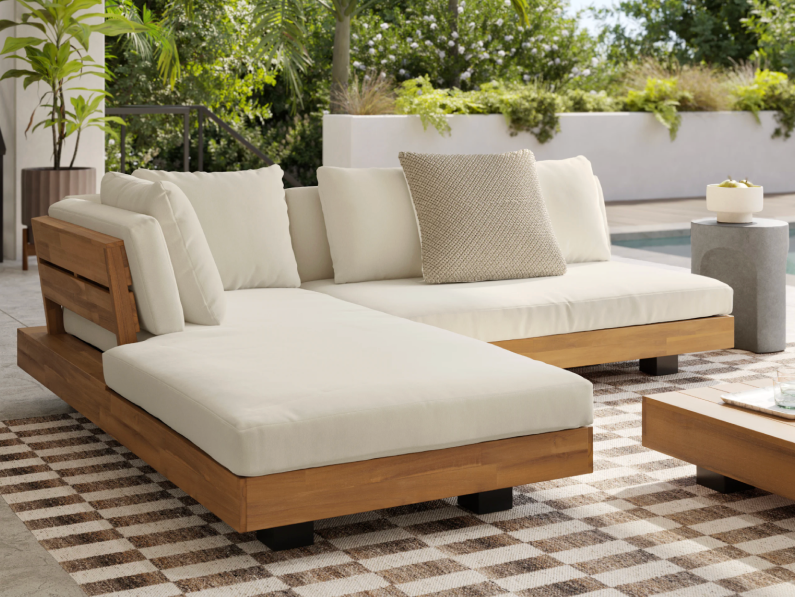
Neighbor is another brand hitting the sweet spot of mid-century modern design and extreme durability. They use solid FSC-certified teak. Teak is the gold standard because it’s naturally oily and resists rot. It weathers to a beautiful silver-grey if you don't oil it, but the structural integrity remains rock solid for decades. Their Haven sectional is modular, so you can keep adding pieces as your family grows or your patio expands.
Small Spaces and Tight Budgets
You don't need a massive yard to enjoy a sectional. In fact, an L-shaped sofa is often more space-efficient on a small balcony than two individual chairs. It creates a "nook" feeling that defines the space.
For those watching their bank account, IKEA and Target have stepped up their game, but you have to be picky. The IKEA HAVSTEN series is a surprising winner. It’s a mesh-based design that’s incredibly bouncy and comfortable. Because it uses a powder-coated steel frame, you have to be diligent about checking for scratches, but the price point is unbeatable.
If you're shopping at big-box retailers, look for "All-Weather Wicker." This isn't actual wood. It’s High-Density Polyethylene (HDPE). Avoid PVC wicker at all costs. PVC is brittle and cracks in the sun. HDPE is flexible, handles heat without melting, and won't shatter when the temperature drops below freezing.
The Comfort Test Nobody Talks About
Stop looking at the length and start looking at the depth. A standard indoor sofa is usually 35 to 40 inches deep. Many outdoor sectionals try to save money by making the seats shallow—around 28 to 30 inches. You’ll feel like you’re sitting in a waiting room chair. If you want to lounge or nap, look for a seat depth of at least 32 inches.
Pay attention to the cushion thickness too. Anything under 4 inches will bottom out. You’ll feel the metal bars of the frame against your tailbone within twenty minutes. Aim for 5 or 6 inches of high-resiliency foam.
Maintenance Is Not Optional
I don't care how "all-weather" the manufacturer says it is. If you leave your sectional exposed to the elements 365 days a year, it will degrade. Bird droppings, tree sap, and pollen act like sandpaper on fabric.
- Invest in covers. High-quality individual covers are better than one giant tarp. They stay on better in the wind.
- Clean the frames. Use a simple mixture of mild soap and water twice a year to remove salt and pollutants.
- Stand cushions up. After rain, flip your cushions on their side. Water drains through the seams much faster this way, preventing mold.
Modularity is Your Best Friend
Your life changes. Your patio might too. Fixed sectionals—where the L-shape is permanent—limit your options. Modular sets allow you to move the "corner" piece or separate the units into a sofa and a freestanding chaise. This flexibility is vital if you move houses or decide to add a fire pit later. Brands like West Elm and Pottery Barn offer "build your own" configurations that allow you to buy exactly the number of middle and end pieces you need.
The Verdict on Materials
- Teak: Expensive, beautiful, lasts forever. Requires occasional oiling if you want to keep the honey color.
- Aluminum: Best all-rounder. No rust, easy to move, very modern.
- Wicker (HDPE): Great for a traditional look. Make sure it's wrapped around an aluminum frame, not steel.
- Concrete/Stone: Trendy but heavy. Almost impossible to move once delivered.
Don't buy a set just because it's on sale in August. Check the specs. Verify the frame material. Confirm the fabric brand. A great sectional is an investment in your mental health and your home's livability. Spend the extra 20% now to get the aluminum frame and the performance fabric. You’ll save 100% in three years when you don't have to replace the whole thing.
Measure your space twice. Blue painters tape is your best friend here. Tape out the dimensions of the sectional on your patio floor before you hit the "buy" button. If you can still walk around it comfortably and open your back door without hitting a cushion, you're ready to pull the trigger. Look for shipping policies that include "white glove" delivery for the heavier teak sets. It's worth the extra fifty bucks to not have to deal with a mountain of cardboard and heavy lifting yourself.