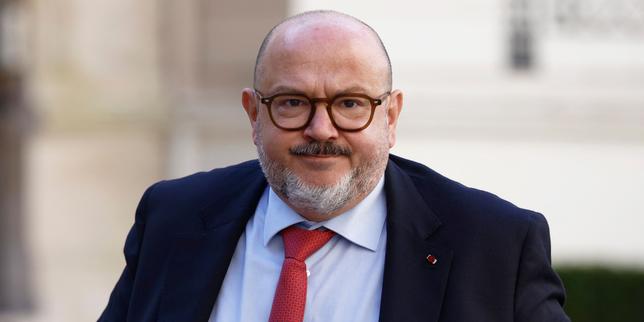
Brussels is no longer just the bureaucratic heart of Europe. It has become a tactical extension of the bloodiest turf war in French history. When Belgian Interior Minister Bernard Quintin recently confirmed that the DZ Mafia—the dominant criminal syndicate from Marseille—is actively operating on Belgian soil, he wasn't just reporting a local spike in crime. He was acknowledging a structural shift in how European drug cartels project power across borders.
The expansion of the DZ Mafia into Belgium represents a predatory evolution. For years, the port of Antwerp served as the primary entry point for South American cocaine, but the distribution and "street tax" enforcement remained largely fragmented among local gangs. That peace is over. Marseille’s most violent export has arrived to consolidate the market, bringing a brand of hyper-violence that the Belgian police are currently ill-equipped to counter.
The Marseille Connection and the Battle for Antwerp
The logic behind this expansion is purely logistical. Marseille is a fortress, but it is also a bottleneck. The DZ Mafia and their rivals, the Yoda clan, have turned the Mediterranean city into a graveyard, with dozens of assassinations recorded annually. However, the real money isn't in the streets of Marseille; it is at the source. By establishing a permanent, armed presence in Belgium, the DZ Mafia is cutting out the middlemen. They are moving from being regional distributors to becoming continental wholesalers.
Antwerp’s port is a massive, porous labyrinth. Despite billions spent on security, the sheer volume of containers makes total surveillance impossible. In the past, Marseille-based groups would hire local Belgian or Dutch crews to "extract" shipments. Now, they are sending their own soldiers. These are young men, often recruited from the housing projects of Marseille’s northern districts, who view a stint in Brussels or Antwerp as a high-stakes business trip. They bring with them a culture of narcocide—public, high-impact executions designed to terrorize competitors into submission.
The Recruitment of the Invisible Proletariat
The most alarming aspect of this shift isn't the drugs; it's the workforce. Investigative leads suggest that the DZ Mafia is leveraging a "gig economy" model for hits and intimidation. They don't need a standing army in Brussels. They use encrypted apps like Telegram and Signal to outsource violence to local minors or undocumented migrants who have nothing to lose.
This creates a layer of deniability that makes traditional police work nearly impossible. When a teenager is caught throwing a grenade at a storefront in Antwerp, he often doesn't even know who paid him. He only knows the digital wallet address that sent the cryptocurrency. This is the new reality of Belgian organized crime: a decentralized, franchise-based system of terror directed from luxury villas in Dubai or hideouts in North Africa.
Beyond the DZ Mafia
Minister Quintin was careful to mention that the DZ Mafia is "not the only one." This is an understatement. Belgium is currently a chessboard for several major players, including the Mocro Maffia—primarily Moroccan-Dutch syndicates—and Albanian clans who control the physical movement of product through the Balkan routes.
The arrival of the Marseille factions has upset a delicate equilibrium. For a long time, the Albanians handled the heavy lifting of logistics while the Mocro Maffia handled the European distribution. The DZ Mafia is the wild card. They are more aggressive, less interested in long-term stability, and more prone to using heavy weaponry in residential neighborhoods. The result is a multi-polar war where the front lines are constantly shifting between the port of Antwerp, the suburbs of Brussels, and the French border.
The Fragility of the Belgian Judicial Response
Belgium’s legal system is buckling under the weight of this narco-onslaught. Prosecutors are overwhelmed. The "Sky ECC" hack, which provided a treasure trove of decrypted messages between criminals, was a massive victory, but it also exposed the terrifying scale of the problem. It showed that the rot isn't just on the streets; it reaches into the port authorities, the police, and even the legal profession.
Corruption is the silent partner of the DZ Mafia. In Marseille, they have perfected the art of "buying" the environment. They offer port workers five years' salary for a single container's location. In Belgium, where salaries are higher but the cost of living is rising, these bribes are proving equally effective. The state is fighting a fire with a water pistol. While the government discusses budget allocations for more cameras, the cartels are buying armored SUVs and high-end thermal imaging gear.
The Strategy of Public Terror
Why the grenades? Why the daytime shootings? To the average citizen, this looks like chaos. To the DZ Mafia, it is a marketing strategy. Violence serves two purposes: it signals to rivals that a territory is no longer "open," and it signals to the state that intervention will be costly.
In Marseille, the "kalash" (Kalashnikov) became a symbol of authority. In Brussels, we are seeing the same pattern emerge. The goal is to create "gray zones" where the police hesitate to enter without significant backup. Once a neighborhood becomes a gray zone, the cartel can set up its points of sale (points de deal) with impunity. This isn't just about drugs; it's about the erosion of state sovereignty.
Belgium is now facing the "Marseille-ification" of its cities. The violence is becoming more performative. We have moved past the era of quiet disappearances. Today’s narco-trafficker wants everyone to see the body. They want the video of the execution to go viral on social media. It is a psychological war designed to paralyze the community and the authorities alike.
A Failure of Borderless Security
The European Union’s greatest achievement—the Schengen Area—is also its greatest vulnerability in the face of organized crime. The DZ Mafia moves men, money, and weapons from the south of France to the heart of Belgium with no more friction than a tourist.
Belgian authorities are pushing for a more unified European response, but the reality is that every country is fighting its own local fire. France is focused on the internal security of Marseille; Belgium is focused on the integrity of the Antwerp port; the Netherlands is struggling with the aftermath of high-profile assassinations of journalists and lawyers. There is no "Narco-Interpol" with the teeth to actually dismantle these networks.
Follow the Money or Follow the Bodies
The current Belgian strategy is reactive. Police respond to a shooting, make an arrest, and wait for the next one. This is a losing game. The only way to actually hurt the DZ Mafia is to strike at their financial infrastructure.
Most of the profits from the Belgian cocaine trade are laundered through complex real estate schemes in Southern Europe or moved into the unregulated financial markets of the Middle East. As long as the "brains" of the operation stay in Dubai and the "muscles" stay in the projects of Marseille, the Belgian front will remain a slaughterhouse.
The Cost of Inaction
We are witnessing the birth of a narco-state in the center of Europe. It doesn't look like Colombia in the 1980s; it looks like a modern European democracy where certain zip codes are simply no longer under government control. The "Marseille connection" is no longer a movie plot. It is a daily reality for residents in Saint-Gilles or Anderlecht who have to explain to their children why there are bullet holes in the bakery window.
The DZ Mafia is a symptom of a larger rot. They are the apex predators of an ecosystem that thrives on the massive European demand for cocaine and the relative ease of moving illicit goods through globalized trade hubs. Minister Quintin’s admission is a start, but it is far from a solution. The state must decide if it is willing to match the cartels' level of commitment. Anything less than a total, coordinated offensive across the entire continent is just managing the decline.
Stop looking at the street dealers. Start looking at the shipping manifests and the offshore accounts. The war for Brussels isn't being fought in the alleys; it's being fought in the ports and the banks. If the authorities don't change their focus soon, the "Marseille-ification" of Europe will be complete, and the state will be nothing more than an onlooker in its own capital.