Ice is never just frozen water. Ask anyone who has laced up skates in the biting wind of a Manitoba winter, and they will tell you it has texture, memory, and a voice. It rings when it is pristine. It groans under pressure. And in late September, inside the humming concrete bowl of the Canada Life Centre, it absorbs the raw, nervous energy of a hundred hockey dreams colliding at terminal velocity.
Outside, the Winnipeg autumn is already painting the prairies in shades of amber and slate, a gentle warning that winter is coming. Inside, the air smells of fresh rubber, sharpening stones, and the sharp, metallic tang of adrenaline.
Most eyes in the hockey world are naturally drawn to the marquee names. Fans talk endlessly about Connor Hellebuyck standing tall in the crease like a monastic wall. They debate whether Mark Scheifele can push his offensive ceiling even higher, or if Nikolaj Ehlers will finally unlock that terrifying, explosive gear that leaves defensemen grasping at thin air. These are the narratives that fill the columns and spark tavern debates across Portage Avenue. They are the safe stories. The comfortable stories.
They are also incomplete.
To truly understand what this franchise is becoming, you have to look away from the marquee. You have to lower your gaze to the fringes of the roster, to the quiet corners of the training camp where players without guaranteed contracts fight for inches of breathing room. This is where the real soul of a hockey team is forged. Not in the multimillion-dollar certainty of the top line, but in the desperate, beautiful scramble of the training camp battles.
Consider a hypothetical player we will call Liam. He is twenty-four years old, drafted in the fifth round half a decade ago, a lifetime in hockey years. He has spent the last three seasons riding the endless asphalt ribbons of the American Hockey League, sleeping in three-star hotels, eating pre-game meals out of cardboard boxes, and playing in minor-league rinks where the goal horn sounds like a dying duck. He has logged thousands of miles for a single persistent dream: one shift. Just one regulation shift under the roaring whiteout of a Winnipeg home crowd.
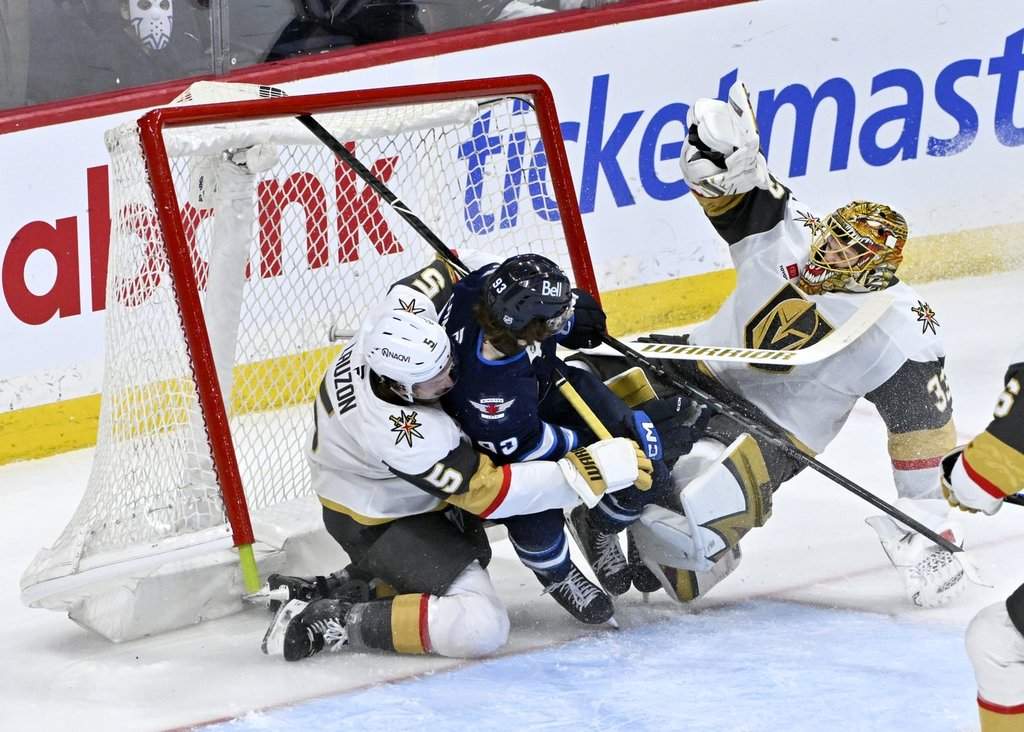
When Liam steps onto the ice for the first day of Jets training camp, he is not thinking about the salary cap. He is not thinking about jersey sales. He is thinking about his stride. Every crossover must be explosive. Every corner battle must end with him emerging victorious, his shoulder wedged firmly into the ribs of an opponent who might be making ten times his salary.
The margin between a roster spot and a one-way ticket back to the minors is thinner than a razor blade. It lives in a fraction of a second. A defenseman pinches too high at the blue line; Liam has to recognize the vacancy, accelerate into the void, and protect the puck with his entire body. If he wins the battle, he survives another day. If he loses it, the coaches make a quiet note on a clipboard, and the dream recedes into the mist.
This is the hidden theater of September. While the casual fan focuses on opening-night lineups and divisional projections, the coaching staff is conducting a brutal, microscopic audit of character. They are watching how a veteran responds to being outskated by a rookie. They are watching how a young prospect handles a mistake without letting his shoulders slump. Hockey is a game played at high speed, but it is coached in slow motion, frame by frame on a video tablet in a darkened room.
The modern NHL fan is sophisticated. We have access to advanced analytics that can measure zone entries, expected goals, and high-danger scoring chances down to the decimal point. We can dissect a player's Corsi rating while drinking morning coffee. Yet, numbers cannot measure the weight of an unwritten future. They cannot quantify what happens in a player's chest when he realizes his window in the best league in the world is closing, and this camp is his last crowbar to pry it open.
Winnipeg occupies a unique place in the hockey ecosystem. It is a city that demands authenticity. You cannot fake grit here, nor can you coast on pedigree. The fans possess an instinctive radar for effort. They have watched legends rise and stumble; they have endured the heartbreak of relocation and the fierce, defiant joy of the franchise's return. When the team takes the ice, the crowd sees a reflection of their own climate: resilient, uncompromising, and deeply loyal.
That loyalty creates an unspoken compact between the sweater and the skater. It dictates that whoever wears the blue, white, and silver must leave everything in the corners. And that standard is never more visible than in the grueling competition of the preseason roster battles.
Look closely at the bottom-six forward group this year. Look at the defensive pairings fighting for the sixth and seventh spots. These are not glamorous roles. These are players who will block shots with their ankles, absorb heavy hits along the boards to cycle a puck, and take the tough defensive zone faceoffs against opposing superstars so the top lines can catch their breath. They are the scaffolding of a contender. Without them, even the most gifted offensive talent collapses under the weight of a long, bruising eighty-two-game schedule.
When a bubble player wins a battle in the neutral zone, strips a puck from an established star, and feeds a transition pass, he is doing more than earning a roster spot. He is sending a shockwave through the entire locker room. He is raising the internal floor of the team. Complacency is a slow poison in professional sports, and nothing flushes it out quite like a hungry twenty-year-old skating through a brick wall for a sweater.
The front office knows this. The coaching staff knows this. But as fans, we often cheat ourselves of the narrative when we ignore these battles. We miss the drama of the climb. We skip straight to the destination and wonder why the journey feels hollow when the postseason arrives.
The season is an epic poem, and the opening chapter is written right now, on the sweat-slicked ice of September. Every drill is a plot twist. Every roster cut is a heartbreak. Every unexpected breakout star is a reminder of why we fell in love with this chaotic, beautiful game in the first place.
So the next time you look toward the horizon of the hockey year, do not just stare at the mountain peak. Look at the steep, rocky slopes where the real climbing is happening. Watch the battles in the corners. Watch the players who have everything to lose fighting for the right to stay in the light.
The ice is waiting. The sound of the skates is sharpening. And the story is just beginning.