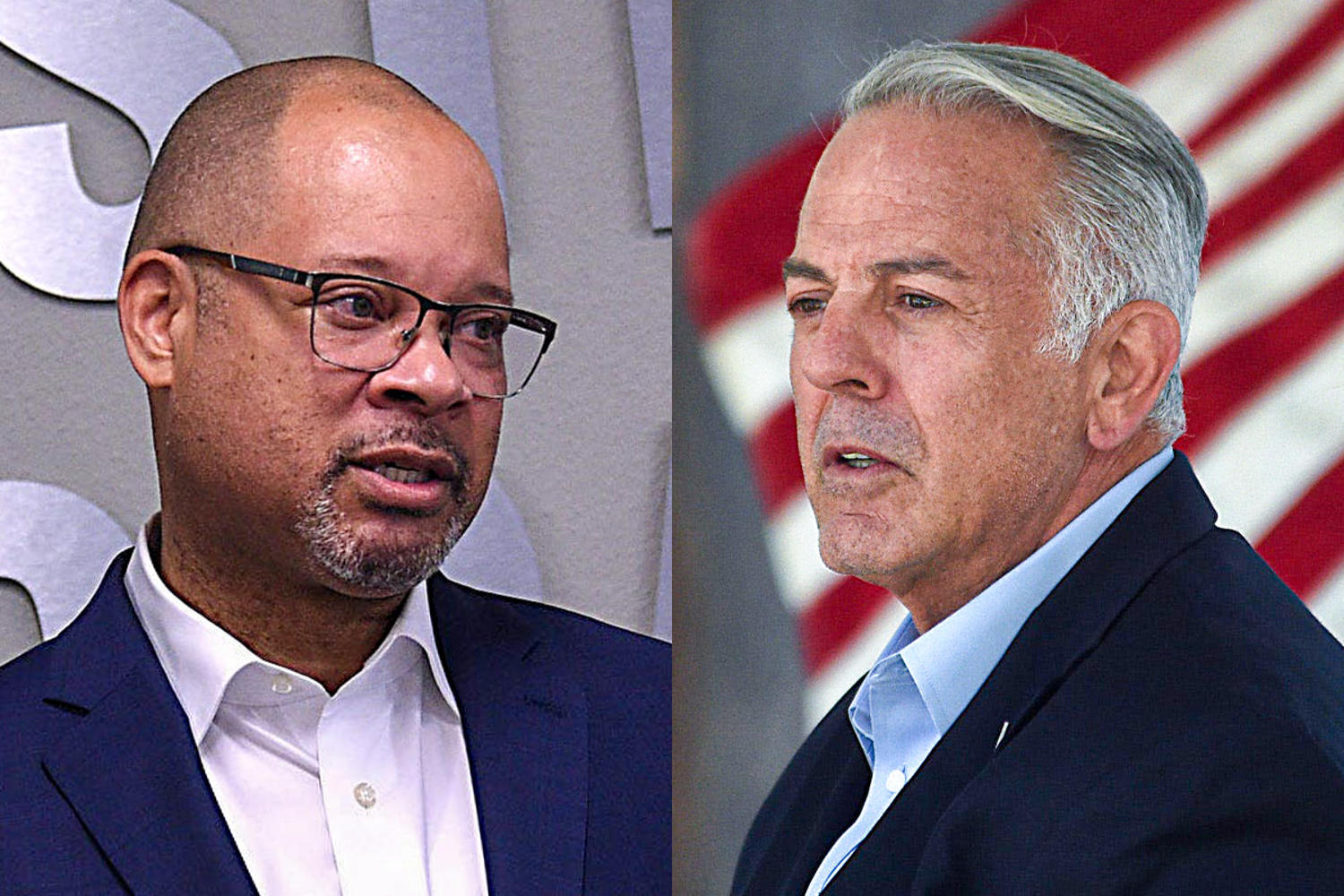
The general election matchup for the Nevada governorship is officially locked in, but the conventional narrative surrounding it is entirely wrong. While national headlines frame the upcoming showdown between incumbent Republican Governor Joe Lombardo and Democratic Attorney General Aaron Ford as a predictable partisan proxy war, the reality on the ground is far more volatile. This election will not be decided by boilerplate campaign talking points. It will be decided by a quiet, systemic economic crisis that is actively reshaping the Silver State.
Nevada is facing an unprecedented structural threat to its foundational industry. National macroeconomic shifts, sweeping federal trade policies, and shifting global travel patterns are colliding to squeeze the state’s economy in ways not seen since the 1970s. For Lombardo and Ford, the race is no longer just about courting base voters in Clark and Washoe counties. It is a high-stakes referendum on who can prevent the state's economic engine from stalling entirely.
The June primary results delivered exactly what political insiders expected, yet the numbers underneath reveal deep voter anxiety. Ford secured the Democratic nomination by sweeping past Washoe County Commissioner Alexis Hill with roughly 65% of the vote. Lombardo comfortably dispatched a field of Republican challengers to secure his spot on the November ballot. On the surface, both candidates look formidable. In reality, both are stepping onto a political battlefield defined by an economic landscape that has grown increasingly hostile over the last eighteen months.
To understand why this race is the most vulnerable gubernatorial defense in the country, one has to look at the data coming out of the Las Vegas Strip and Reno’s commercial hubs.
Nevada’s tourism sector, which directly sustains nearly 30% of all jobs in the region, saw an overall visitor decline of 7.5% over the past year. Excluding the anomalies of the pandemic lockdowns, this represents the sharpest drop in foreign and domestic visitation the state has recorded since it began tracking the metric in 1970. The primary culprit is a dramatic contraction in foreign tourism. Canadian visitors, who historically make up half of all international travelers to Las Vegas, slashed their travel to the state by 17%.
This is where the race shifts from a local policy debate to a referendum on national governance.
NEVADA TOURISM BREAKDOWN (NON-PANDEMIC DECLINE)
===================================================
Overall Visitor Drop:      -7.5% (Worst since 1970)
Canadian Visitor Drop:     -17.0%
Tourism Share of Regional Jobs: ~30%
Ford has wasted no time tying these brutal economic indicators directly to federal policies, explicitly blaming the administration's aggressive tariff structures and immigration enforcement for choking off the international consumer base that keeps Nevada afloat. As the state’s top law enforcement officer, Ford has weaponized his office, signing onto more than 40 lawsuits challenging federal mandates. His campaign strategy is clear: paint Lombardo as a passive bystander who is too timid to defend Nevada’s economic interests against damaging national party policies.
Lombardo, conversely, finds himself in a delicate political vice. He carries the endorsement of the federal administration, a crucial asset for maintaining his conservative base in rural strongholds like the 2nd Congressional District. Yet, the governor has privately and publicly acknowledged the unique peril of his position. In a candid admission to national media earlier this year, Lombardo confessed to being deeply concerned about his re-election prospects, noting that the old adage of "all politics is local" has been thoroughly obliterated. Nevada's heavy reliance on global discretionary spending means that international trade disputes and shifting federal monetary policies dictate local realities far more than any bill signed in Carson City.
The structural hurdles facing Lombardo are formidable. Nevada has historically leaned blue in presidential cycles, and the state's federal delegation is dominated by Democrats, including two sitting U.S. Senators. Lombardo broke through in 2022 by running an aggressive, hyper-focused campaign that blamed then-Governor Steve Sisolak for the devastating economic hangover of pandemic-era business closures. He won by a razor-thin 1.5 percentage points.
But the political capital gained from the post-pandemic backlash has completely evaporated. Voters are no longer looking backward at 2020 lockdowns; they are looking at the immediate pressure of the present.
Nevada currently grapples with some of the highest fuel prices in the nation, a chronic shortage of affordable housing, and recent federal contractions in healthcare and food assistance programs. Ford’s campaign manager, Zoë Kleinfeld, is actively exploiting these pain points by building a multiracial, working-class coalition designed to cut directly into Lombardo's moderate suburban support in Clark County.
Ford brings significant structural advantages to this fight. As the highest-ranking elected Democrat statewide, his name recognition is formidable. He is also a proven statewide winner, having secured re-election as attorney general by the largest margin of any Nevada Democratic incumbent in state history. His campaign will heavily lean on his tangible record, particularly the extraction of more than $1.1 billion in settlements from major pharmaceutical manufacturers and distributors to combat the state's opioid epidemic.
Yet, Ford’s path is not without its own vulnerabilities. For all his efforts to distance himself from local economic blame, his party has held legislative majorities in Carson City. If Lombardo can successfully pivot the conversation away from federal tourism drops and focus instead on state-level affordability, inflation, and the cost of living, he can shift the defensive burden back onto the challenger.
The political reality of Nevada remains fiercely independent. Nonpartisan voters now represent a massive, unpredictable slice of the electorate, routinely outnumbering registered members of both major parties in critical swing districts. These voters are notoriously transactional. They do not care about partisan loyalty, federal lawsuits, or Mar-a-Lago endorsements. They care about their rent, their grocery bills, and whether the casinos are busy enough to guarantee their tip income and overtime hours.
The campaign that successfully demystifies these complex economic anxieties and offers a credible blueprint for stabilizing the state's financial core will win the building in Carson City. The traditional playbook of running on cultural grievances or partisan alignment will not work in a state where the tourism engine is visibly sputtering. Both candidates are staring down a razor-thin margin of error, and the final stretch will be a brutal, unsparing test of political survival.