The air down by the water smells of brackish river water, old mud, and the sharp, chemical tang of a city rebuilding itself. On a humid Sunday afternoon, the usual hum of Washington traffic is replaced by something far heavier. A motorcade. Black SUVs idle on the cracked asphalt of East Potomac Park, their exhausts cutting through the thick summer air.
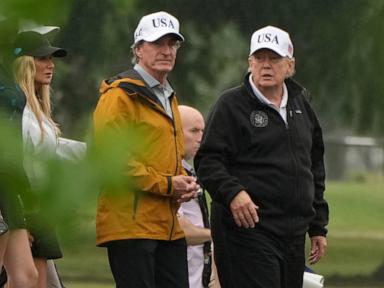
At the center of it all stands the President. He is squinting at the turf of East Potomac Golf Links, a sprawling patch of public land that has long served as the messy, democratic heart of Washington golf. Beside him are Interior Secretary Doug Burgum and the legendary golf architect Tom Fazio. They are looking past the patchy grass and the outdated sprinklers, visualizing something grander.
The President envisions a stage for the world. He sees the U.S. Open. He sees the Ryder Cup. He sees the PGA Championship. In a flurry of social media posts, he promises that a massive overhaul will begin on September 1, transforming this public park into a championship venue capable of hosting golf’s greatest spectacles.
But look closer at the ground beneath their feet. The transformation is not just a matter of moving dirt and planting pristine bentgrass. It is a collision of worlds.
For decades, East Potomac has been the place where the real Washington plays. This isn't the Washington of dark-suited lobbyists and high-dollar fundraisers at exclusive country clubs. This is the Washington of congressional staffers, schoolteachers, taxi drivers, and retirees who pull their clubs out of worn trunks to play a cheap round within eyesight of the Washington Monument. It is a rare sanctuary where the sport strips off its country-club armor and becomes accessible to anyone with twenty dollars and a desire to walk the fairways.
Now, that sanctuary is a battleground.
The proposed redesign would swallow the existing layout, replacing three distinct public courses—including a short, beginner-friendly par-3 course—with a massive, 7,660-yard championship course. To put that in perspective, only a handful of courses in the entire region would be longer. It is a design built specifically to challenge the modern professional golfer, to test the limits of the game, and to attract the global spotlight.
But a grand vision rarely fits neatly into an existing ecosystem. The project is currently tangled in a lawsuit in U.S. District Court. The National Links Trust, a nonprofit that had previously secured a 50-year lease to restore the public courses without skyrocketing the prices, finds itself pushed aside. Local golfers fear that the soul of affordable, accessible recreation in the District is being systematically erased to make room for a playground meant for elite professionals and international television audiences.
Then there is the physical reality of the land itself.
East Potomac Park is a peninsula, a slice of land caught between the Potomac River and the Washington Channel. It is sinking. The historic seawall that protects the park requires a massive infrastructure investment, with estimates soaring toward $600 million just to keep the water at bay.
Worse yet, the ground is carrying a quiet, toxic burden. Debris from the demolition of the White House East Wing was recently dumped on the golf course grounds. A National Park Service report revealed that the soil has tested positive for lead, chromium, and other toxic metals. What looks like a simple construction project is, in reality, an environmental puzzle wrapped in an administrative war.
The logistics of hosting a major tournament present an even steeper climb. Golf's governing bodies plan their schedules decades in advance. The U.S. Open has its venues locked in through 2051, with only a few open slots left in the late 2043 or 2046 calendars. The PGA Championship is completely booked through 2035. The dream of bringing a major to Hains Point is a vision cast far into an uncertain future.
Beyond the legal briefs and the toxic soil tests, the battle is deeply political. The President's motorcade didn't just stop at the golf course. It rolled past Lafayette Park and paused where he intends to construct a massive triumphal arch. It is an assertive display of federal power over a city that has long fought for its own self-governance.
The local resistance has a face. Janeese Lewis George, who recently won the Democratic primary for Washington's mayor, has become a central figure in the friction. The President labeled her a "Communist" in his social media dispatches, setting a combative tone before they even sit down to meet.
Lewis George is walking a tightrope that every local D.C. leader knows by heart. She has stated publicly that she will work with anyone, including the administration, if it serves the best interests of D.C. residents. But she has drawn a hard line against pre-emptive compliance that could compromise the independence of the locally elected government.
So the park sits in suspense. On one side is a vision of global prestige, towering grandstands, and the roar of a gallery watching the world’s best golfers attack a pristine, Fazio-designed masterpiece. On the other side is the memory of generations of ordinary citizens who found a home in the rough patches of a flawed, public park.
The bulldozers are scheduled to arrive on September 1, but the true shape of East Potomac Park will be decided long before then, in courtrooms and city council chambers, where the city's identity is constantly being rewritten.
Analysis of Trump's fixation with the D.C. golf course offers an insightful breakdown of why this specific piece of land has become such a high-priority fixation for the administration and what it reveals about the competing forces fighting for control over the nation's capital.