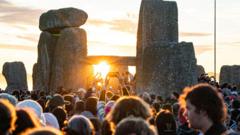
Thousands gathered at Stonehenge this morning to witness the summer solstice sunrise, a annual ritual that routinely captures national headlines with picturesque images of pagan celebrants, druids, and tourists greeting the dawn. Yet beneath the surface of this yearly spectacle lies a complex, decades-long clash over land access, cultural heritage, and commercialization. What the public sees as a peaceful celebration of nature is actually a carefully managed compromise resulting from intense security operations and deep-seated ideological disputes.
The summer solstice marks the longest day of the year. For centuries, this astronomical event has drawn people to Wiltshire's ancient stone circle, where the rising sun aligns precisely with the Heel Stone. While casual observers view the gathering as a harmless eccentric tradition, English Heritage, the charity managing the site, views it as a high-stakes logistical challenge. Balancing the preservation of a 5,000-year-old monument with public access requires a delicate touch. It often leaves both heritage purists and spiritual practitioners dissatisfied. Meanwhile, you can read other developments here: The Empty Gate at Midnight.
The Closed Circle
For most of the year, visitors to Stonehenge are kept at a distance. They walk along a designated pathway, forbidden from touching the stones to prevent erosion and vandalism. The solstice is the rare exception. For a few hours, the barriers come down, allowing thousands into the central pasture.
This open access was not granted willingly. It was won through decades of friction. To see the bigger picture, check out the excellent analysis by Condé Nast Traveler.
During the 1970s and 1980s, the Stonehenge Free Festival turned the solstice into a month-long counter-culture gathering. It grew massive. It grew unmanageable. The escalation culminated in 1985 with the Battle of the Beanfield, a violent confrontation between police and a convoy of New Age travellers. Following that clash, a strict exclusion zone was enforced around the stones for fifteen years.
Public access only returned in 2000 under a managed open access policy. Today's peaceful gathering is heavily policed. Private security guards outnumber the druids. Drones hover overhead. The atmosphere is less an anarchic celebration of nature and more a highly regulated outdoor festival, complete with bag searches and alcohol bans.
The Cost of Spiritual Tourism
Managing thousands of people on a fragile archaeological site costs money. English Heritage provides the access for free, but the surrounding infrastructure is heavily monetized. Parking fees are steep. Concession stands line the approach.
This commercial reality frustrates traditional pagan communities. To them, the solstice is a sacred religious holiday, not a tourist attraction. They argue that fencing off the monument and charging for basic amenities during the rest of the year alienates the local population from its own history.
Consider a hypothetical scenario where a historic cathedral charged a mandatory entry fee to local worshippers except for one day a year, while surrounding the building with corporate sponsors. The outcry would be immediate. Yet, because the belief systems associated with Stonehenge are non-traditional, the commercialization of the site faces less mainstream scrutiny.
The influx of casual tourists also creates friction with serious practitioners. The quiet contemplation required for dawn rituals is frequently disrupted by festival-goers who view the event primarily as an all-night party. Drums drown out chants. Litter scatters across the sacred landscape.
Infrastructure Versus Heritage
The debate over the solstice is inseparable from the wider conflict regarding the transport infrastructure surrounding Salisbury Plain. For years, the A303 highway, which passes directly past Stonehenge, has been a notorious traffic bottleneck.
The government's proposed solution is a multi-billion-pound road tunnel.
Proponents argue the tunnel will remove the sight and sound of traffic from the monument, restoring the tranquil setting of the ancient landscape. Archaeologists and environmentalists are horrified. They warn that digging a tunnel through a UNESCO World Heritage site will inevitably destroy undiscovered artifacts and alter the water table, potentially damaging the stability of the stones.
The solstice highlight emphasizes this tension. The thousands who drive to the site every June rely on the very road network that threatens to disrupt the surrounding archaeological landscape. The gridlock on the morning of the solstice is a physical manifestation of the unresolved argument between modern utility and historical preservation.
A Fragile Compromise
The summer solstice at Stonehenge will continue to draw crowds. The human desire to connect with cyclical cosmic events is deep-rooted. However, treating the event as a simple feel-good news story ignores the ongoing struggle over who truly owns British heritage.
English Heritage must protect the stones. The pagans want to worship them. The tourists want to photograph them. The state wants to build roads near them. As the sun rises over the Heel Stone each year, it illuminates a temporary truce, not a permanent peace.