The bass hits your sternum first.
If you have ever stood inside an arena during the Latin Grammy Awards, you know that the television broadcast lies to you. On a screen, the show looks like a sleek parade of designer gowns, choreographed pyrotechnics, and polite applause. In the room, it is loud, chaotic, humid, and deeply personal. The air smells like expensive cologne, hairspray, and the faint metallic tang of stage fog. People shout across aisles in three dialects of Spanish and two kinds of English. It feels like a family wedding where half the cousins just won international awards and the other half are arguing about the seating chart. If you enjoyed this article, you should look at: this related article.
For decades, the unspoken rule of this room was simple. Leave the heavy stuff at the valet stand. Bring the glamour, bring the heartbreak ballads, bring the reggaeton beats that shake the rafters, and save the speeches for thanking your mother, your producer, and God. Politics was supposed to stay outside, pacing the sidewalk with the protesters and the paparazzi.
Then came November 2026. For another angle on this story, check out the latest update from Rolling Stone.
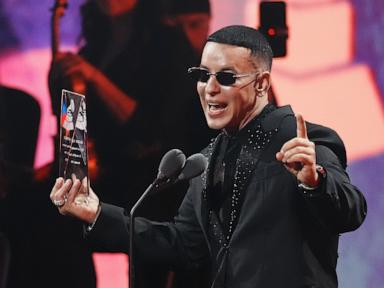
And suddenly, the man holding the golden gramophone wasn't just a Tejano heartthrob from Edinburg, Texas. He was a congressman-elect.
When Bobby Pulido stepped into the spotlight at the Latin Grammys, the applause carried a different frequency. It wasn't just the nostalgic roar of fans who remembered dancing to Desvelado in South Texas dance halls back in 1995. It was the sound of a cultural tectonic plate grinding against a political one. Pulido had just won his race for Texas's 15th Congressional District, trading tour buses and late-night encores for committee hearings and Capitol Hill office suites. Yet here he was, standing under the hot lights of Latin music's biggest night, living proof that the wall between the recording studio and the ballot box had finally crumbled.
Here is the catch. Bobby Pulido wasn't an anomaly. He was barely even the headline.
If you watched the broadcast closely—or better yet, if you listened to the quiet conversations happening in the corridors behind the stage—you realized that Pulido was just one note in a much louder, far more complicated symphony. Across the telecast, politics didn't sneak onto the stage through a side door. It kicked the front door off its hinges. From pointed acceptance speeches about immigration and border communities to songs rewritten on the fly to protest economic instability in Latin America, the 2026 Latin Grammys became a mirror of a hemisphere in the middle of an identity crisis.
To understand why this matters, you have to stop looking at award shows as empty distractions and start seeing them for what they really are. They are pressure valves. When millions of people feel unheard by the institutions meant to represent them, they turn to the artists who speak their language. Literally.
The Myth of the Apolitical Stage
We like to pretend that music and politics are oil and water. Fans say it all the time on social media. Just sing. Stick to the music. Keep your opinions to yourself.
That nostalgia for an apolitical golden age is a fiction. Music has always been a Trojan horse for political reality. Think back to the Nueva Canción movement of the 1960s and 1970s, when artists like Mercedes Sosa and Víctor Jara armed themselves with acoustic guitars against military dictatorships, paying for their lyrics with exile or their lives. Think about Rubén Blades turning salsa into a newspaper for the working class of Panama and New York, writing songs about disappearances, poverty, and broken promises while people danced their shoes off in crowded clubs.
Even so, the modern corporate award show tried hard to sand down those sharp edges. Sponsors hate controversy. Television networks love predictability. For years, the Latin Recording Academy walked a tightrope, celebrating the immense commercial explosion of Latin music—a genre that now dominates global streaming charts—while keeping the political temperature safely below a simmer.
That containment strategy broke down because reality refused to cooperate.
Consider a hypothetical viewer watching the show from a living room in McAllen, Texas, or Queens, New York. Let's call her Elena. Elena is thirty-eight, works two jobs, and puts the Latin Grammys on every November because it is the one night of the year when her culture takes center stage on prime-time network television without an asterisk. When Elena watches Bobby Pulido take the stage, she isn't thinking about campaign finance disclosures or House committee assignments. She is thinking about her father, who played Pulido's cassettes in the cab of his pickup truck while hauling produce across the Rio Grande Valley. She is thinking about whether the guy who sang about small-town heartbreak actually understands what happens to the price of groceries when border trade slows down.
That is the invisible stake at play here. When an entertainer enters Congress, or when a pop star uses ninety seconds of live television to call out government neglect, the audience isn't judging a policy paper. They are testing authenticity.
Why Bobby Pulido Changed the Room
Bobby Pulido's journey from Tejano royalty to Capitol Hill is easy to caricature if you only read the headlines. Critics love to reduce celebrity candidates to punchlines, comparing every musician-turned-politician to Sonny Bono or Ronald Reagan without bothering to look at the local soil that grew them.
Pulido didn't drop out of the sky into a congressional district. He grew up in the Rio Grande Valley, the son of Tejano legend Roberto Pulido, spending thirty years traveling the highways between San Antonio, Corpus Christi, and Brownsville. In South Texas, Tejano music isn't background noise. It is the regional nervous system. Every quinceañera, every county fair, every high school graduation runs on accordion riffs and bilingual lyrics that blend Mexican ranchera tradition with Texas country and pop.
When Pulido announced his run for Congress in Texas's 15th District—a sprawling, fiercely contested strip of land stretching from the outskirts of San Antonio down to the Mexican border—political consultants in Washington scratched their heads. The district had swung dramatically toward Republicans in recent election cycles, turning what used to be a reliable Democratic stronghold into one of the most expensive battlegrounds in the country. Both parties spent millions trying to figure out how to talk to South Texas voters. They tested focus-grouped slogans. They bought Spanish-language radio ads voiced by actors from Miami or Los Angeles who couldn't pronounce local town names properly.
Pulido didn't need a focus group. He already knew the names of the towns because he had played VFW halls in half of them.
By the time he walked into the Latin Grammys as an incoming member of Congress, his mere presence in the room felt like a rebuke to traditional political consultants everywhere. He hadn't won by memorizing talking points. He won because cultural familiarity is a currency that super PAC money cannot buy. Watching him navigate the red carpet—greeting fellow musicians with warm embraces while fielding questions from political reporters about border infrastructure and healthcare costs—showed just how blurry the boundary between celebrity and civic power has become.
Yet if Pulido represented the institutional side of politics stepping onto the stage, the rest of the night showed what happens when politics arrives without an invitation.
The Night the Teleprompter Lost Control
Anyone who has ever worked live television knows the terror of the unscripted moment. Producers sit in a dark truck outside the arena, watching forty monitors, praying that the winners stick to the thirty-second clock and keep their hands off the third rail.
At the 2026 Latin Grammys, the third rail was everywhere.
Early in the broadcast, a veteran singer-songwriter accepted an award in a technical category that usually gets rushed through before a commercial break. Instead of reading a list of studio engineers off a crumpled piece of paper, he looked straight into the red tally light of the main camera and spoke quietly about artists disappearing from public life in countries where criticizing the state carries a prison sentence. No shouting. No profanity. Just thirty seconds of calm, devastating clarity that sucked the oxygen out of the arena.
Half an hour later, a younger urban artist—someone whose music usually lives on gym playlists and nightclub speakers—turned a high-energy performance into a visual protest. Halfway through the song, the flashy LED graphics behind the dancers cut to stark black-and-white imagery of flooded neighborhoods and shuttered schools, accompanied by a verse rewritten specifically for the broadcast. The crowd erupted, not with the polite applause reserved for industry insiders, but with the guttural roar you hear at a soccer match when the underdog scores in injury time.
Backstage, the energy shifted instantly. Publicists hovered nervously near the press room, whispering to their clients before they stepped up to the microphones. Reporters who had prepared softball questions about tour dates and fashion designers suddenly found themselves asking about migration policy, inflation, and the responsibilities of fame.
Why did it all spill over at once? Because Latin music is no longer a niche category fighting for scraps of mainstream attention. It is a multi-billion-dollar global engine. According to the Recording Industry Association of America, Latin music revenue in the United States has surged past the $1.4 billion mark, growing faster than the overall music market year after year. When you hold that much cultural real estate, silence stops looking like neutrality. It starts looking like complicity.
The Trap of the Celebrity Savior
I will admit something that makes both political junkies and music fans uncomfortable. Watching artists become political vessels is thrilling, and it is also deeply risky.
We have a bad habit of asking musicians to do the work that our political institutions fail to do. When Congress deadlocks, when local mayors ignore crumbling roads, when immigration reform stalls for the third decade in a row, people look to the stage for someone who feels real. We want a song to fix a broken system. We want a famous face to carry the weight of a million unreturned phone calls from government agencies.
Think of it like using a flare gun to light a dark house. A flare is brilliant. It cuts through the pitch black, shows you where the walls are, and tells everyone within five miles that someone needs help. Nobody can ignore a flare.
You cannot heat your living room with it, though. And if you hold onto it too long, it burns your hand.
That is the tension sitting right on Bobby Pulido's shoulders as he prepares to swap his stage boots for dress shoes on Capitol Hill. On the campaign trail and on the Latin Grammy red carpet, he gets to be the symbol—the native son who made good, the bridge between culture and power. Come January, the music stops. He will have to vote on massive omnibus spending bills where every choice angers half his district. He will sit through four-hour subcommittee hearings on agricultural water rights and Medicare reimbursement rates. There will be no encore when a bill dies in committee.
The same danger applies to the artists who stayed on the stage that night. Speaking truth to power during an award show takes courage, especially when corporate sponsors and authoritarian governments alike keep lists of who said what. Still, an acceptance speech is a beginning, not an outcome. Fans have sharp memories. If an artist uses a global broadcast to champion working-class struggle on Thursday night and launches a $400 luxury sneaker collaboration on Friday morning, the audience notices the math immediately.
What the Noise Actually Means
Step back from the flashing cameras and the endless cable news chatter, and a clearer picture emerges.
The real story of the 2026 Latin Grammys wasn't that celebrities suddenly discovered politics. It was that politics finally caught up to a demographic reality it spent decades ignoring.
For years, political strategists treated Latino voters and Latin music audiences as a monolith—a single block to be unlocked with one clever ad campaign or one celebrity endorsement every four years. That lazy thinking is dead. Inside that arena, you could see the entire messy spectrum of modern Hispanic and Latin American identity standing shoulder to shoulder. There were conservative Tejano traditionalists from Texas, progressive indie rockers from Mexico City, Afro-Caribbean trap stars from San Juan, and pop balladeers from Madrid and Bogotá. They do not vote the same way. They do not agree on taxes, border enforcement, or foreign policy.
What they share is an insistence on being seen in full, without translation and without permission.
When Bobby Pulido walked past the velvet ropes with a congressional pin waiting in his future, and when fellow winners used their microphones to name the struggles of their communities out loud, they were doing the exact same thing. They were refusing to leave half of themselves at the door.
The arena empties out eventually. Roadies roll black flight cases across the scuffed concrete floor, coiling miles of audio cable while sweepers push confetti into gray plastic bins. By morning, the stage is bare metal scaffolding again. Bobby Pulido packs his tuxedo into a garment bag and catches an early flight back to South Texas, where constituent town halls and legislative briefing binders are already stacked on his desk, waiting for the music to fade so the real work can begin.