Every time an authoritarian government bans a book, Western commentators pop champagne and declare the regime terrified.
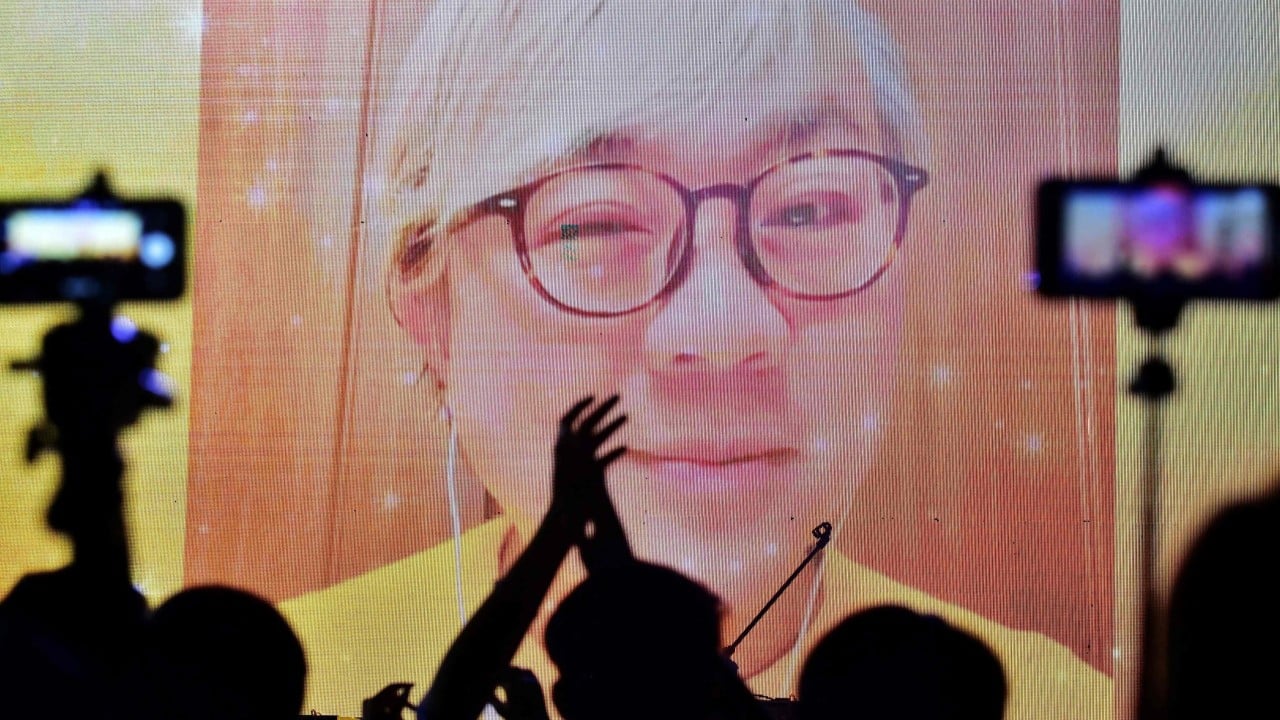
They point to an exiled Thai dissident laughing from a safe distance in Japan or France, mocking the bureaucrats in Bangkok who just slapped a national security ban on a history textbook. The mainstream narrative writes itself. The state looks insecure. The critic looks brave. The banned book becomes an instant underground sensation. Everyone applauds the Streisand Effect and moves on to the next news cycle.
That consensus is dangerously naive.
If you actually study how modern information control works—not from a comfortable newsroom in London, but by analyzing how states dismantle opposition networks over decades—you realize the Bangkok censors are not panicking. They are executing a cold, calculated strategy that works precisely because the exiled critic is laughing.
The Myth of the Clumsy Censor
The lazy analysis treats censorship like a failed PR stunt. When Thai authorities invoke national security laws to ban a textbook examining the monarchy or modern political history, outside observers judge the move by Western media metrics. By those metrics, generating bad press and handing your opponent a viral talking point is an unforced error.
Authoritarian bureaucracies do not care about Western media metrics. They care about institutional friction.
I have spent years tracking state-level censorship across Southeast Asia, and the pattern never changes. The goal of banning a physical or digital text on national security grounds is rarely to erase the words from the earth. The state knows PDFs exist. The state knows VPNs exist.
The real objective is to criminalize the infrastructure of distribution.
When a book sits legally on a university syllabus, professors assign it, bookstores stock it, and students debate it in public daylight. It becomes normalized civic knowledge. The moment the Royal Gazette publishes a ban, that infrastructure vanishes overnight.
- University administrators quietly scrub the title from reading lists to protect their budgets.
- Local printers refuse to touch the manuscript out of fear of asset seizure.
- Everyday citizens stop sharing excerpts on public feeds because the legal risk shifts from civil annoyance to a decade in prison under statutes like Section 112 or the Computer Crime Act.
The exiled critic gets a few thousand retweets from diaspora activists and foreign journalists. Meanwhile, inside the country, an entire generation of students loses casual, frictionless access to the text. Trade one viral news cycle for twenty years of institutional erasure. Any authoritarian strategist will take that deal every single day.
Why Exiled Mockery Plays Into the State's Hands
Look closely at the dynamic when a dissident abroad mocks a domestic ban.
Exile is a slow-acting poison for political relevance. The longer an activist lives outside the borders, the more their rhetoric shifts to please an international audience rather than speaking the quiet, coded language required to survive inside the country.
When an exiled scholar or activist laughs at Bangkok's censors, they are performing for two groups: fellow exiles and Western human rights observers. To someone sitting in Chiang Mai or Khon Kaen, watching a critic mock the military or royalist establishment from the safety of Kyoto does not inspire immediate revolt. Often, it highlights the massive gap between the critic's safety and the local citizen's vulnerability.
State propaganda units understand this psychological divide intimately. They do not need to refute the textbook's historical arguments. They simply let the exiled author mock the state, then quietly frame the entire book as a foreign-backed provocation designed to destabilize domestic peace from afar.
The critic wins the moral high ground on social media. The state wins the domestic framing war.
The Streisand Effect Has a Hard Ceiling
Media theorists love citing the Streisand Effect—the phenomenon where hiding information only draws more attention to it. It makes for a great soundbite, yet it fails completely when applied to high-coercion environments.
The Streisand Effect works in low-stakes democracies where curiosity carries zero personal cost. If a celebrity sues to hide a photo of their beachfront house, millions of people look at it because clicking a link cannot get them arrested.
In a high-coercion state, curiosity carries an asymmetric penalty.
A spike in Google searches or Telegram downloads during the first forty-eight hours after a ban is meaningless noise. Traffic collapses within two weeks. Why? Because reading a banned PDF in private does not build a political movement. Movements require public assembly, shared physical spaces, legal publishing houses, and academic legitimacy. Censorship destroys the coordination mechanisms while leaving the isolated individual alone with a screen.
What People Get Wrong About National Security Bans
When news breaks of a textbook ban in Thailand, the internet immediately floods with predictable questions rooted in democratic assumptions. Let us dismantle the most common misconceptions.
Does banning a textbook actually stop people from reading it?
No, and nobody in the Ministry of Digital Economy or the security apparatus expects it to. Stopping 100 percent of readership is an impossible metric. The state only needs to reduce readership among the non-ideological majority—the casual students, civil servants, and middle-class voters who determine political stability. Hardcore dissidents will always find the text. The state already knows who they are. Censorship is built to quarantine the fence-sitters.
Why do governments still ban books in the internet age?
Because physical and legal bans establish clear red lines for institutional self-censorship. Digital files are slippery, yet institutions are rigid. A university department, a public library, or a commercial publisher has a physical address, bank accounts, and licenses that the state can revoke with a single signature. Banning a book forces every institutional gatekeeper in the country to become an unpaid enforcement agent for the government.
Is mocking the censors an effective resistance strategy?
It is effective for personal branding and fundraising abroad, yet largely ineffective for shifting domestic power balances. Humor and ridicule work brilliantly when a regime is already fracturing from within or facing acute economic collapse. When a state apparatus remains cohesive, mocking its bureaucrats from exile merely confirms to hardliners that their enemies are out of touch with local realities.
The Uncomfortable Truth About Information Warfare
Political scientists like Margaret Roberts, who wrote the definitive research on modern censorship mechanics in Censored, proved that states rarely rely on total blackouts anymore. Instead, they rely on friction and flooding.
- Friction raises the time, money, or legal risk required to access forbidden information. Banning a textbook is pure friction. You turn a five-dollar bookstore purchase into a legal hazard requiring encrypted tools and foreign networks.
- Flooding drowns out banned narratives with state-approved history, patriotic spectacle, and coordinated online harassment.
Look at how this plays out on the ground. While the exiled critic celebrates a spike in international press coverage, domestic publishers quietly cancel three other borderline manuscripts they had in the pipeline. Authors begin editing themselves before a single word hits the page. Academics choose safer research topics to avoid losing their tenure or facing sedition charges.
This is the chilling effect in its purest form, and it requires zero additional effort from the police. One high-profile ban paralyzes an entire industry for years.
The Downside of the State's Playbook
To be entirely clear, this strategy is not invincible. Heavy-handed bans carry a severe long-term cost for the state: institutional rot.
When a government criminalizes critical history and forces its brightest scholars into exile, it blinds itself. Policy-makers end up surrounded by sycophants who repeat state-approved myths rather than diagnosing real societal fractures. Over time, the gap between official history and lived reality grows so wide that young citizens stop believing anything the state says—not just about history, but about economics, public health, and governance.
You can ban a textbook, yet you cannot ban the quiet cynicism that spreads through a classroom when students realize their teachers are afraid to answer basic questions.
Stop Measuring Resistance by Viral Moments
If dissidents, journalists, and democracy advocates want to understand what is actually happening in places like Thailand, they need to stop grading political battles like social media campaigns.
- Stop treating viral outrage as a policy victory. A trending hashtag in Washington or Tokyo does not reopen a banned publishing house in Bangkok.
- Track institutional compliance, not online mockery. Watch what universities, bookstores, and domestic media outlets do thirty days after a ban. That is the true scorecard of power.
- Value domestic resilience over exiled spectacle. The people doing the hardest work are not the ones mocking authorities from abroad; they are the local educators and writers finding subtle, legal ways to keep critical thinking alive inside the borders without getting thrown in a cell.
The exiled critic gets the applause. The state keeps the territory. Until observers learn to tell the difference between a loud tweet and actual leverage, they will keep cheering while the walls close in.


