A suspected Ukrainian drone strike has hit a Russian vessel in the Gulf of Finland, shattering the last illusion that Moscow's northern maritime lifeline remains insulated from the war in Ukraine. Rather than condemning the strike or pleading for restraint to protect regional shipping lanes, the Finnish Prime Minister stated flatly that Kyiv holds the right to retaliate against Russian aggression. That single diplomatic endorsement transforms a localized maritime incident into a structural shift in Northern European security. It signals that NATO's newest Baltic flank will no longer provide political cover for Russian logistics operating right off its coastline.
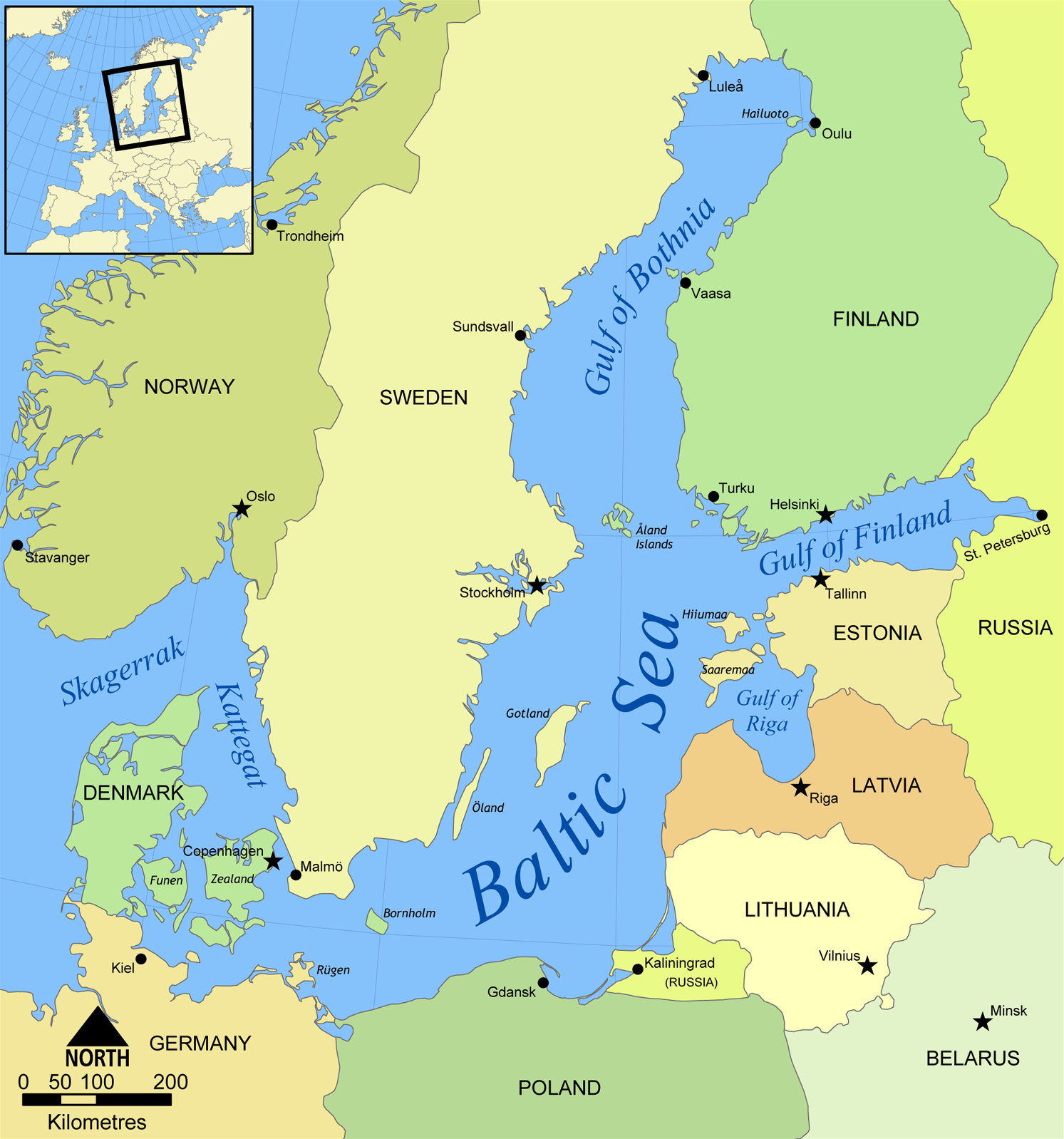
For years, defense analysts treated the Black Sea as the primary laboratory for asymmetric naval warfare while viewing the Baltic Sea as a tense but largely static deterrence zone. That distinction just evaporated. The Gulf of Finland is a narrow, congested maritime corridor wedged between NATO members Finland and Estonia, serving as the sole western maritime exit for St. Petersburg and Russia's primary Baltic energy terminals. When unmanned systems reach a Russian hull in those waters, the message goes far beyond hull damage. It tells shipping insurers, port operators, and Kremlin planners that distance no longer guarantees immunity.
Geography Turned Into a Trap
Look at a nautical chart of the eastern Baltic and the strategic vulnerability jumps off the page. To reach open ocean from St. Petersburg, Primorsk, or Ust-Luga, every Russian-linked tanker and cargo vessel must thread a needle roughly 40 to 70 nautical miles wide. To the north sits Finland. To the south sits Estonia. Both nations belong to NATO, and both have spent the past several years hardening their coastal surveillance, electronic warfare posture, and naval coordination.
Russia has relied heavily on this northern corridor to keep its wartime economy breathing. As Western sanctions tightened around maritime transport and G7 price caps squeezed traditional oil trade, Moscow assembled a sprawling network of aging, opaque vessels commonly known as the shadow fleet. These ships routinely transit the Gulf of Finland carrying crude oil and refined products toward global buyers, generating the hard currency that funds the Kremlin's military machine.
Until now, those transit routes enjoyed an unspoken buffer. Kyiv focused its maritime drone campaign on the Black Sea Fleet, systematically forcing Russian warships out of Sevastopol and reopening Ukrainian grain corridors. Striking deep into the Baltic required solving a completely different set of operational problems.
The Operational Reality of Long-Range Strikes
Moving the fight to the Gulf of Finland demands either extraordinary range, covert launch platforms, or sophisticated navigation through heavily monitored airspace and waters. Unlike the Black Sea, where Ukrainian forces launch unmanned surface vessels directly from their own coastline, the Baltic sits more than a thousand kilometers north of Ukrainian territory.
Whether the strike relied on long-range aerial drones flying overland corridors, sea-launched systems deployed from commercial vessels, or covert operatives working closer to the coast, the operational achievement is identical. Russian air defense and electronic warfare umbrellas around the Leningrad Oblast failed to stop a strike on a maritime asset in their own backyard.
Moscow has invested heavily in GPS jamming across the Baltic region over the past two years, disrupting thousands of commercial flights and maritime navigation systems in an effort to blind reconnaissance and drone guidance. Yet modern unmanned systems increasingly bypass satellite reliance through inertial navigation, terrain-contour matching, and terminal optical guidance. Jamming the sky no longer blinds an incoming munition that navigates by recognizing landmarks and thermal signatures.
Why Helsinki's Response Matters More Than the Explosion
In traditional European diplomacy, a strike on a commercial or state-linked vessel just miles from a neutral or allied coastline triggers immediate calls for de-escalation. Officials typically express concern over environmental hazards, freedom of navigation, and the risk of spillover. Finland did the exact opposite.
By stating publicly that Ukraine has the right to retaliate, the Finnish Prime Minister stripped away any diplomatic ambiguity. Helsinki is signaling that it views Ukrainian strikes on Russian maritime assets not as reckless escalation on Finland's doorstep, but as legitimate self-defense against an aggressor that has spent years waging hybrid warfare across the Baltic.
Finland's perspective is shaped by direct, relentless pressure from Moscow. Since joining NATO in 2023, Helsinki has dealt with weaponized migration along its 1,340-kilometer land border, persistent cyberattacks against state infrastructure, and suspicious damage to undersea gas pipelines and telecommunications cables linking Finland and Estonia. In the Finnish strategic calculus, the Baltic Sea was never peaceful. Russia was simply the only side firing hybrid shots.
The End of Baltic Sanctuary
For Moscow, the political fallout in Helsinki is arguably worse than the physical damage to the ship. A permissive diplomatic environment among littoral states changes the risk calculus for every vessel flying a Russian flag or carrying Russian cargo.
- Diplomatic Isolation: Without regional powers pressuring Kyiv to halt northern operations, Ukraine faces zero allied pushback for targeting Russian logistics nodes in the Baltic.
- Intelligence Convergence: NATO surveillance aircraft, coastal radar networks, and naval patrols already track virtually every hull moving through the Gulf of Finland. While allies maintain strict boundaries regarding direct involvement, the transparency of the Baltic battlespace leaves Russian vessels nowhere to hide.
- Resource Diversion: Russia must now stretch its already depleted air defense batteries, patrol boats, and electronic warfare units to guard northern ports that were previously treated as rear-area safe zones.
Every Pantsir air defense system or patrol craft pulled back to protect terminals near St. Petersburg is one less asset available on the front lines in Ukraine or guarding facilities in the Black Sea. Asymmetric warfare works precisely because defending a vast coastline costs exponentially more than launching a handful of unmanned vehicles.
The Financial Chokehold on the Shadow Fleet
Military analysts focus on blast radii and hull plating, while maritime underwriters focus on actuarial tables. In global shipping, an explosion in a transit corridor hits balance sheets faster than it sinks steel.
The Gulf of Finland handles a massive share of Russia's seaborne crude exports. Ports like Primorsk and Ust-Luga are the crown jewels of Moscow's western energy infrastructure, built specifically to bypass transit countries and load tankers directly for European and global markets. When a vessel takes a hit in those waters, the entire commercial ecosystem surrounding Russian trade shudders.
Standard Western Protection and Indemnity clubs already avoid sanctioned Russian oil shipments, pushing Moscow toward obscure, poorly capitalized insurers registered in permissive jurisdictions. Even those shadow insurers operate on thin margins. If the Gulf of Finland becomes an active war-risk zone, freight rates surge, compliant shipowners pull out entirely, and port turnaround times slow to a crawl as crews demand hazard pay or refuse transit.
The Ecological Time Bomb
There is an uncomfortable truth that Western leaders rarely emphasize in public statements, yet every coastal planner in Helsinki, Tallinn, and Stockholm loses sleep over. A drone strike on a loaded crude tanker in the shallow, semi-enclosed waters of the Baltic Sea would trigger an environmental catastrophe.
The Baltic has slow water exchange with the North Sea, meaning oil spills linger for decades, devastating fisheries, coastlines, and marine ecosystems across multiple NATO nations. Worse still, many tankers operating in Russia's shadow fleet are dilapidated vessels well past their normal service lives, lacking Western safety inspections and carrying questionable liability coverage. If one breaks apart after an explosion, Finland and Estonia will be left footing the cleanup bill while Moscow denies ownership through layers of shell companies.
Helsinki's backing of Kyiv's right to strike demonstrates just how high Finland's tolerance for risk has climbed. Finnish leadership has effectively decided that leaving Russia's war economy unchallenged poses a greater long-term threat to national survival than the immediate hazards of maritime disruption in the Gulf.
How Maritime Warfare Escaped the Black Sea
To understand where this leads, look at how Ukraine rewrote naval doctrine without possessing a conventional blue-water navy. In 2022, conventional military wisdom held that a land power could not contest sea control against a major fleet armed with cruise missiles and submarines. Ukraine dismantled that assumption using low-cost, mass-produced unmanned systems guided by real-time satellite communications and decentralized command structures.
Once a tactical doctrine proves successful in one theater, geography stops being a barrier. The blueprint developed on the Dnipro River and the Black Sea is inherently portable. Unmanned systems do not require deep-water ports, dry docks, or decades of shipbuilding expertise. They can be assembled in dispersed workshops, transported in standard shipping containers, and launched from improvised platforms.
Moscow assumed its northern fleet assets and Baltic commercial corridors were insulated by distance. That assumption rested on a 20th-century understanding of front lines, where threats radiate outward from a contiguous border. Modern drone warfare ignores front lines entirely, targeting logistics nodes wherever vulnerabilities appear.
The Escalation Trap for the Kremlin
Russia now faces a lose-lose dilemma in the north. Retaliating openly against NATO territory is off the table unless Moscow wants to trigger Article 5 collective defense against an alliance that outmatches Russian conventional forces across every domain. Attempting to escalate hybrid sabotage against Baltic cables or pipelines only hardens European resolve and accelerates maritime policing—including NATO initiatives to board, inspect, and detain shadow fleet vessels suspected of sabotage or environmental violations.
Meanwhile, doing nothing invites repeated strikes. If Ukrainian operators proved they can reach a target in the Gulf of Finland once, they will refine their approach, map Russian defensive gaps, and strike again. Port infrastructure, fuel depots, and naval auxiliaries docked in Kronstadt or Baltiysk suddenly sit inside an active threat envelope.
A New Reality for Northern Europe
For decades, Nordic security rested on predictable boundaries and carefully managed deterrence. That era is finished. The Gulf of Finland has joined the Black Sea as an active contested zone where commercial shipping, energy exports, and unmanned warfare collide.
Finland's refusal to condemn the strike confirms that Moscow can no longer count on European caution to shield its northern supply lines. Every Russian vessel steaming past Tallinn and Helsinki now transits waters where the political consensus favors Kyiv, the surveillance grid belongs to NATO, and the next drone could already be inbound.