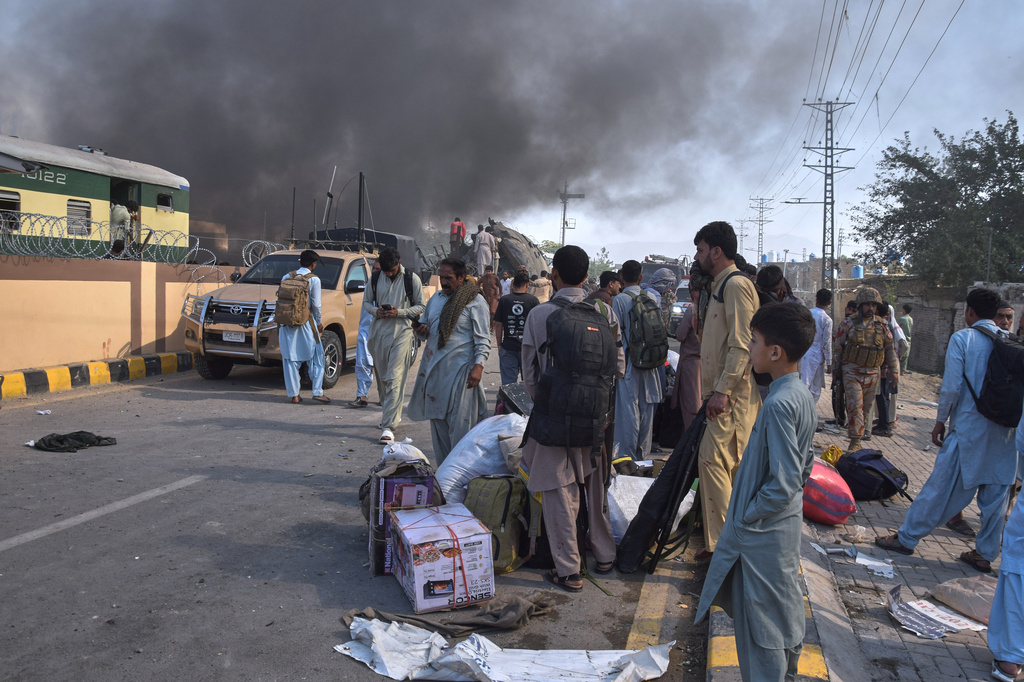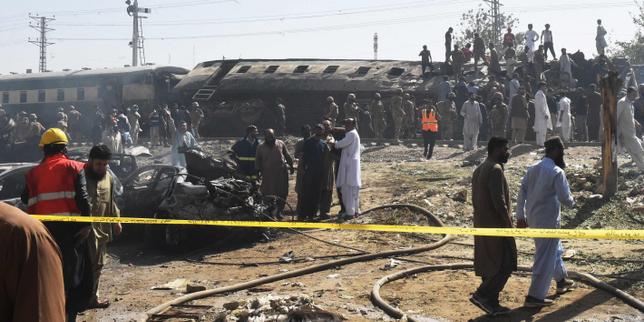
The international press loves a predictable tragedy. When a bomb ripped through the railway station in Quetta, Balochistan, killing at least 24 people waiting for a train to Peshawar, the media immediately defaulted to its decades-old playbook. They painted it as another senseless spasm of violence in a remote, forgotten corner of South Asia. They called it a localized ethnic conflict. They blamed a lack of regional integration.
They got it completely backward. For a different look, check out: this related article.
The Quetta bombing, claimed by the Baloch Liberation Army (BLA), is not a symptom of isolation. It is the direct consequence of hyper-integration. Western analysts and mainstream editors look at Balochistan and see a vacuum. In reality, it is a crowded room where global superpowers, regional intelligence agencies, and trillions of dollars in infrastructure investments are colliding. Treating this as a localized security failure is a catastrophic misunderstanding of modern geopolitical warfare.
The Fallacy of the Borderland Vacuum
Open any mainstream report on the Quetta blast and you will find the same lazy narrative: Balochistan is a lawless tribal frontier, disconnected from the modern world, where impoverished insurgents lash out at the state. Further insight on this trend has been shared by NPR.
This view is completely disconnected from reality.
Balochistan sits at the literal crossroads of the multi-billion-dollar China-Pakistan Economic Corridor (CPEC). The railway station targeted in the attack is not just a transit point for civilians; it is a vital artery for the transport of goods, security forces, and strategic materials connecting deep-water ports like Gwadar to the rest of South Asia and, by extension, western China.
When the BLA’s Majeed Brigade targets a military civilian transport link, they are not fighting a provincial war. They are executing a high-stakes veto on global trade routes.
To understand why this distinction matters, we have to look at how modern militancies actually operate. The "lazy consensus" assumes that insurgencies thrive on isolation and poverty. The data tells a different story. Sophisticated insurgencies—those capable of intelligence-led suicide bombings inside heavily fortified military-civilian hubs—require significant financial capital, external logistical networks, and precise geopolitical timing.
By framing this as a regional tragedy, mainstream journalism hides the true actors behind the curtain. This is not a local dispute over provincial autonomy. It is an internationalized proxy conflict played out on a regional canvas.
Why Intelligence Networks Fail the Infrastructure Test
Security analysts always ask the wrong question after an attack like Quetta. They ask: "How did the bombers slip through the perimeter?"
The real question is: "Why do we keep pretending that static perimeters can protect kinetic infrastructure?"
I have spent years analyzing security architecture in high-conflict zones. The fundamental flaw in Pakistan’s defensive posture—and the posture of Western nations advising on counter-terrorism—is the obsession with hardening specific nodes while ignoring the fluid nature of the network. You can put metal detectors and armed guards at the entrance of a station, but you cannot protect thousands of miles of open track, nor can you screen every single individual in a high-volume transit system without completely grinding commerce to a halt.
Let us look at the mechanics of the Quetta attack. The bomber targeted soldiers from the Infantry School who were returning from training. This requires operational intelligence. It requires knowing troop movements, shift changes, and security blind spots.
[Security Weakness] -> Focuses on physical perimeters (checkpoints, gates)
[Insurgent Strategy] -> Targets operational predictability (schedules, troop rotations)
The BLA did not defeat Pakistan's security apparatus through superior firepower. They defeated it through superior information asymmetry. While the state asset-protection teams were busy looking outward at the physical perimeter, the threat was already inside the logistical stream.
The Irony of Strategic Infrastructure
Here is the truth nobody wants to admit: the more infrastructure a state builds in an unstable region to project power, the more vulnerabilities it creates for itself.
Pakistan and its international partners view highways, railways, and pipelines as tools of pacification. The theory goes that if you bring economic development to a restive province, the insurgency will wither away.
It is a beautiful theory that fails every time it hits the ground.
In practice, massive infrastructure projects serve as high-value, stationary targets for insurgent groups. A railway line cannot hide. A port cannot move. A pipeline cannot defend itself. By flooding Balochistan with concrete and steel, Islamabad has essentially handed the BLA a target-rich environment.
Every new mile of track is a mile that must be patrolled. Every new train station is another potential headline for a group seeking to prove that the state cannot guarantee safety. The infrastructure itself becomes the catalyst for the escalation, not the solution to the grievance.
The External Actor Delusion
Whenever an attack of this scale occurs, the Pakistani state immediately points the finger at foreign intelligence agencies, specifically naming India's Research and Analysis Wing (RAW) or blaming cross-border sanctuaries in Afghanistan. Conversely, human rights organizations put the blame on internal state oppression and enforced disappearances.
Both sides are practicing willful blindness.
The regional dynamics are far more complex than a simple binary of state vs. foreign proxy. The BLA has successfully tapped into a globalized network of funding and propaganda. They are not hiding in caves using surplus mid-century rifles. They are using advanced communications, sophisticated explosive compounds, and coordinated media campaigns that hit Telegram and social platforms minutes after the blast occurs.
Dismissing the insurgents as mere foreign proxies ignores the genuine local grievances that fuel their recruitment. But ignoring the undeniable footprint of international geopolitical competition on the ground is equally naive. The Balochistan conflict is an ecosystem where local anger is weaponized by regional rivals to disrupt Chinese expansion, while the state uses the pretext of foreign intervention to avoid systemic political reform.
Stop Trying to Secure the Unsecurable
The current counter-terrorism paradigm dictates that the response to Quetta must be more troops, more checkpoints, and more surveillance. This approach has a track record of total failure.
You cannot secure a multi-thousand-mile transport network through brute force alone. The only way to disrupt this cycle of violence is to shift from a posture of physical denial to one of network resilience and political decoupling.
First, the state must stop treating infrastructure development as a substitute for political legitimacy. If the local population sees a railway as a pipe to extract wealth from their land rather than a tool to improve their lives, they will always tolerate, if not actively support, the elements that blow it up.
Second, intelligence operations must prioritize internal counter-intelligence over external border hardening. The Quetta bombing was an inside-out failure, not an outside-in breach.
The mainstream media will continue to cover these events as tragic, isolated incidents of a faraway world. They will keep analyzing the tactical minutiae of the blast radius and the casualty count. And they will continue to miss the broader reality: the tracks leading out of Quetta do not just run to Peshawar. They connect directly to the heart of global geopolitical instability, and they are burning.