Imagine paying for a backyard pool, securing local building permits, enjoying it for over five decades, and then being told it has to be completely bulldozed. That is the nightmare facing a group of California homeowners caught in a decades-old property trap.
In Huntington Beach, a sanitation district dispute has put property rights on a direct collision course with municipal infrastructure. At the heart of the issue is a simple legal truth that most buyers ignore when purchasing real estate: an easement is not your land, even if it sits inside your fenced perimeter. Recently making headlines in this space: The Hollow Promise of Monthly Product Roundups and Why Consumers Are Tuning Out.
The 53 Year Old Backyard Reality Check
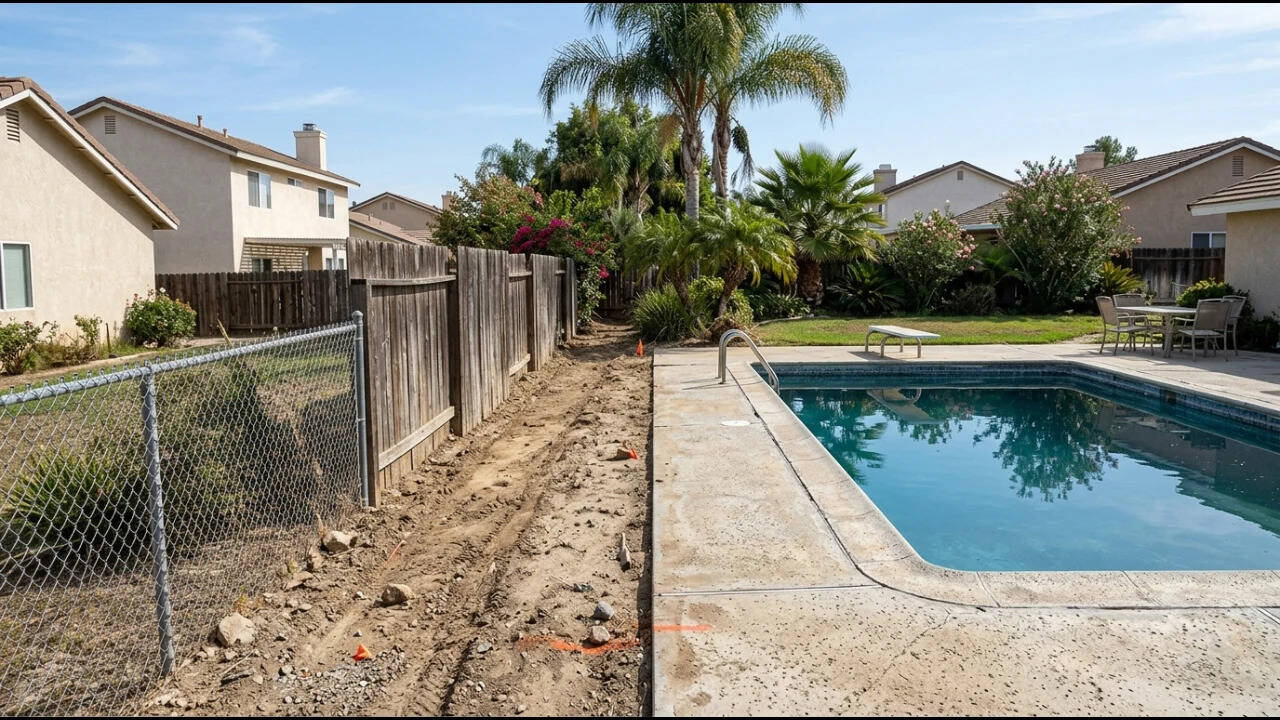
Back in 1973, a local homeowner paid $5,000 to install a backyard pool complete with city permits. Fast forward 53 years, and that same pool is slated for removal. The Orange County Sanitation District, commonly known as OC San, launched the Miller-Holder Rhone Lane Sewer Easement Cleanup Project to reclaim access to aging pipelines built back in the 1950s.
The district argues that keeping the underground infrastructure accessible is non-negotiable for worker safety, routine inspections, and emergency repairs. But for the 29 affected properties along Rhone Lane, the enforcement feels like a sudden and aggressive land grab. Homeowners are watching crews tear out swimming pools, concrete decking, custom patios, and retaining walls that have stood untouched for generations. Further insights regarding the matter are detailed by Cosmopolitan.
Where Property Lines and Public Utilities Collide
The core frustration comes down to municipal oversight and paper trails. Many residents bought their homes assuming that because they pulled permits through local agencies, their backyard investments were safe. Some owners, like Phillip and Andrea Rizzo, built accessibility features over the disputed zone, including a ramp for their teenage son who uses a wheelchair.
When districts enforce these easements, they treat access rights as absolute. Homeowners argue that an easement grants the right of passage, not total ownership or the power to erase decades of permitted improvements without substantial pushback. While some residents have chosen to settle out of frustration over mounting legal costs, others are pushing the dispute toward trial to establish firm boundaries on how far municipal authority can reach.
What Every Homeowner Gets Wrong About Easements
Most people look at a property title survey as a boring document to sign at closing and promptly forget about it. That mistake can cost you your entire backyard.
- Permits do not override easements: Getting a city permit to build a pool or a patio does not magically clear an underlying utility easement. Local building departments often miss or fail to cross-reference underground district utility maps when approving residential projects.
- Access versus ownership: An easement gives a utility company or city agency the legal right to cross or use private land for specific purposes, but it does not mean they own the dirt. However, the legal right to maintain infrastructure often trumps your right to landscape over it.
- Aging infrastructure gets priority: Pipelines laid down in the mid-twentieth century are reaching the end of their design lifespans. As sanitation districts scramble to modernize, dormant easements are suddenly being aggressively enforced.
If you are planning any major backyard renovations, pull your title report and check for utility easements before spending a dime on contractors. Track down the exact location of underground lines instead of guessing based on manhole covers. If your dream pool sits on top of municipal infrastructure, no amount of permits will protect it when the district decides it is time to dig.
Huntington Beach neighbors lose backyards because of old sewer line
This video provides an on-the-ground look at the Huntington Beach neighborhood dispute, showing the actual impact of the sanitation district project on resident backyards.