Donald Trump has confirmed that he personally intervened with FIFA President Gianni Infantino to overturn the automatic one-match suspension of United States forward Folarin Balogun. The unprecedented executive lobbying has plunged the 2026 World Cup into a full-blown governance crisis just hours before the American team takes the field against Belgium in the Round of 16. By exploiting an obscure loophole in the disciplinary code, soccer's world governing body has effectively rewritten its own rulebook mid-tournament to appease the leader of the primary host nation.
The decision has ignited fierce condemnation across the Atlantic. The Royal Belgian Football Association immediately filed an emergency appeal, while European soccer officials warned that the sport has crossed a dangerous line into geopolitical favoritism. What began as a routine disciplinary infraction on a pitch in Santa Clara has transformed into a high-stakes demonstration of raw political influence over international sport.
The White House Call That Overturned a Red Card
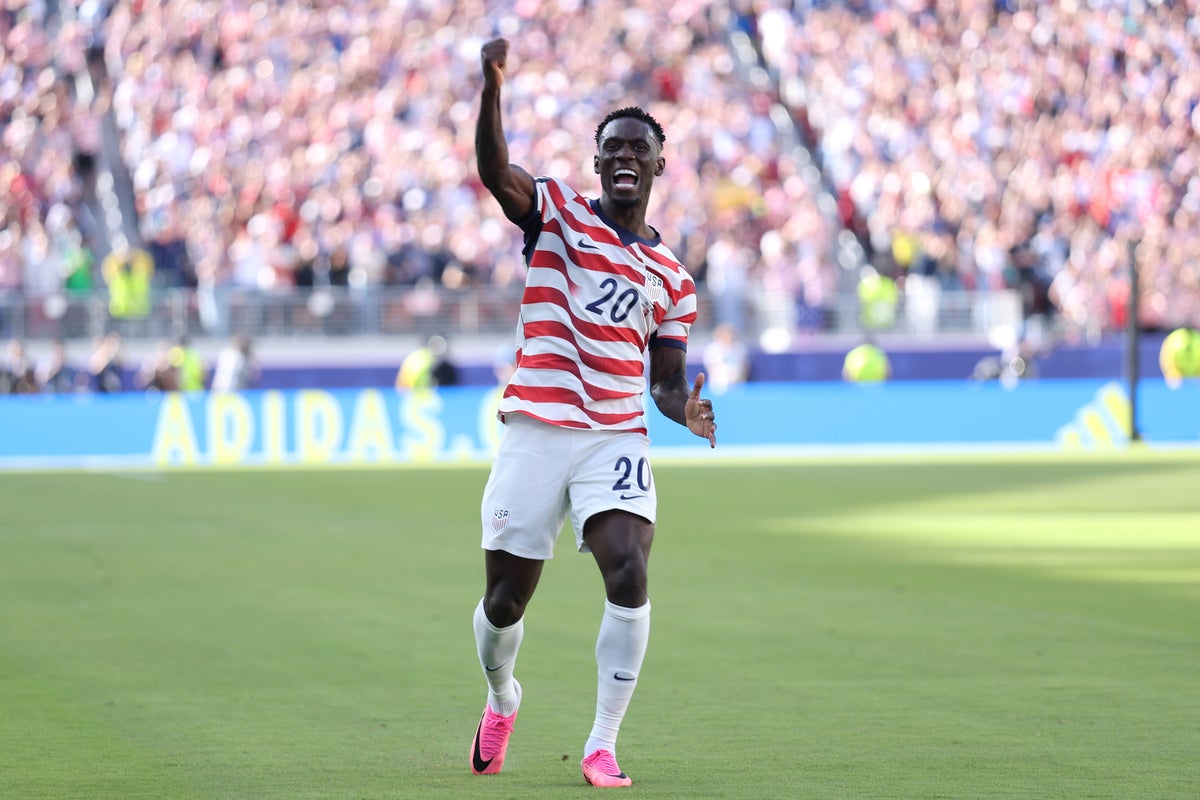
The crisis trace back to Wednesday night during the final minutes of the United States victory over Bosnia and Herzegovina. In the 64th minute, Balogun scored to put the Americans ahead but was caught in a heavy challenge with Bosnian defender Tarik Muharemovic. The on-field official originally let play continue. After a lengthy review by the Video Assistant Referee, the official altered the decision and showed Balogun a straight red card for serious foul play.
An automatic one-game ban is the baseline penalty for any straight red card in international football. This standard has stood unchanged in World Cup tournaments for more than six decades. The American forward, who leads the host nation with three goals in the tournament, was fully expected to miss the crucial elimination match against Belgium.
Then the Oval Office stepped in.
Speaking to reporters, Trump openly detailed his phone conversation with the FIFA president. The American executive asserted that he watched the play carefully and decided on his own authority that the tackle did not warrant an infraction. Trump described the play as two great athletes running at full speed who simply tangled up. He went on to heavily criticize the match official, labeling the referee very suspect and offering to publicly expose the referee's past record to the press corps.
Trump maintained that he only asked Infantino for a official review and did not explicitly dictate the final outcome. The timeline of events suggests otherwise. Within forty-eight hours of the telephone call between Washington and FIFA headquarters, the governing body issued an extraordinary legal decree clearing Balogun to play.
Inside Article 27 and the Erasure of FIFA Precedent
To rescue the American striker without technically erasing the red card from the record books, FIFA lawyers turned to Article 27 of the FIFA Disciplinary Code. This narrow provision allows a judicial body to suspend the implementation of a disciplinary measure and place the sanctioned individual on a probationary period lasting between one and four years.
FIFA applied this mechanism to a mid-tournament red card. The governing body announced that Balogun's mandatory one-match ban would be suspended for a probationary period of one year. The forward remains technically penalized, but his actual punishment has been delayed until after the World Cup concludes.
The move has stunned soccer historians and legal experts. The sport has operated on a strict principle of on-field finality since the 1962 tournament in Chile. When a player receives a red card, they sit out the next match. There is no appeal process for the automatic suspension, a rule designed specifically to prevent wealthy or powerful federations from litigating their way out of sporting penalties during a fast-moving tournament.
By invoking Article 27 in this manner, FIFA has created a double standard that threatens the integrity of the entire competition. Smaller nations lack the direct line to Infantino's office necessary to secure a probationary suspension for their penalized stars. If a Belgian or Bosnian forward had committed the exact same infraction, their automatic ban would have stood without question.
The Growing Fury in Brussels and Beyond
The fallout from the ruling was instantaneous. In Brussels, the Royal Belgian Football Association expressed deep astonishment and released a scathing public statement questioning the legal foundation of the decision. The Belgian federation rightly pointed out that Article 66.4 of the same disciplinary code explicitly states that a red card automatically results in a suspension for the team's next match. They argued that FIFA has completely ignored its own foundational regulations to preserve the commercial viability of the American host team.
European football's governing body, UEFA, has also privately expressed fury over the development. Sources within the organization indicate that European officials view the intervention as an existential threat to the independence of sports regulatory bodies. The fear is that international sport is slipping back into an era where political strongmen can dictate disciplinary outcomes through personal relationships with sports executives.
The timing could not be worse for the credibility of the tournament. The United States is the only host nation left in the competition following the early eliminations of Mexico and Canada. Millions of dollars in domestic television ratings, ticket sales, and corporate sponsorships hinge on the survival of the American team. Sidelining the top American scorer right before a prime-time knockout match threatened the financial momentum of the event. By bending to political pressure, FIFA has confirmed the worst suspicions of fans worldwide, suggesting that corporate profits and political relationships matter far more than the rules of the game.
A Geopolitical Strong-Arm on the Soccer Pitch
The relationship between Trump and Infantino is well documented. During his first term in office, Trump hosted the FIFA president at the White House multiple times, openly taking credit for securing the hosting rights for the 2026 tournament. Trump repeated those claims during his press interaction, asserting that he single-handedly brought the World Cup to North America while criticizing his political rivals for being unvocal on sports.
Infantino has spent years cultivating close relationships with world leaders, often positioning FIFA as a sovereign entity equal to national governments. This strategy has now backfired spectacularly. By accommodating a personal request from a sitting United States president, Infantino has compromised the neutrality that FIFA is legally bound to uphold.
The sport now faces an dangerous precedent. If the United States wins the match against Belgium with Balogun on the field, the entire victory will be permanently stained by the perception of political interference. Opposing teams will look at future disciplinary actions not as matters of objective rule enforcement, but as subjects for executive negotiation.
Soccer has long maintained a fragile barrier between politics and the pitch. That barrier was completely demolished by a single phone call. As the American team prepares to take the field in Seattle, the match will not be remembered for the tactics or the talent of the players. It will be remembered as the day the rules of the world's most popular game were rewritten in the Oval Office.