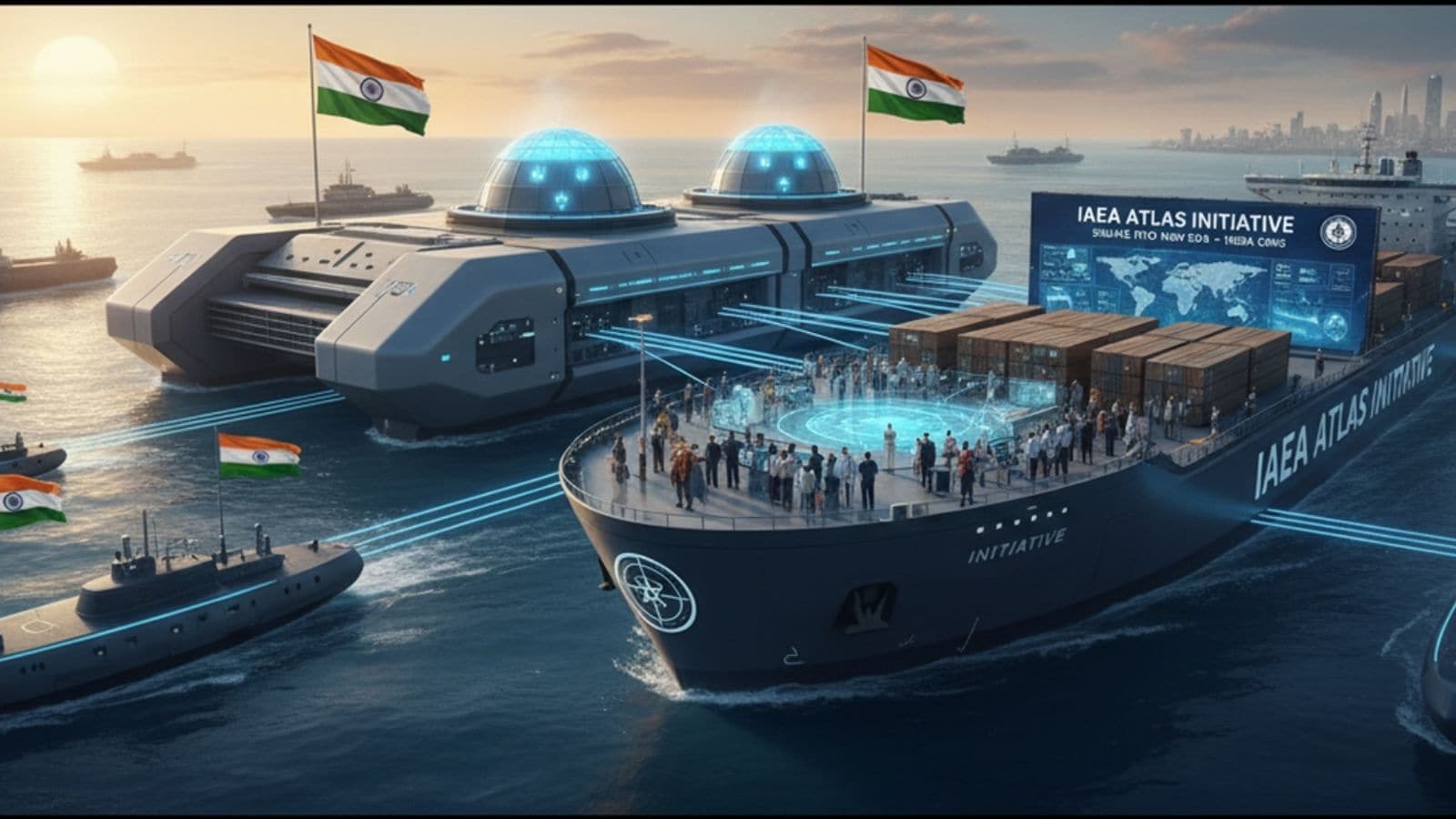
Every two years, the maritime industry gathers in Hamburg for SMM, and every two years, the script repeats itself with agonizing predictability. A British firm steps up to the podium, flanked by sleek CAD renderings of uncrewed hulls, promising that autonomous vessel technology will solve shipping's labor shortages, slash fuel bills, and usher in a brave new era of efficiency. The trade press nods along, copying and pasting press releases about remote-controlled container ships navigating the English Channel without a soul on board.
It is a comforting fantasy for tech investors and PR departments. It is also an absolute delusion. Don't forget to check out our previous article on this related article.
I have spent the better part of two decades watching companies burn venture capital and R&D budgets trying to solve a problem that commercial shipping does not actually have, while completely ignoring the structural fires burning in front of them. Let us stop pretending that painting a sensor suite onto a bridge-less hull makes economic sense.
Here is the controversial truth nobody in the maritime circuit admits: full autonomy at sea is a solution in search of a problem, championed by people who have never spent a freezing night trying to troubleshoot a raw water cooling pump in a pitching engine room five hundred miles off the Falklands. To read more about the context of this, Wired offers an informative breakdown.
The Lazy Consensus of Remote Operations
The prevailing narrative goes like this. Software engineers point to self-driving cars, drone deliveries, and automated warehouses, assuming the ocean is just a very wet highway. They argue that removing the human crew eliminates human error, saves living space, and cuts hotel loads.
This argument collapses the moment you look at the physics and economics of blue-water logistics.
A modern container ship is not a delivery van. It is a floating industrial petrochemical plant combined with a power station and a structural steel skyscraper subjected to cyclical wave fatigue. When a high-voltage switchboard trips in the middle of the North Atlantic, an autonomous control center in Southampton cannot push a software patch to fix a fried breaker. When a fuel line cracks and sprays diesel over a hot exhaust manifold, no algorithm in the cloud is going to grab a fire extinguisher.
The proponents of uncrewed shipping love to quote maritime accident statistics claiming that seventy to eighty percent of marine casualties are caused by human error. It is a favorite data point of consultants who have never run a passage. What those dry insurance statistics actually capture is operational fatigue, poor shore-side scheduling, inadequate training, and corporate pressure to cut corners. Blaming human error for a grounding is like blaming the driver when the brakes fail because the fleet manager deferred maintenance to save a buck. Removing the human from the vessel does not remove the error; it simply relocates the failure point to a poorly paid remote operator staring at a bank of monitors twelve time zones away, suffering from terminal vigilance fatigue.
The Regulatory and Logistical Quagmire
Let us entertain a scenario where a British startup successfully demos a fully autonomous cargo feeder at SMM. What happens next? They run straight into the brick wall of international maritime law.
The Convention on the International Regulations for Preventing Collisions at Sea, known widely as COLREGs, contains stubborn little phrases like Rule 5, which mandates that every vessel shall at all times maintain a proper look-out by sight and hearing as well as by all available means. Notice the words sight and hearing. Cameras and LiDAR are impressive tools, but maritime courts and flag states operate on centuries of precedent regarding direct human sensory judgment.
Try explaining to an admiralty judge why your AI-driven collision avoidance system interpreted a fishing vessel's erratic drift as a safe passing maneuver in a squall. Insurance underwriters are not sentimental. Marine mutuals like the UK P&I Club do not underwrite radical experiments without charging eye-watering premiums that completely wipe out the labor savings you hoped to achieve in the first place.
Port state control authorities present an even steeper hurdle. Try telling the pilot station in Rotterdam or Singapore that you want to berth a four-hundred-meter container ship using a satellite link and a bank of thrusters controlled from a basement in Bristol. Port authorities mandate pilots on board precisely because local knowledge, real-time current micro-adjustments, and unpredictable windage require tactile, situational intuition that cannot be replicated by a neural network trained on historical AIS data.
Where the Real Innovation Hides
While the venture-backed crowd chases the chimera of the ghost ship, the actual profit centers of maritime technology are busy solving unglamorous problems.
Look at what is working. Hull optimization coatings that reduce biofouling drag by six percent. Predictive maintenance algorithms that monitor main engine vibration signatures to catch bearing failures before catastrophic crankcase explosions occur. Dynamic trim optimization systems that use real-time weather routing to adjust propeller pitch and rudder angles minute by minute.
These technologies do not require rewriting international treaties or convincing conservative shipowners to trust a multi-million-dollar asset to a cloud server. They work with the crew already on board, enhancing their situational awareness rather than trying to render them obsolete.
The irony of the autonomous vessel push is that it treats seafarers as an expensive liability to be excised, rather than the ultimate fail-safe system keeping global supply chains from collapsing. We are facing a genuine demographic shortage of competent mariners, yes. But the answer to a talent shortage is not to pretend we can build an autonomous robot to do everything; it is to make seafaring careers safer, better paid, and technologically empowered.
Stop investing in remote control rooms that add layers of cyber-vulnerability to an already fragile infrastructure. Stop pretending that taking the crew off the ship makes it greener when the hotel loads and propulsion demands remain identical.
The next time a software vendor stands on a stage in Hamburg and promises uncrewed trans-oceanic navigation, ask them who is going to climb into the ballast tanks to inspect for fractures when the ship is slamming into a ten-meter swell. When they don't have an answer, walk away.