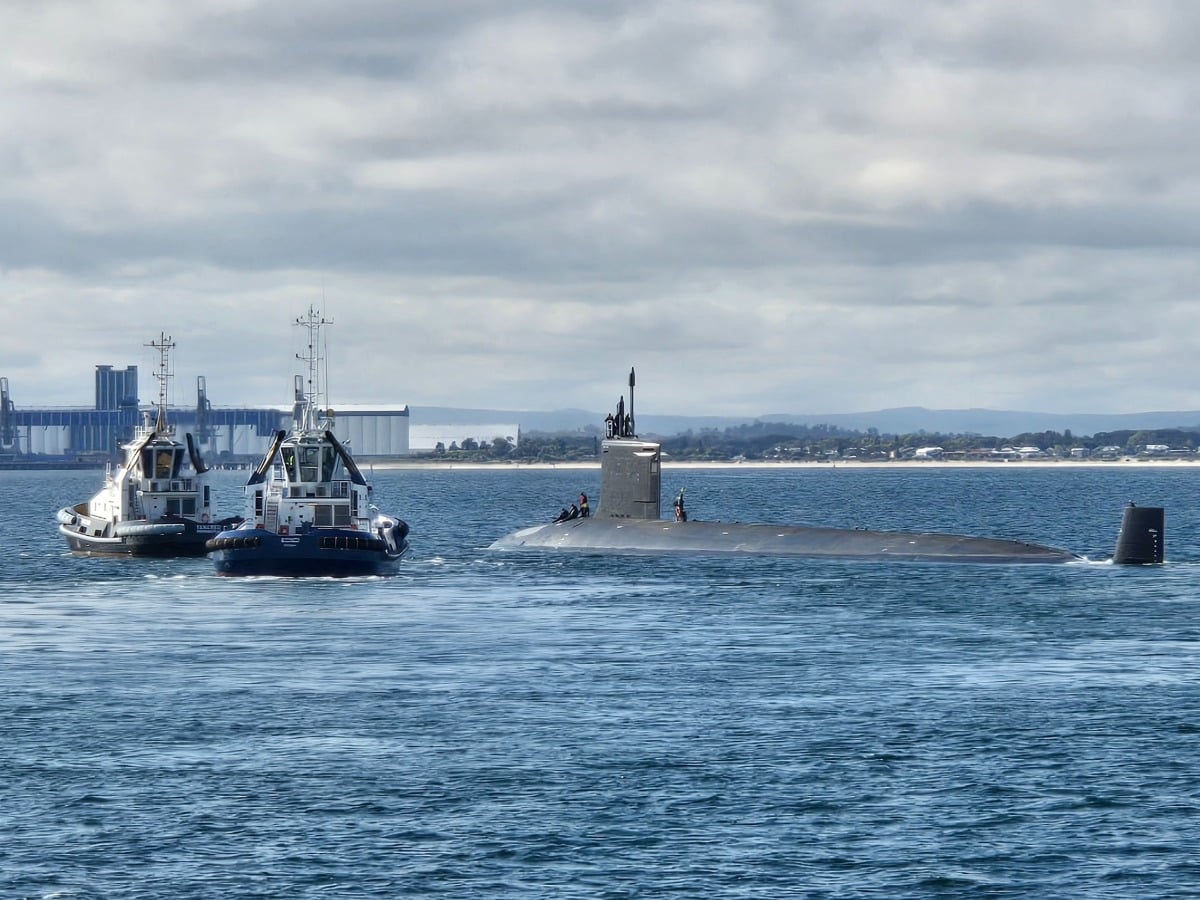
The defense establishment is celebrating the U.S. Navy’s reestablishment of Submarine Squadron 20 in Western Australia as a masterstroke of deterrence. Mainstream analysts are churning out carbon-copy reports hailing this move as the definitive anchor of Indo-Pacific security. They are wrong.
Branding a bureaucratic reshuffle as a major projection of power is a classic Pentagon parlor trick. Moving a handful of staff officers to HMAS Stirling does not change the brutal math of undersea warfare. It masks a deeper, systemic vulnerability that both Washington and Canberra are desperately trying to ignore.
The conventional narrative says forward-deploying American command structures to Australia creates an immediate, seamless shield against regional adversaries. This is lazy thinking. In reality, this move exposes the structural fragility of the AUKUS agreement and highlights an uncomfortable truth: the U.S. submarine fleet is cannibalizing its own readiness to prop up a political narrative.
The Logistics Myth: You Can't Base a Fleet on Paperwork
Establishing a squadron headquarters is not the same as basing warships. A squadron is an administrative shell. It consists of computers, desks, and middle-management officers.
I have watched defense officials burn billions of dollars on forward-basing initiatives that look spectacular on a PowerPoint slide but crumble under actual operational stress. True undersea power requires dry docks, deep-water maintenance facilities, specialized nuclear engineering workforces, and immediate access to spare parts. Western Australia currently possesses almost none of these at the scale required for sustained wartime operations.
The current plan relies on the "Submarine Rotational Force-West" initiative, which dictates that U.S. and UK nuclear submarines will rotate through the region. Let’s look at the actual mechanics of nuclear maintenance.
When a Virginia-class submarine suffers a complex technical failure in its propulsion system, you cannot fix it with a local contractor and a toolbox. You need highly specialized, cleared technicians who are legally and technically certified to work on naval nuclear reactors. Right now, those technicians are concentrated in places like Norfolk, Pearl Harbor, and Puget Sound.
Flying a team of specialists twelve thousand miles across the Pacific to patch up a deploying boat isn't a strategy. It is an emergency workaround.
The AUKUS Diversion: Trading Present Readiness for Future Promises
The reestablishment of this squadron is a frantic attempt to show progress on the AUKUS front because the actual timeline of the deal is a disaster. Australia is not scheduled to receive its first bought Virginia-class submarines until the early 2030s, and the domestic build of the "AUKUS-class" boats won't hit the water until the 2040s at the absolute earliest.
Meanwhile, the U.S. domestic submarine industrial base is buckling under its own weight.
$$Availability = \frac{Operational\ Boats}{Total\ Fleet}$$
The United States is currently struggling to maintain an operational availability rate above 60% for its fast-attack fleet due to severe maintenance backlogs in domestic shipyards. Nearly a third of the U.S. attack submarine fleet is sidelined at any given moment waiting for repairs.
By peeling off command assets and rotating hulls through Australia, the U.S. Navy is stretching an already frayed logistical rubber band. We are degrading our immediate operational readiness today in exchange for a theoretical geopolitical payoff twenty years from now.
Dismantling the Consensus: The Real Undersea Vulnerability
The public assumes that putting American submarines closer to the South China Sea naturally increases their effectiveness. This is a flawed premise that completely misunderstands modern anti-submarine warfare (ASW).
Geography is a double-edged sword. Narrow chokepoints like the Lombok or Sunda straits are highly predictable transit corridors. Forward-basing assets at HMAS Stirling forces submarines to navigate predictable routes to reach their patrol areas in the Western Pacific.
Advanced adversarial sensory networks—consisting of seabed acoustic arrays, satellite imagery, and long-endurance maritime drone swarms—excel at monitoring predictable approaches. A submarine is only a strategic asset when its location is completely unknown. By consolidating operations around a single, highly visible hub in Western Australia, we are handing our adversaries a concentrated target for surveillance and preemptive strike planning.
Let's address the counter-argument: "But this footprint signals unbreakable alliance commitment."
Signaling does not win wars. Hard capabilities win wars. If conflict erupts, a squadron headquarters without organic, heavy industrial repair capability becomes an immediate liability. It creates a high-value target that requires defensive assets—like air defense batteries and surface combatants—to protect it, diverting those scarce resources away from the actual front lines.
The Unconventional Reality for Policy Makers
If the goal is genuine regional stability, stop treating bureaucratic flag-planting as a victory.
The current trajectory is a dangerous compromise that satisfies politicians in Washington and Canberra while leaving naval commanders holding an empty bag. We are pretending that setting up a command structure is equivalent to building a fortress.
The hard, ugly fix requires an immediate halt to geopolitical theater and a massive, unglamorous injection of capital into domestic shipyard infrastructure. Until the United States can repair the submarines it already has on time, opening new administrative offices abroad is just moving deck chairs on a sinking bureaucratic ship.
Do not look at the ribbon-cutting ceremony in Australia and think the Pacific is safer. Look at the dry docks in Virginia and Pearl Harbor that are choked with rusting hulls waiting for parts. That is where the real balance of power is decided.