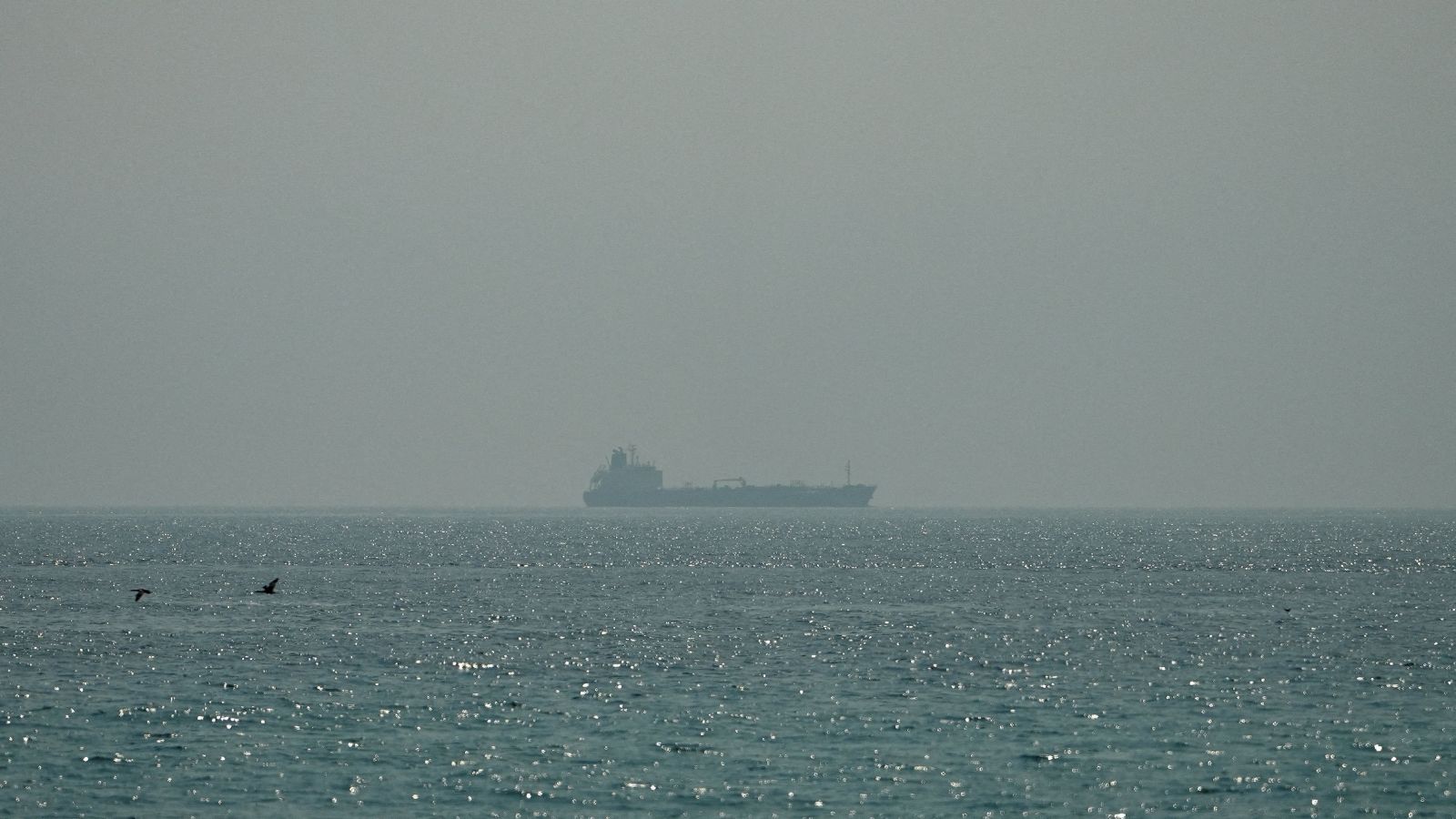
Maritime security incidents in the Strait of Hormuz represent systemic chokepoint vulnerabilities rather than isolated tactical events. When two commercial tankers sustain attacks within hours inside the world's most sensitive energy transit corridor, the immediate market impact is driven less by physical vessel damage and more by the instant escalation of insurance risk premiums, altered routing protocols, and regional security posture shifts. Understanding the mechanics of maritime interdiction requires disassembling the incident into three structural vectors: physical strike methodology, maritime logistics chain disruption, and energy market contagion dynamics.
The Tri-Border Kinetic Risk Model
A maritime attack in the Strait of Hormuz operates within a highly constrained geographic funnel. At its narrowest point, the strait spans roughly 21 nautical miles, with incoming and outgoing shipping lanes restricted to two-mile-wide corridors separated by a two-mile buffer zone. For another view, consider: this related article.
Commercial shipping operations through this passage face three primary threat mechanisms:
- Unmanned Aerial Vehicle (UAV) and Loitering Munition Strikes: Low-radar-cross-section loitering munitions target non-armored deck infrastructure, superstructure bridge wings, or propulsion housing. While rarely causing catastrophic hull breach, these strikes induce fires, disable navigation systems, and force immediate engine shutdown.
- Limpet Mine and Anti-Ship Missile Engagement: Surface or subsurface ordnance aimed near the waterline targets structural integrity and ballast tanks. These strikes create immediate environmental hazard risks and require emergency stabilization anchorages.
- Fast Attack Craft (FAC) Interdiction and Boarding: Swarming tactics utilize speed advantage to blind vessel sensors, force compliance through small-arms fire, and board vessels to execute state-directed seizures.
The vulnerability function of a commercial tanker is directly proportional to its transit speed and operational maneuverability. A fully laden Very Large Crude Carrier (VLCC) carrying two million barrels of crude oil travels at an average speed of 12 to 15 knots, requiring up to three nautical miles to execute a complete emergency stop. This operational inertia turns large commercial vessels into predictable targets within narrow transit channels. Further analysis on this matter has been shared by The Guardian.
Supply Chain Contagion and Marine Insurance Escalation
The immediate economic impact of a chokepoint security breach cascades through the international shipping ecosystem via well-defined financial mechanisms. Physical damage to hulls represents only a fraction of total financial loss.
War Risk Premium Spikes
Under standard maritime contracts, vessels operating in designated high-risk waters must secure War Risk Insurance extensions. Following an active kinetic event:
- Insurers re-evaluate the War Risk Breach Premium, often raising rates from a baseline of 0.05% of hull and machinery value up to 0.5% or higher per transit.
- For a modern VLCC valued at $100 million, a single seven-day transit premium can jump from $50,000 to over $500,000.
- Reinsurance underwriters restrict capacity, forcing fleet operators to hold vessels at anchor outside the Gulf of Oman while seeking coverage confirmation.
Fleet Rerouting and Ton-Mile Inefficiencies
When shipping lines suspend passage through Hormuz, maritime logistics faces a structural bottleneck:
- Approximately 20% of global petroleum liquids pass through the strait daily.
- Alternative pipeline infrastructure—such as Saudi Arabia's East-West Pipeline (capacity 5 million barrels per day) and Abu Dhabi's Habshan-Fujairah pipeline (capacity 1.5 million barrels per day)—can bypass the strait, but their combined throughput capacity covers less than half of typical daily Hormuz transits.
- Unrouted volumes require long-term storage or alternative long-haul routing around Africa, which adds up to 14 transit days for European destinations and significantly increases total global ton-mile demand, tightening worldwide tanker capacity.
Naval Escort Limitations and Asymmetric Deterrence
Relying on state naval forces to secure commercial lanes introduces severe capacity constraints. The ratio of merchant vessels transiting the strait daily (between 30 and 40 energy carriers) to available international naval assets prevents single-vessel convoy escorts under routine operational budgets.
Naval defense strategies rely instead on layered zone defense:
- Air assets maintain persistent Synthetic Aperture Radar (SAR) coverage over coastal launch zones.
- Surface combatants establish defensive barriers near international lane entry points.
- Maritime Information Exchange centers issue real-time positional warnings to ship captains, directing automated identification system (AIS) protocols and speed adjustments.
The fundamental asymmetry remains favoring the aggressor. A low-cost loitering munition costing tens of thousands of dollars can force an international naval coalition to deploy multi-million-dollar air defense interceptors, while simultaneously imposing millions of dollars in freight and insurance costs across global commercial fleets.
To mitigate ongoing transit exposure, fleet directors must bypass conventional reactive security protocols and enforce strict operational parameters before vessels cross the 25th parallel north: transition AIS transponders to localized secure frequencies upon entering high-density threat zones, maintain maximum achievable speed despite fuel efficiency penalties, and mandate immediate continuous armed escort integration for non-flagged tonnage transiting known coastal strike vectors.