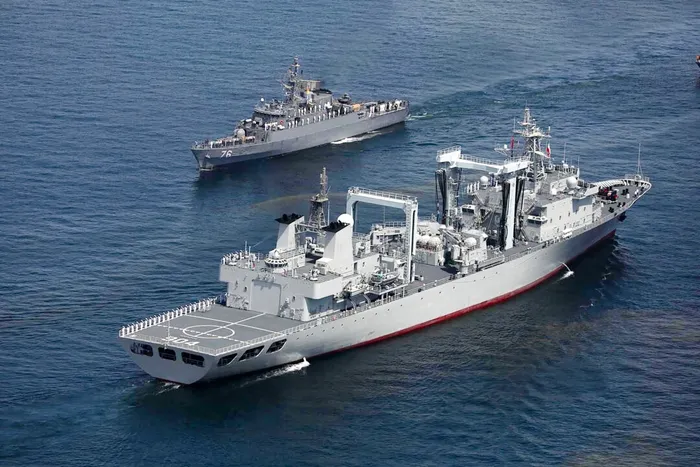
The systematic degradation of the Islamic Republic of Iran Navy (IRIN) and the Islamic Revolutionary Guard Corps Navy (IRGCN) represents a shift from strategic containment to active kinetic dismantling. Statements regarding the "sinking" of these assets are not merely rhetorical; they reflect a multi-layered military objective to neutralize Iran’s ability to execute "anti-access/area-denial" (A2/AD) operations in the Persian Gulf and the Bab al-Mandeb strait. This deconstruction follows a repeatable logic of engagement where superior sensor fusion and standoff precision are utilized to overwhelm high-quantity, low-survivability swarming tactics.
The Architecture of Iranian Naval Power
To evaluate the current state of maritime attrition, one must categorize Iranian naval assets into two distinct functional buckets. The IRIN operates as a traditional, "green-water" force utilizing frigates and submarines, while the IRGCN functions as an asymmetric disruptor. Don't forget to check out our previous article on this related article.
- The Conventional Tier (IRIN): This includes aging, British-built Alvand-class frigates and domestically produced Moudge-class vessels. These platforms are structurally vulnerable to modern anti-ship cruise missiles (ASCMs) and lack integrated electronic warfare suites capable of spoofing contemporary seeker heads.
- The Asymmetric Tier (IRGCN): This is characterized by high-speed, small-attack craft (FAC/FIAC) armed with rockets, torpedoes, or man-portable air-defense systems (MANPADS). Their primary utility is the "swarm" logic: saturating a target's defense processing capacity through sheer volume.
The current engagement model focuses on decapitating the Conventional Tier while systematically pruning the Asymmetric Tier during flare-ups. When a major Iranian vessel is neutralized, the IRGCN loses its mobile command-and-control nodes, forcing small craft to operate with degraded situational awareness.
The Mechanics of Kinetic Neutralization
The process of "sinking" a modern naval force does not require the total physical destruction of every hull. It requires the destruction of the Kill Web. The US approach utilizes a "distributed lethality" framework that renders Iranian naval assets tactically inert before they enter their effective firing range. To read more about the background of this, Al Jazeera provides an excellent breakdown.
Precision Engagement Envelopes
The attrition occurs within three distinct geographical and technical envelopes:
- The Detection Horizon: Utilizing MQ-4C Triton UAVs and P-8A Poseidon aircraft, US forces establish a persistent "unblinking eye." Iranian vessels are tracked from the moment they clear the pier at Bandar Abbas. This removes the element of surprise essential for swarm tactics.
- The Standoff Phase: By employing the Long Range Anti-Ship Missile (LRASM), US forces can engage Iranian frigates from outside the reach of Iran’s Noor or Qader missile systems. The LRASM uses autonomous routing to bypass defense perimeters, targeting specific high-value compartments (like the bridge or engine room) to ensure a "mission kill" even if the vessel remains buoyant.
- The Close-In Engagement: For the IRGCN’s small boat swarms, the response has shifted toward directed energy weapons and Mk 44 Bushmaster II autocannons. These systems provide a lower cost-per-kill ratio than expensive interceptor missiles, allowing for the sustainable thinning of swarm formations.
Strategic Bottlenecks: The Strait of Hormuz Cost Function
The primary Iranian counter-move is the threat of closing the Strait of Hormuz. However, the economic and military cost function of this move has shifted. Historically, a "tanker war" would spike global oil prices and deter Western intervention. Today, the variables have changed:
- Variable A: Redundant Infrastructure. The expansion of pipelines across Saudi Arabia and the UAE allows a significant portion of crude to bypass the Strait entirely, reducing Iran's economic leverage.
- Variable B: Intelligence Parity. The deployment of underwater unmanned vehicles (UUVs) to detect and neutralize Iranian bottom-mines in real-time prevents Iran from "seeding" the channel effectively.
- Variable C: Domestic Fragility. Sinking the Iranian Navy removes the regime's primary tool for domestic prestige. The loss of a flagship like the Sahand or the Makran acts as a visible signal of technical inferiority to the domestic population.
The Logic of Cumulative Attrition
Military analysts often mistake individual skirmishes for isolated events. In reality, these engagements follow a Rate of Replacement vs. Rate of Attrition formula.
$R_{net} = R_{prod} - (A_{kinetic} + A_{mechanical})$
Where:
- $R_{prod}$ is Iran’s domestic shipbuilding rate (slow, hampered by sanctions).
- $A_{kinetic}$ is the loss of ships to combat.
- $A_{mechanical}$ is the accelerated wear on aging engines due to high-tempo posturing.
Iran’s $R_{prod}$ is currently insufficient to cover even $A_{mechanical}$ over a five-year horizon. By introducing $A_{kinetic}$ (active sinking of ships), the US accelerates the "structural insolvency" of the Iranian Navy. The force is becoming smaller, older, and less capable of venturing beyond the immediate coastline.
Tactical Limitations and Escalation Risks
While the kinetic degradation of the IRIN is technically feasible, several friction points limit the efficacy of a "total sinking" strategy.
The first limitation is the Proximity Paradox. As the Iranian Navy is pushed back toward its own territorial waters, it gains the protection of land-based coastal defense cruise missiles (CDCMs) and surface-to-air missile (SAM) batteries like the Bavar-373. Engaging Iranian ships within this littoral "bubble" increases the risk to US carrier strike groups significantly.
The second bottleneck is the Information Environment. Every sunken Iranian vessel is utilized as a martyr-narrative by the IRGCN to justify increased funding and more aggressive proxy actions in Yemen or Iraq. The tactical success of a sinking must be weighed against the strategic cost of regional escalation.
The Future of the Maritime Balance
The shift toward a "sinking" posture indicates that the threshold for acceptable Iranian provocation has lowered. The US is no longer content with "harassment" of its assets; it is responding with permanent removals from the Iranian order of battle. This creates a psychological "deterrence gap." If the Iranian leadership perceives that their naval assets are "use it or lose it," they may be incentivized to launch a large-scale, desperate strike before their capabilities fully evaporate.
The operational focus must transition from reactive defense to preemptive sensor-interdiction. To maintain the current trajectory of dominance, the US must prioritize the deployment of low-cost, high-endurance autonomous surface vessels (USVs) that can mirror Iranian small boats. This allows for a persistent presence that can identify and neutralize IRGCN assets the moment they exhibit hostile intent, without risking high-value manned platforms. The goal is not a single decisive battle, but a continuous, grinding reduction of Iranian maritime reach until the Navy is reduced to a purely ceremonial coastal guard.
Strategic planners should anticipate an Iranian pivot toward "suicide USVs" (similar to those used by Houthi rebels) as their manned fleet diminishes. Counter-UAS and counter-USV technology will become the primary theatre requirements. Increasing the deployment of electronic jamming pods on all littoral combat ships is the immediate tactical necessity to disrupt the command links of these incoming asymmetric threats.