Bilateral relations between Islamabad and Kabul operate within a classic principal-agent dilemma, where sovereign diplomatic declarations mask localized proxy management and plausible deniability. When Pakistan publicly demands that the Taliban administration dismantle cross-border militant sanctuaries while simultaneously rejecting accusations of recruiting Afghan nationals into domestic security or proxy apparatuses, both states are engaging in strategic signaling aimed at domestic constituencies and international monitors rather than literal operational transparency.
Understanding this friction requires stripping away standard diplomatic rhetoric and examining the underlying security architecture, economic leverage points, and the structural limits of territorial control along the 2,640-kilometer Durand Line.
The Structural Mechanics of Cross-Border Militancy
Standard reporting treats border skirmishes and diplomatic protests as isolated incidents of miscommunication. In reality, they are predictable outputs of an unresolved territorial dispute colliding with asymmetric warfare doctrines.
The Sanctuary-Sanction Paradox
Pakistan’s primary security grievance centers on Tehrik-i-Taliban Pakistan (TTP), an umbrella organization of militant groups operating from safe havens within eastern Afghanistan. From Islamabad’s operational perspective, the Afghan Taliban’s refusal to neutralize the TTP represents a breach of the Doha Agreement’s counterterrorism guarantees and a direct threat to internal stability in Khyber Pakhtunkhwa and Balochistan.
However, the Taliban administration in Kabul faces a severe internal constraint: ideological and familial overlap. The rank-and-file fighters of the Afghan Taliban and the TTP share tribal affiliations, combat histories, and doctrinal foundations. Attempting a kinetic crackdown on the TTP risks fracturing the Taliban’s internal cohesion, potentially driving disaffected commanders to defect to the Islamic State Khorasan Province (ISKP), Kabul’s primary existential rival.
This creates a diplomatic stalemate:
- Islamabad’s Demand: Verifiable kinetic operations against TTP leadership and the dismantling of logistics nodes inside Afghan territory.
- Kabul’s Counter-Position: Framing the TTP as an internal Pakistani governance failure that must be resolved through domestic negotiation rather than Afghan military intervention.
- The Operational Reality: Kabul employs containment—relocating TTP fighters away from the immediate border zone—rather than eradication, a compromise Islamabad views as insufficient.
The Plausible Deniability of Recruitment Accusations
Conversely, Kabul’s accusations that Pakistan recruits Afghan citizens for regional militant operations—often linked to ISKP logistics or cross-border destabilization—highlight the reciprocal nature of proxy warfare in South Asia. Islamabad’s categorical denial relies on the structural opacity of non-state militant networks.
In conflict zones characterized by porous borders and depressed local economies, militant recruitment rarely occurs through formal state-sponsored enlistment. Instead, it operates through decentralized brokers, ideological networks, and financial intermediaries. By denying state involvement, Islamabad exploits the attribution gap: the intelligence threshold required to prove direct state command-and-control over an insurgent cell is significantly higher than the threshold required to observe the movement of fighters across a border.
The Three Pillars of Bilateral Coercion
Because direct military confrontation carries prohibitive escalation risks, both Islamabad and Kabul rely on non-kinetic and sub-threshold levers to compel compliance.
1. Trade Corridor Weaponization
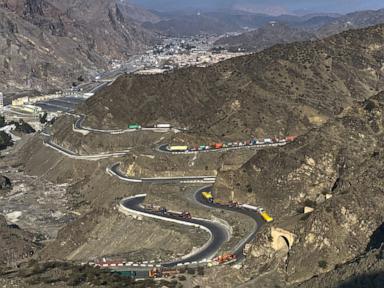
As a landlocked nation, Afghanistan depends heavily on Pakistani transit routes, particularly the Torkham and Chaman border crossings, for access to maritime trade via Karachi and Port Qasim. Islamabad routinely utilizes administrative bottlenecks—sudden visa regime changes, customs clearance delays, and unilateral border closures—as coercive instruments.
The cost function of this strategy is asymmetric in the short term but corrosive in the long term. While closures inflict immediate inflationary pressure on Afghan markets and deprive Kabul of customs revenue, they simultaneously destroy the livelihoods of Pakistani border merchants and incentivize Kabul to diversify its trade routes toward Iranian ports like Chabahar and Central Asian rail networks.
2. Demographic Leverage and Repatriation
The presence of millions of undocumented Afghan refugees and migrants in Pakistan serves as a high-visibility pressure valve. Mass deportation drives executed by Pakistani authorities function as a direct signal to Kabul: failure to secure the border against anti-Pakistan militants will result in severe socioeconomic strain inside Afghanistan as hundreds of thousands of returnees require housing, employment, and humanitarian aid that the sanctioned Taliban economy cannot provide.
3. Diplomatic Isolation vs. Regional Integration
Kabul seeks international legitimacy, asset unfreezing, and formal diplomatic recognition. Pakistan historically acted as the primary diplomatic interlocutor for the Taliban, advocating for international engagement to prevent state collapse. By publicly broadcasting Kabul’s failure to contain terrorism at international forums, Islamabad threatens to validate Western and regional narratives that Afghanistan remains a permissive environment for transnational jihadist groups, thereby blocking Kabul’s path to diplomatic normalization.
The Attribution Problem in Asymmetric Intelligence
Evaluating the validity of mutual accusations requires distinguishing between verifiable empirical facts and strategic intelligence narratives.
Verifiable Facts
- Attack Frequency: Following the August 2021 regime change in Kabul, cross-border attacks targeting Pakistani security forces increased markedly, concentrated in districts bordering Afghanistan’s Kunar, Nangarhar, Paktika, and Khost provinces.
- Border Infrastructure: Pakistan has completed fencing along roughly 98 percent of the Durand Line, yet kinetic breaches and sniper attacks on border outposts persist, demonstrating that physical barriers cannot substitute for cooperative policing on both sides of the frontier.
- Deportation Flows: Hundreds of thousands of Afghan nationals have exited Pakistan under state-mandated repatriation campaigns, directly correlating with spikes in diplomatic friction.
Educated Hypotheses and Intelligence Claims
- Weapon Transfers: Intelligence assessments suggest that advanced weaponry left behind during the 2021 withdrawal of international forces has entered TTP inventories. Whether this represents deliberate state transfer by Kabul or leakage through corrupt local commanders and black markets remains an open analytical question.
- Reciprocal Proxy Sponsorship: Allegations that Pakistani security elements facilitate the movement or recruitment of anti-Taliban factions or ISKP operatives are standard features of regional information warfare. While strategic logic suggests Islamabad might seek leverage against a non-compliant Kabul, empirical proof of direct state orchestration remains classified or circumstantial, allowing Islamabad to maintain strict diplomatic denials.
Operational Limitations of Current Strategies
Neither state possesses a unilateral mechanism to enforce its preferred security outcome without incurring unacceptable secondary costs.
- The Limits of Pakistani Kinetic Retaliation: Conducting cross-border airstrikes or artillery shelling inside Afghan territory demonstrates resolve to domestic audiences in Pakistan, yet these strikes rarely degrade the TTP’s decentralized command structure. Instead, they trigger nationalist backlash inside Afghanistan, temporarily unifying disparate Taliban factions against a perceived foreign aggressor.
- The Limits of Taliban Containment: Kabul’s strategy of relocating TTP fighters to northern or western Afghan provinces reduces immediate border friction but fails to address the root grievance. Modern insurgent communications and financial networks allow TTP leadership to direct operations in Pakistan remotely, rendering physical relocation a temporary palliative rather than a durable solution.
- The Economic Blowback Loop: Every border closure intended to punish Kabul degrades bilateral trade volume, pushing legitimate commerce into smuggling networks that are subsequently taxed by the very militant groups Islamabad seeks to defund.
Strategic Imperatives for Bilateral Stabilization
Moving beyond cycles of public recrimination and border closures requires replacing ad-hoc coercive measures with institutionalized security mechanisms.
First, Islamabad must decouple commercial transit from security disputes. Weaponizing border crossings accelerates Afghanistan’s economic pivot toward Iran and Central Asia, permanently eroding Pakistan’s primary source of structural leverage. Maintaining predictable trade corridors preserves economic interdependence, which remains the most reliable long-term deterrent against state-level hostility.
Second, both capitals must transition from public diplomatic signaling to granular, sector-level intelligence sharing. Establishing joint border coordination centers staffed by operational commanders—rather than political envoys—allows for real-time verification of militant movements, neutralizing the plausible deniability that currently shields cross-border actors. Without verified ground-level monitoring, mutual denials will remain the default posture, ensuring that non-state militants continue to dictate the foreign policy of both nations.