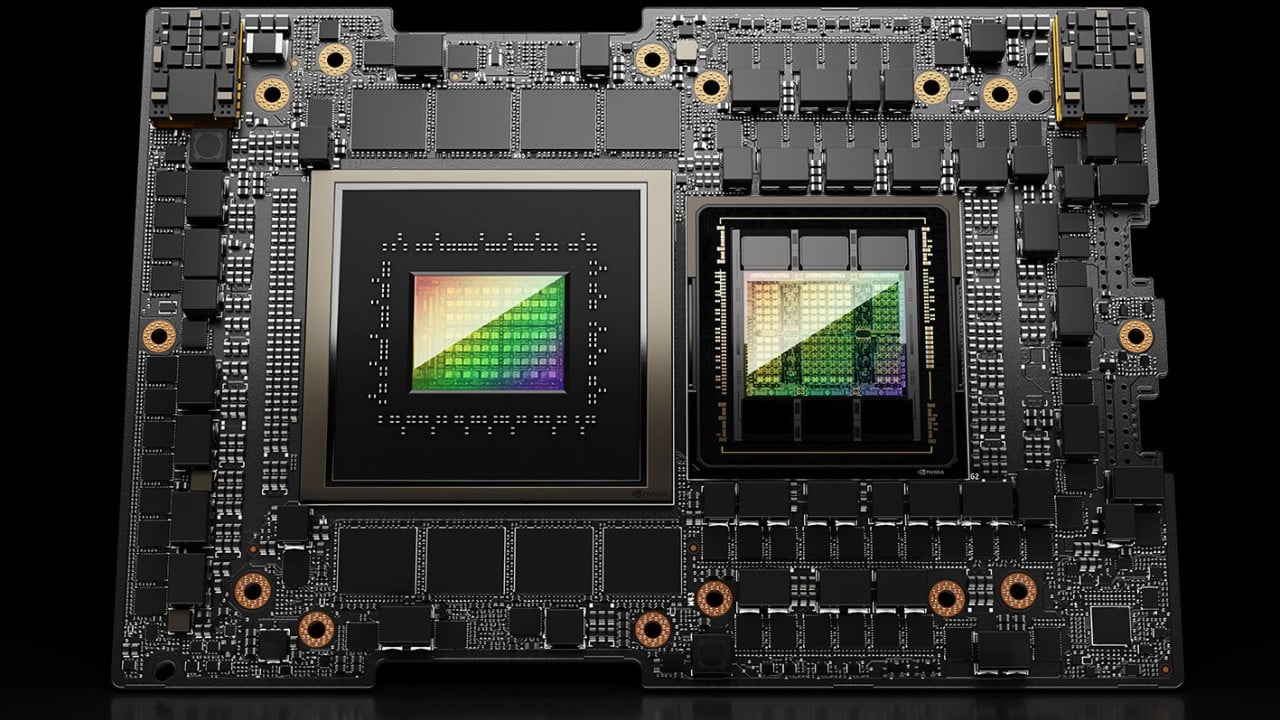
The global artificial intelligence hardware market operates under structural supply constraints and rigid regulatory boundaries. In early 2026, the intersection of these forces produced an apparent paradox: after months of resistance and a strict push toward domestic silicon, Beijing initiated partial import approvals for Nvidia’s Hopper-architecture H200 tensor core GPUs.
A superficial interpretation reads this as a capitulation by Chinese regulators or an outright reversal of industrial policy. A structural analysis reveals the opposite. Beijing's targeted clearance for companies like Alibaba, ByteDance, and DeepSeek to acquire a capped pool of under 200,000 units is a calculated, asymmetric compromise. This framework splits the AI lifecycle into training and inference workloads, creating a managed dependency on American hardware for frontier model development while protecting the domestic semiconductor supply chain. If you enjoyed this post, you might want to read: this related article.
The Compute Asymmetry Matrix
The decision to permit restricted H200 imports stems from a stark divergence in performance capabilities between indigenous Chinese silicon and advanced American architectures. For frontier model training, raw compute throughput, memory capacity, and interconnect bandwidth dictate engineering timelines.
The primary domestic alternative, Huawei’s Ascend architecture, delivers approximately 60% to 70% of the raw computational performance of an H200 on paper. In practice, this gap expands during large-scale cluster scaling. The variance is driven by three distinct technical parameters: For another perspective on this story, check out the latest update from Engadget.
- Memory Bandwidth Constraints: The Nvidia H200 features 141 gigabytes of HBM3e memory, delivering 4.8 terabytes per second of memory bandwidth. Domestic fabrication processes face yield issues on high-bandwidth memory, restricting local accelerators to lower-tier configurations that bottleneck large language model training.
- Interconnect Scalability: Training a frontier model requires clustering tens of thousands of GPUs. Nvidia’s proprietary NVLink ecosystem maintains ultra-low latency and massive bandwidth across nodes. Local architectures struggle to scale past a few thousand nodes without severe communication overhead losses.
- Software Ecosystem Deficits: Nvidia’s CUDA platform represents over a decade of optimized libraries for deep learning. Porting complex training pipelines to alternative software stacks introduces optimization delays, extending training times from weeks to months.
This creates a sharp divergence between training and inference workloads. Frontier training scales non-linearly with compute density, whereas inference can be horizontally distributed across less efficient hardware with less extreme penalty metrics.
The Bifurcated Architecture Framework
To balance technological progress with long-term technological sovereignty, Beijing utilizes a split-stack deployment strategy. This bifurcated approach partitions hardware deployment based on operational utility.
       [AI Workload Segmentation Strategy]
                       │
        ┌──────────────┴──────────────┐
        ▼                             ▼
[Frontier Training]          [Mass Inference]
  (Compute Intensive)          (Volume Intensive)
        │                             │
        ▼                             ▼
  Nvidia H200                  Domestic Silicon
(Capped at <200k Units)      (Huawei Ascend, SMIC, etc.)
By siloing foreign high-end chips inside training clusters, Chinese planners achieve a dual-track objective. First, they allow top-tier labs to match the training velocity of global peers, preventing a permanent capabilities gap in foundational model weights. Second, they insulate the domestic consumer inference market from foreign hardware, forcing local firms to deploy domestic accelerators for user-facing applications.
This segmentation acts as a natural shield for China's semiconductor ecosystem. Because inference represents the true volume driver over an AI model's commercial lifespan, keeping the inference market closed ensures that local chip design firms and fabrication foundries maintain a high volume of orders. This domestic demand provides the revenue and operational data required to iteratively narrow the hardware performance gap.
Tectonics of the Dual-Regulatory Bottleneck
The flow of H200 chips into Chinese data centers is bounded by a dual-sided regulatory filter. Both Washington and Beijing enforce competing compliance mechanisms, squeezing the net margin and volume of these transactions.
The American regulatory framework, established via the Bureau of Industry and Security (BIS) case-by-case review policy, shifts away from a blanket "presumption of denial" but introduces friction points. It implements a volume cap limiting exports to 50% of the domestic U.S. shipment volume. Furthermore, it demands a mandatory physical verification loop where chips fabricated in Taiwan must be routed through the United States for security checks. This routing incurs a 25% tariff structure that alters the unit economics of deployment.
The Chinese regulatory framework acts as a secondary filter. Beijing requires target enterprises to submit highly granular justification metrics, specifying the exact node counts, training objectives, and end-user verification protocols before granting an import license. This intentional friction caps total allocation below 200,000 units—less than half of the initial aggregate commercial demand from Chinese buyers.
Financial Implications and Strategic Trade-Offs
For Nvidia, this policy shift reopens access to a vital geographic market, yet it does not signal a return to historical revenue distributions. The 25% tariff penalty coupled with the stringent volume caps means that the absolute volume of H200 shipments to China functions as a minor variance compared to demand from North American hyperscalers.
The primary beneficiary of this regulatory window is the subset of Chinese AI developers executing high-parameter model training. Acquiring clusters of H200s allows these entities to bypass the structural limitations of domestic hardware and keep pace with global model architectures. However, this relief introduces unique operational risks.
Hardware Fragment Risks
Operating a split-stack infrastructure introduces permanent architectural complexity. Engineering teams must build software layers capable of running training pipelines on Nvidia hardware while compiling the resulting model weights for deployment across heterogeneous domestic inference clusters.
Supply Chain Shock Risks
Because these import licenses are subject to sudden legislative or executive adjustments in either Washington or Beijing, infrastructure built around these chips remains structurally fragile. Capital expenditure allocated to H200 deployment could be stranded mid-lifecycle if export criteria change.
Operational Playbook for Capital Allocation
Organizations navigating this regulatory landscape cannot treat these imports as a permanent hardware foundation. The optimal strategic play requires treating the H200 allocation as a temporary, high-velocity asset to be exploited for structural advantage, rather than a permanent solution for infrastructure scaling.
[H200 Inbound Allocation] ──► [Frontier Weight Training] ──► [Weight Optimization Phase] ──► [Heterogeneous Cross-Compilation] ──► [Scale Inference via Local Silicon]
Capital allocation strategies must isolate the H200 clusters entirely for core foundational training tasks where domestic chip performance penalties are unacceptable. Concurrently, infrastructure investments should prioritize building robust cross-compilation layers. Companies must develop software toolchains that convert model weights derived from CUDA-centric training environments into runtimes optimized for native domestic architectures.
By utilizing the H200 exclusively to secure competitive model weights and deploying those weights onto sovereign local inference nodes, AI firms can maximize immediate model performance while hedging against the volatile regulatory frameworks that govern global semiconductor supply chains.