Smoke smells different when it belongs to your past.
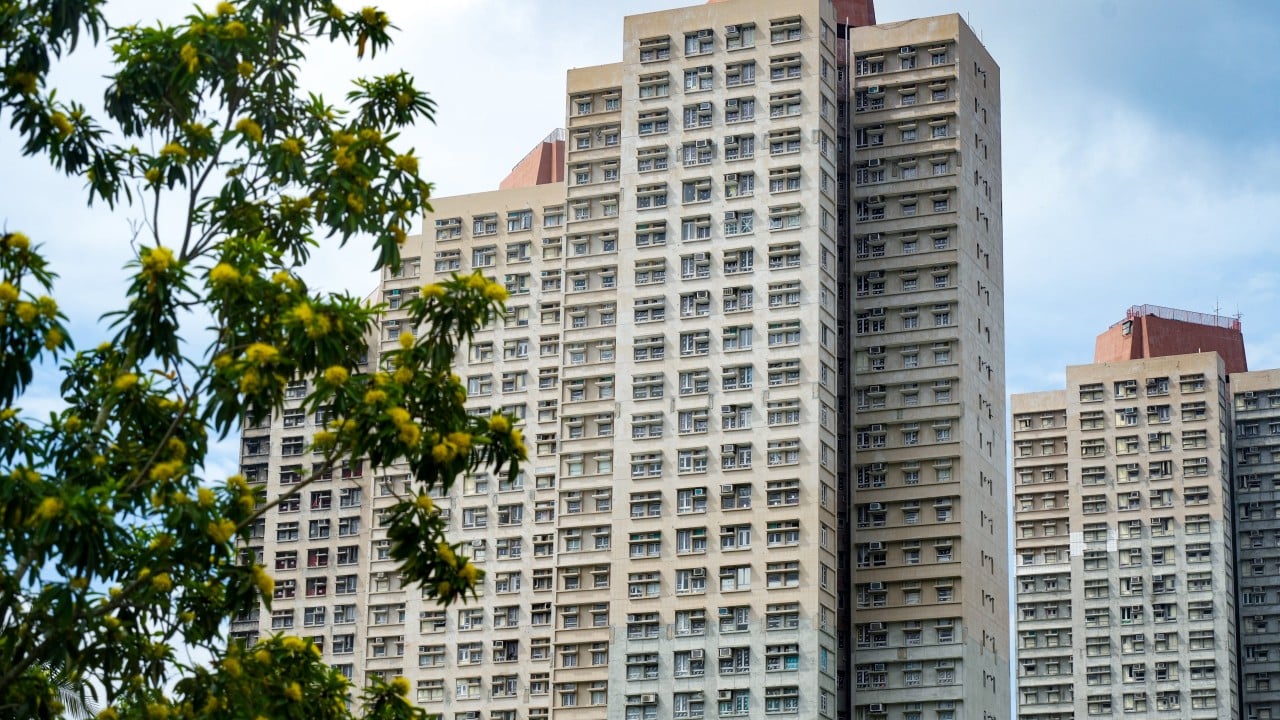
It is not the clean scent of a winter fireplace or the savory drift of a street-side stall. It is acrid. It sticks to the roof of your mouth hours after you have evacuated. It carries the weight of melted plastic, ruined photo albums, and the sudden, violent evaporation of routine. When a block in Tai Po caught fire, the headlines tallied the immediate damages. Sirens. Hoses. Smoke billowing into a grey Hong Kong sky. But the true fire did not stop when the flames were extinguished. It smoldered in the weeks that followed, shifting from physical heat to the crushing pressure of a bureaucratic choice.
Let us step into a hypothetical living room on the aftermath side of catastrophe. Imagine Mei-ling, a fictitious resident whose life for twenty years was anchored by a specific view of a quiet courtyard from her third-floor flat.
(Note: Mei-ling is a hypothetical character created to illustrate the collective emotional reality of the block's residents.)
Her kitchen tiles are still stained with soot. The walls, once a comforting cream, now weep grey water marks. She sits on a plastic stool because her sofa absorbed too much chemical residue to save. In her hand is a single piece of official paper. It is a proposition. The authorities want to buy them out.
Quietly. Efficiently. Entirely.
Numbers do not tell the whole story. Yet, numbers are all we have to measure a turning point.
75.8%.
That is the exact threshold. Nearly three-quarters of the flat owners at the fire-scarred Tai Po block looked at their charred stairwells, their fractured community networks, and the steep price of rebuilding from the ashes, and they said yes. They agreed to sell.
Why?
To understand that number, you have to understand the terror of the lingering ghost. A home is supposed to be a sanctuary. When a sanctuary is violated by fire, the psychological architecture collapses alongside the drywall. Every time you turn on a switch, you wait for a spark. Every time you smell burnt toast from a neighbor's kitchen, your chest tightens. Rebuilding is not just a matter of hiring contractors and repouring concrete. It is an act of supreme psychological endurance. Many residents simply ran out of fuel.
Consider what happens next in a neighborhood like this.
When a collective sale or government acquisition looms, the community fractures into whispers. In the lobbies, by the mailboxes, neighbors who once shared mooncakes during the Mid-Autumn Festival now argue in low, tense tones.
"If we stay, how long until the permits clear?"
"If we leave, where does this money actually take us?"
Property in Hong Kong is not merely shelter. It is oxygen. It is the bedrock of generational security. To be forced out of it—even by circumstance rather than a developer's wrecking ball—feels like an eviction by fate itself.
Yet, looking at that 75.8% approval rate reveals a pragmatic exhaustion. It is the sound of people realizing that holding onto a wounded building is a form of self-punishment. The authorities offered a way out. Not a perfect way, and certainly not a painless one, but an exit from the limbo of destruction.
We often talk about housing in cold metrics. Square footage, market valuations, acquisition costs, urban renewal strategies. We draw zoning lines on maps and debate policy in air-conditioned chambers far away from the scent of burnt rubber and soaked timber. But the human element always resists neat categorization.
Mei-ling, our hypothetical resident, represents the dissenting minority as much as the agreeing majority. She hesitated. She walked the scorched hallways one last time, running her fingers over the blistered paint of her front door. She remembered her children taking their first steps on that floor. She remembered the sound of rain hitting the aluminum awning outside.
How do you price twenty years of memories into a government acquisition payout? You cannot. The mathematics of compensation will always fall short of sentimental value.
And yet, late last night, Mei-ling signed the papers.
She did not do it because she stopped loving her home. She did it because the smoke had finally cleared enough for her to see the horizon. The block in Tai Po will change. New walls will rise, or the space will be cleared into something entirely new, erasing the physical scars of that terrible day.
The fire is out. The papers are signed. Outside, the rain begins to fall, washing the remaining soot from the streets, indifferent to everything that was lost, and everything that must now begin again.


