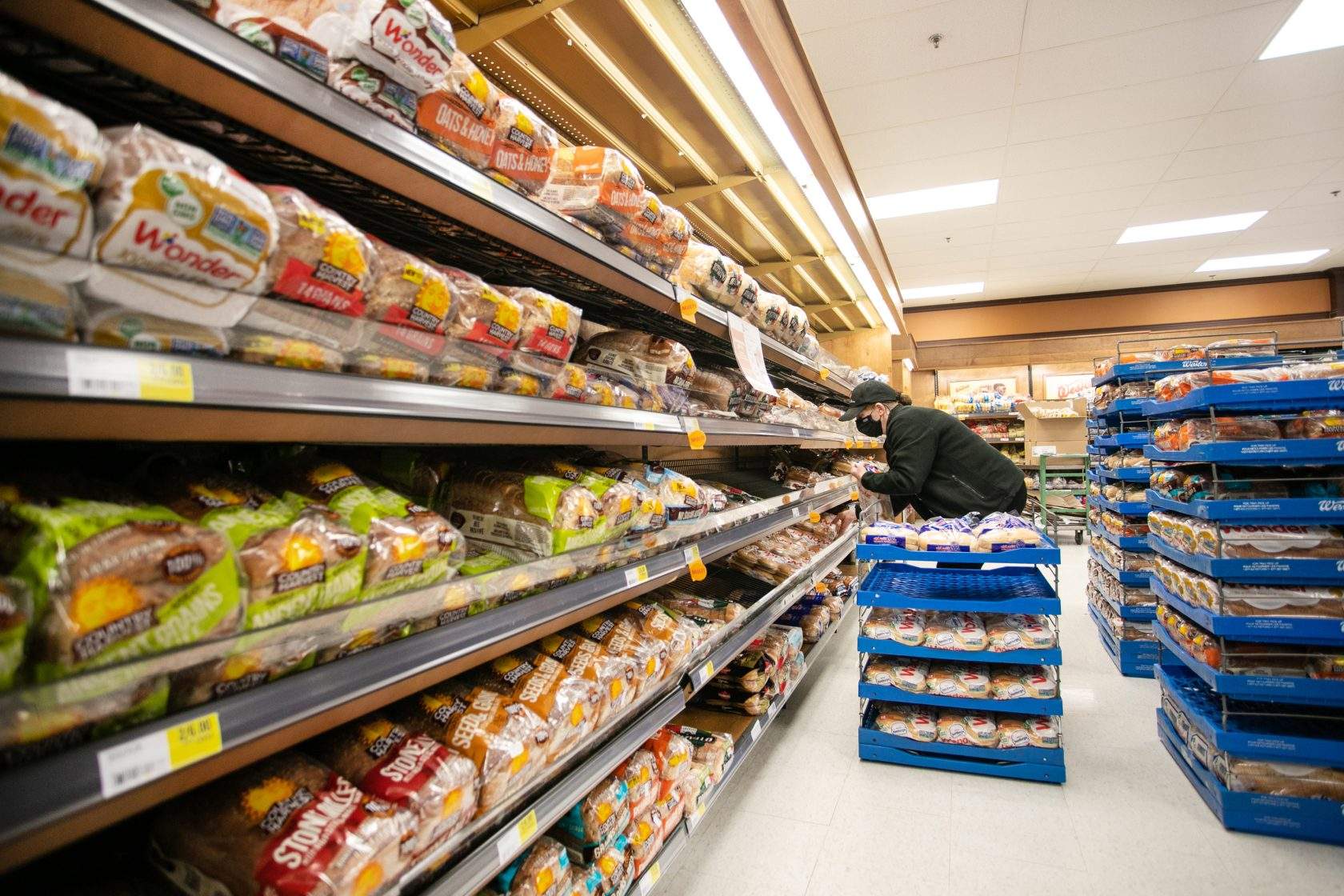
The issuance of $25 CAD payouts to Canadian consumers marks the operational conclusion of a 14-year period of coordinated retail and wholesale inflation in the commercial bread market. While public discourse often frames this as a simple refund, the event represents a complex settlement of a class-action lawsuit following a long-term breach of the Competition Act. To understand the mechanics of this payout, one must analyze the structural collusion between Loblaw Companies Ltd. and George Weston Ltd., the subsequent immunity deal with the Competition Bureau, and the calculated risk-mitigation strategy employed by corporate entities to move past a multi-billion-dollar price-fixing scheme.
The Mechanism of Price Coordination
The bread price-fixing arrangement operated through a hub-and-spoke model. In this framework, George Weston Ltd. and Canada Bread served as the primary manufacturers (the hubs) that facilitated price communication between various retail competitors (the spokes), including Loblaw, Sobeys, Metro, and Giant Tiger.
The coordination relied on three operational pillars:
- Uniform Price Increases: Manufacturers coordinated the timing and magnitude of wholesale price hikes.
- Retail Alignment: Retailers agreed to pass these increases to the consumer simultaneously, eliminating the competitive incentive to undercut prices and capture market share.
- Margin Protection: By synchronizing the "list price" and the "floor price," participants ensured that promotional discounts never dropped below a predetermined threshold, effectively ceiling the consumer's purchasing power.
This system removed the standard market variable of price elasticity. Since bread is a staple good with low substitutability, the cartel could extract consistent rent from the Canadian populace without fearing a significant drop in demand.
The Leniency Program and Strategic Immunity
The disclosure of this scheme in 2017 was not the result of a whistle-blower or an external audit, but a strategic deployment of the Competition Bureau’s Leniency Program. Loblaw and George Weston Ltd. approached the Bureau to report their involvement in exchange for immunity from criminal prosecution.
The decision-making logic behind this self-reporting follows a clear cost-benefit analysis:
- Criminal Exposure: Under the Competition Act, price-fixing can lead to fines of up to $25 million and imprisonment for up to 14 years.
- Civil Liability: While immunity protects the corporation from criminal fines, it does not provide a shield against civil class-action lawsuits.
- First-In Advantage: The first participant to report a cartel receives full immunity; subsequent participants may only receive a reduction in penalties.
By being the "first-in," Loblaw secured a position where its primary legal threat was shifted from the federal government to the civil courts. The current payouts are a direct result of settling these civil claims, specifically those filed in Ontario and Quebec, totaling a combined $500 million settlement fund.
Quantifying the Payout vs. the Profit
The $25 "Loblaw Card" (initially offered in 2018) and the subsequent cash payments from the 2024 settlement represent a fraction of the total economic distortion caused by the 14-year scheme. To quantify the impact, one must evaluate the Delta of Collusion.
If we assume a conservative price inflation of $0.15 per loaf due to fixing, and a weekly consumption rate of one loaf per household, the annual cost per household exceeds the value of the settlement. When compounded over 14 years, the $25 payment functions less as a restorative measure and more as a "settlement of convenience."
For the corporations involved, the settlement serves two functions:
- Liability Capping: By agreeing to a $500 million figure, the companies define their maximum loss, preventing an open-ended trial that could result in multi-billion dollar damages if triple-damages or punitive awards were applied.
- Administrative Attrition: The process for claiming these funds requires active consumer participation. Historical data on class-action settlements shows that "take-up rates"—the percentage of eligible class members who actually file a claim—are often low. This creates a "breakage" effect where a significant portion of the settlement fund remains unpaid or is redirected, reducing the effective cost to the defendant.
Operational Logistics of the Disbursement
The current distribution of funds is managed by third-party claims administrators (RicePoint and Epiq Global). The logistical chain follows a rigid verification sequence:
- Eligibility Window: The claim period covers purchases made between January 1, 2001, and December 19, 2019.
- Attestation Model: Due to the impossibility of producing 20-year-old grocery receipts, the settlement utilizes a "Simplified Claim Form" where consumers declare their purchases under penalty of perjury.
- Payment Modality: Interac e-Transfer has become the primary delivery mechanism, chosen for its lower administrative overhead compared to physical cheque mailing.
The delay between the 2017 admission and the 2024 payout is a result of the "Contested Defendant" variable. While Loblaw and Weston settled, other retailers like Sobeys and Metro initially contested the allegations, leading to years of discovery and legal maneuvering. The $500 million currently being distributed represents the portion of the litigation involving the Weston-owned entities. Litigation against other retailers remains a separate variable in the broader legal landscape.
Corporate Governance and Brand Recovery
From a brand strategy perspective, the $25 payment is a tactical maneuver to convert a legal liability into a customer loyalty touchpoint. In the 2018 phase, the "Loblaw Card" was restricted for use within Loblaw-owned stores. This effectively forced the settlement funds back into the company’s own ecosystem, allowing them to recover the wholesale margin on the goods purchased with the cards.
The 2024 cash payout is different; it is "fungible" capital that can be spent anywhere. However, the reputational damage remains a "sticky" variable. In an era of high food inflation, the legacy of the bread price-fixing scandal serves as a focal point for consumer frustration regarding retail oligopolies in Canada.
Market Implications for the Canadian Grocery Sector
The bread settlement is a diagnostic tool for the health of Canadian market competition. It highlights the vulnerability of a consolidated market where five major retailers control the vast majority of the food supply chain.
The structural risks identified in this case suggest that:
- Regulatory Oversight Must Be Proactive: The Competition Bureau’s reliance on self-reporting indicates a lack of real-time monitoring capabilities for price anomalies in staple goods.
- Deterrence Gaps Exist: If the profit generated by a 14-year cartel exceeds the eventual civil settlement and the legal fees associated with it, price-fixing becomes a "cost of doing business" rather than a prohibited activity.
Investors and analysts monitoring the Canadian retail sector should view these payouts as the closing of a significant contingent liability on the balance sheets of George Weston Ltd. and Loblaw Companies Ltd. The removal of this legal overhang allows for a cleaner valuation of the stocks, though it does not mitigate the ongoing political pressure regarding grocery margins.
The strategic play for consumers is to execute the claim process immediately to avoid the expiration of the fund. For the broader market, the focus must shift to the remaining defendants—Metro, Sobeys, and Giant Tiger—whose refusal to settle at this stage suggests a different legal calculus. If these firms lose in court, the payouts could potentially exceed the current $25 benchmark, as they would not benefit from the "settlement discount" negotiated by Loblaw.
The completion of the Weston-Loblaw disbursement resets the baseline for corporate accountability in Canada. It establishes a precedent where systemic collusion is resolved through mass-market micro-payments, a model that will likely be replicated in future antitrust actions involving digital platforms and telecommunications. Consumers should view the $25 not as a windfall, but as a receipt for the resolution of a decade-long market inefficiency.
The next strategic inflection point occurs when the Competition Bureau releases its updated guidelines on "competitor collaborations." Retailers must now operate under a heightened "Surveillance State" of pricing, where algorithmic price matching—once a standard tool—may be scrutinized under the same lens as the manual hub-and-spoke coordination of the 2000s. Companies that fail to audit their pricing algorithms for "unintentional synchronization" face the same existential risks that led Loblaw to the immunity desk in 2017.