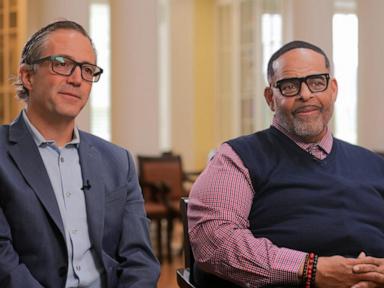
The management of multi-generational historical legacies operates under the same fundamental mechanics as institutional brand equity preservation. When a foundational historical figure possesses a fractured legacy—characterized by simultaneous contributions to systemic infrastructure and severe ethical deficits—the modern descendants inherit a complex matrix of social capital and reputational liability. The public tension surrounding Thomas Jefferson’s lineage is not merely a sentimental dispute; it is a structural case study in how asymmetric historical narratives disintegrate family cohesion and demand a rigorous reallocation of cultural assets.
To systematically evaluate how descendants navigate this environment, the legacy must be deconstructed into its core variables. Jefferson's positioning presents a stark binary: the intellectual architecture of American democratic capitalism (the asset) versus the institutionalized exploitation of enslaved labor, specifically documented through his relationship with Sally Hemings (the liability). The optimization problem for modern descendants involves balancing these conflicting inputs to establish a coherent modern identity.
The Dual-Asset Framework of Generational Inheritances
Every historical lineage possessing macro-level societal impact can be plotted on a balance sheet of cultural equity. The stability of the lineage's modern public profile depends on the ratio between tangible historical contributions and systemic ethical failures.
       [Historical Core Figure]
         /                  \
        /                    \
  [Systemic Assets]     [Systemic Liabilities]
  - Democratic Infrastructure  - Human Exploitation
  - Institutional Brand        - Reputational Deficit
        \                    /
         \                  /
       [Descendant Cohort Split]
       /                        \
 [Traditionalist Faction]   [Revisionist Faction]
 (Preservation Focus)       (Reconciliation Focus)
1. Systemic Assets: Institutional Brand Capital
The structural contributions of Thomas Jefferson provide his descendants with automatic entry into elite socio-political strata. This capital includes:
- Political Legitimacy: Direct lineage to the author of the Declaration of Independence operates as a permanent validation mechanism in Western political discourse.
- Physical Infrastructure: The preservation of Monticello and the University of Virginia serves as tangible geographic anchoring for the family name, transforming private ancestry into public monumentality.
- Intellectual Property Equity: The enduring utilization of Jeffersonian philosophy in constitutional debates ensures the name remains continuously relevant in contemporary policy frameworks.
2. Systemic Liabilities: Reputational Deficits and Moral Debt
Conversely, the structural liabilities generate ongoing friction that devalues the institutional brand capital. These liabilities are defined by:
- Human Exploitation Costs: The documented ownership of over 600 enslaved individuals over a lifespan creates a profound ethical deficit that resists conventional brand rehabilitation.
- The Hemings Contradiction: The biological reality of the Hemings lineage directly undermines the foundational text of the Jeffersonian asset ("all men are created equal"), creating a structural logical paradox at the center of the legacy.
- Modern Revaluation Pressures: As societal values update their evaluative metrics, the weight assigned to historical ethical deficits increases exponentially, accelerating the depreciation of the traditional brand asset.
Factional Divergence in Descendant Cohorts
When an institutional legacy contains highly polarized assets and liabilities, the descendant cohort inevitably splits into distinct strategic factions. This divergence is driven by differing calculations of identity optimization.
The traditionalist faction prioritizes the preservation of the primary brand asset. The strategic objective is to isolate the historical figure's macro-achievements from their systemic flaws. In practice, this manifests as an emphasis on statecraft, architectural innovation, and intellectual history, while categorizing human exploitation as a common chronological variable of the 18th century rather than a defining characteristic of the individual. The limitation of this strategy is its vulnerability to modern historical revisionism, which views asset isolation as a form of historical erasure.
The revisionist faction, heavily populated by the descendants of the Sally Hemings lineage, operates on a strategy of integration and reconciliation. The objective is to force the recognition of the systemic liability into the primary narrative of the asset. By establishing biological authenticity through DNA sequencing and historical documentation, this cohort reclaims their share of the cultural equity, transforming a historical cover-up into an active platform for modern social critique. The bottleneck here lies in institutional resistance; legacy entities (such as traditional lineage societies) often deploy bureaucratic barriers to protect the perceived purity of the original brand asset.
The Operational Mechanics of Institutional Integration
The structural friction within the Jefferson lineage reached a critical inflection point through the evolution of Monticello’s curatorial strategy. Historically, cultural institutions managed legacy liabilities via containment—relegating slave quarters and the Hemings genealogy to peripheral physical and narrative spaces.
This containment strategy failed due to shifting consumer demands for historical accuracy and the democratization of genealogical data. The revised operational model requires structural integration, where the liability is embedded directly into the primary asset delivery mechanism.
For example, curatorial staff converted physical spaces previously used for administrative utility back into interpreted historical sites detailing the lives of the enslaved population. This strategic shift alters the consumer experience: visitors no longer consume a mono-directional narrative of democratic triumph; instead, they experience a dual-narrative optimization model that presents asset and liability simultaneously.
This integration causes measurable shifts in stakeholder alignment. Traditional donors who funded the preservation of the idealized asset may withdraw capital, viewing integration as a dilution of value. Conversely, new institutional capital—grants focused on historical justice, academic partnerships, and broader demographic audiences—flows into the organization, offseting the traditionalist exit.
Mitigating the Impact of Hereditary Reputational Friction
For modern families and organizations managing complex historical heritages, the Jeffersonian paradigm provides a clear blueprint for liability mitigation. The standard corporate response to a legacy crisis—complete detachment or aggressive denial—is non-viable when dealing with immutable historical facts. Instead, managers of these legacies must execute a structural reallocation of narrative assets.
First, acknowledge the structural liability without conditional clauses. Attempts to contextualize ethical failures using chronological relativism consistently alienate modern stakeholders and lower the total value of the brand.
Second, dismantle exclusionary lineage mechanisms. The historic refusal of certain lineage societies to admit descendants of color based on bureaucratic technicalities acted as a secondary reputational hit, compounding the original liability. Open structural integration stabilizes the long-term viability of the organization.
Third, pivot from preservation to active education. A historical legacy remains viable only if it provides utility to the current socio-political environment. By shifting resources toward studying the mechanics of historic systemic exploitation, the modern lineage converts a reputational liability into an educational asset.
The long-term equilibrium of any historical lineage cannot be sustained through the forced enforcement of an incomplete narrative. As data accessibility increases, the market value of unverified historical romanticism approaches zero. Descendants who successfully navigate these legacy dynamics recognize that the goal is not to achieve a flawless historical record, but to demonstrate structural transparency in managing the inherited contradictions of the past. The final strategic requirement for any historical lineage management entity is the complete integration of marginalized bloodlines into the governing bodies controlling the physical and intellectual property of the estate, ensuring that asset distribution matches historical reality.