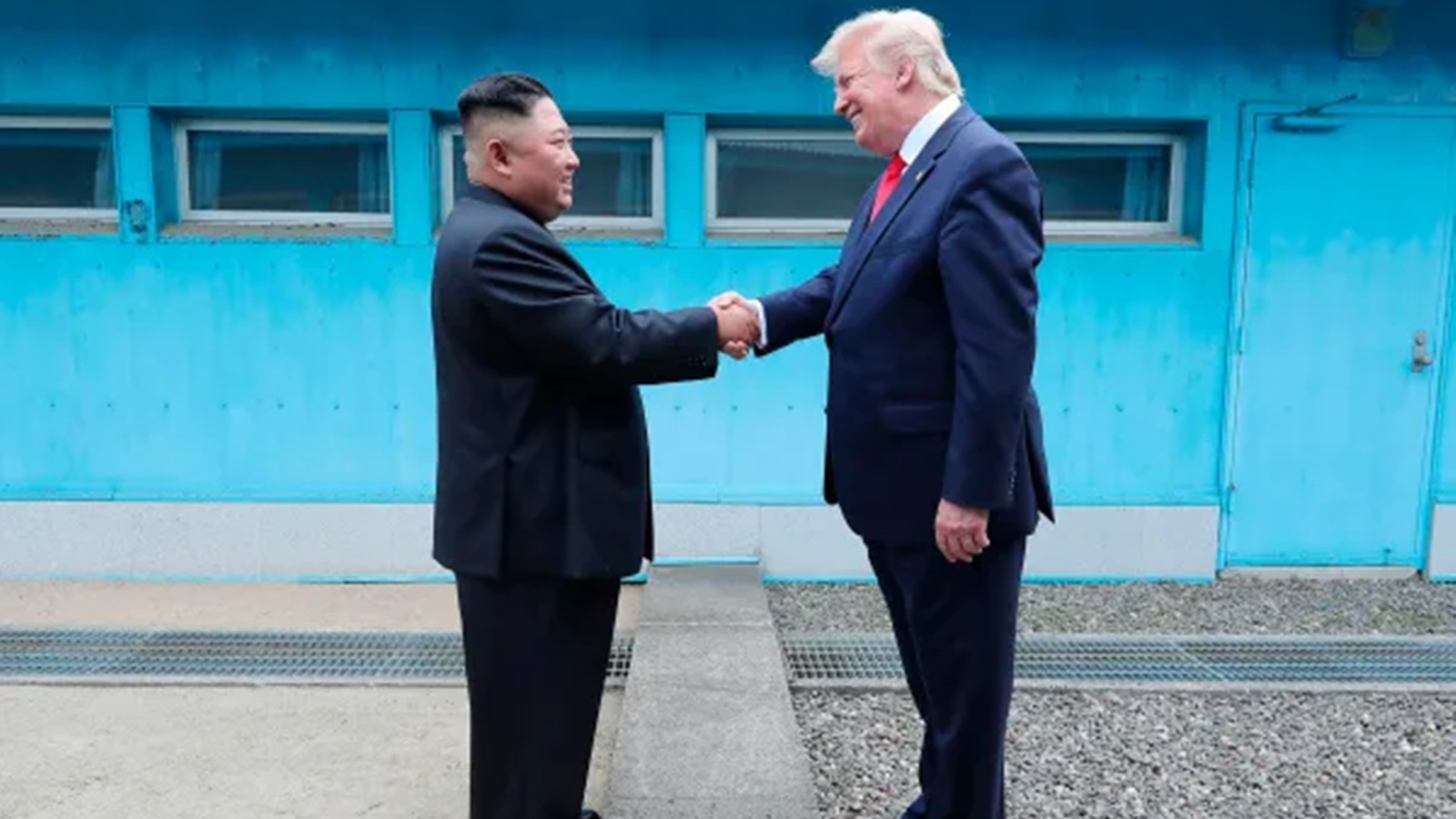
Geopolitical realignments in Northeast Asia trigger systemic vulnerabilities across bilateral security architectures. Strategic pivots by major powers rarely occur in isolation; instead, they alter the risk calculus for regional partners who rely on extended nuclear deterrence. When Washington shifts its posture toward the Korean Peninsula, the structural tension between alliance management and unilateral bargaining efficiency scales exponentially.
The Three Structural Vectors of Alliance Friction
Bilateral cohesion under shifting defense doctrines depends on how the dominant actor handles burden distribution, credibility thresholds, and operational synchronization.
First, the credibility threshold of extended deterrence determines alliance stability. When a security guarantor alters its diplomatic engagement model with a nuclear-armed adversary, secondary partners immediately recalculate the reliability of the security umbrella. The primary vulnerability lies in the divergence of threat perceptions. While a superpower might prioritize strategic stability and counter-proliferation on a global scale, front-line allies face direct kinetic exposure. This divergence introduces systemic friction, as local actors question whether distant capitals will absorb catastrophic risks for regional defense.
Second, the cost function of defense burden-sharing shifts under transactional foreign policy frameworks. Alliance maintenance requires continuous alignment of financial, logistical, and political capital. When operational costs or troop stationing arrangements become subjects of intense transactional renegotiation, the administrative overhead strains diplomatic channels. Partners must hedge against sudden shifts in resource allocation, forcing them to divert capital toward indigenous defense modernization rather than integrated coalition capabilities.
Third, operational integration suffers when command structures lack synchronization. Joint military exercises and intelligence sharing form the operational bedrock of coalition defense. Strategic recalibrations often result in the scaling, suspension, or alteration of combined readiness drills. Without continuous friction testing, interoperability degrades, increasing the probability of miscalculation during an active crisis.
Strategic Interdependence and the Asymmetry of Risk
The economic and security architectures of East Asia operate on deep interdependence. Security dependencies do not map neatly onto economic supply chains, creating a complex risk matrix for secondary states.
Alliance partners face a strategic trilemma. They must maintain alignment with the primary security guarantor to deter regional adversaries, manage trade and economic exposure with competing regional hegemons, and satisfy domestic political constituencies demanding national autonomy. Adjustments to grand strategy in Washington alter the variables within this trilemma, forcing allies to absorb higher strategic variance.
When diplomatic overtures bypass established multilateral frameworks, secondary partners experience a loss of strategic agency. This loss manifests as anxiety over abandonment on one hand, and entrapment in escalatory spirals on the other. The structural mechanism driving this anxiety is the asymmetry of information and decision-making speed. Superpowers operate with global horizons; regional partners operate with localized existential constraints.
Strategic Execution and Operational Hedging
Managing structural friction within security partnerships requires a deliberate pivot from reactive diplomacy to institutionalized risk mitigation.
Alliance managers must decouple long-term capability integration from short-term executive negotiations. Institutionalizing joint command protocols through codified legislative frameworks ensures that operational readiness survives executive transitions. Furthermore, burden-sharing metrics must reflect strategic value rather than arbitrary financial targets, accounting for intelligence assets, geographic positioning, and logistical infrastructure provided by regional partners.
To counteract the erosion of deterrence credibility, joint nuclear consultative mechanisms must transition from consultative forums to active operational planning groups. By codifying collaborative deterrence architecture, secondary actors regain visibility into strategic decision-making cycles, reducing the systemic uncertainty that weakens collective defense postures.


