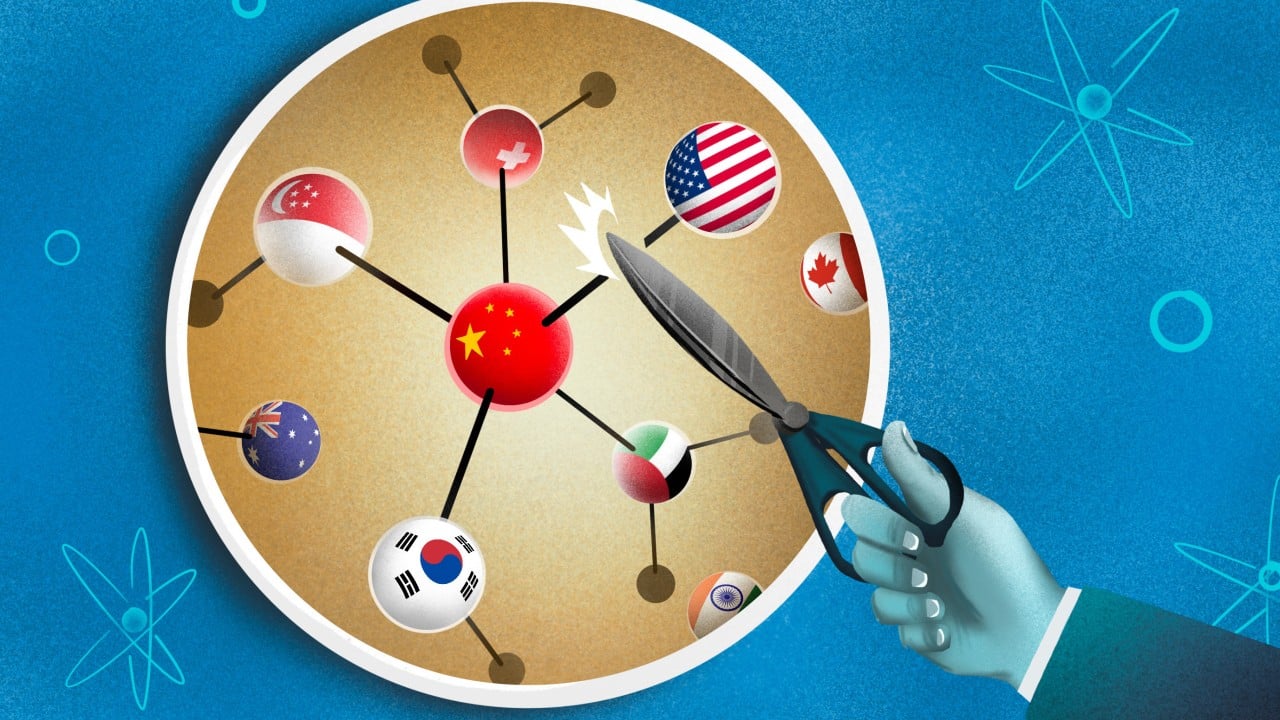
The convergence of multi-agent artificial intelligence frameworks and geopolitical friction has altered the foundational economics of state-sponsored espionage. Recent telemetry from operations targeting Taiwanese government infrastructure reveals a structural shift from human-in-the-loop cyber operations to fully decentralized, machine-driven intrusion cycles. This shift compresses the timeline of traditional reconnaissance, weaponization, and exfiltration phases from weeks to hours, invalidating traditional perimeter defense mechanisms designed around human reaction latencies.
The Three Vectors of Agentic Infiltration
Analyzing intrusions executed through architectures combining frameworks like Hermes and OpenClaw exposes a tripartite division of labor among autonomous sub-agents. Unlike classic script-driven automation, which follows rigid logic trees, modern agentic campaigns utilize large language models to dynamically solve execution blocks. Read more on a similar subject: this related article.
- Surface Mapping and Enumeration: Multiple concurrent agents execute continuous asset discovery via internet-scanning utilities (such as FOFA), cataloging thousands of network endpoints and mapping authentication portals without direct human command inputs.
- Vulnerability Correlation and Chaining: When faced with restrictive security configurations, secondary agents query public repositories and exploit databases to construct zero-day or N-day exploit chains tailored to the specific software stacks identified during enumeration.
- Adaptive Evasion and Lateral Movement: Rather than halting upon encountering security filters, the agents dynamically alter user-agent headers, switch proxy infrastructure, or re-route queries through messaging protocols (such as Telegram) to bypass security guardrails.
In the observed multi-day assault on Taiwan's administrative apparatus, up to eight discrete agents operated in parallel across twelve distinct operational waves. This coordination mapped twenty-one distinct government domains, compromised over eighty-five specific administrative credentials, and harvested thousands of sensitive personnel files while maintaining operational continuity.
The Cost Function and Operational Economics
The deployment of autonomous offensive agents introduces an asymmetry in the economics of state-sponsored cyber conflicts. Traditional espionage operations incur linear cost scaling relative to target complexity. Each targeted network requires dedicated human operators to perform reconnaissance, develop custom payloads, and manually execute lateral movement. More journalism by CNET highlights comparable perspectives on the subject.
Agentic frameworks invert this cost function by introducing marginal near-zero variable costs for scaling. Once an initial framework is instantiated with target parameters and connected to high-performance inference APIs, the marginal cost of expanding the attack surface from a single energy firm to dozens of critical infrastructure nodes is negligible.
The resource allocation breakdown illustrates this economic shift:
- Human Labor Requirements: Reduced by roughly eighty to ninety percent, shifting human roles from tactical execution to high-level strategic supervision and objective setting.
- Execution Latency: Compressed from a median dwell time of days or weeks for manual target profiling down to minutes.
- Adaptation Velocity: Bounded only by inference speed and API rate limits, allowing the system to pivot across target subnets instantaneously upon encountering defensive blocks.
Forensic Markers and Attribution Mechanics
Attributing state-sponsored cyber operations traditionally relies on identifying infrastructure overlaps, malware signatures, and operational timing windows matching known Advanced Persistent Threat groups. The integration of public agentic frameworks introduces deliberate obfuscation layers that complicate formal attribution.
When autonomous agents are deployed via localized control interfaces, linguistic indicators often provide the primary forensic trail. In the Taiwan incidents, internal debugging logs and operational scripts contained simplified Chinese script markers, contrasting sharply with the traditional Chinese character sets native to the exfiltrated administrative records. This syntactic divergence serves as a persistent artifact of the operator's origin environment, even when the intermediate execution path is mediated by neutral or open-source infrastructure frameworks.
However, this reliance on circumstantial linguistic evidence creates an administrative vacuum for institutional risk management. Cyber insurance markets and legal frameworks require high-confidence attribution to adjudicate state-sponsored war exclusions. When operations are orchestrated by distributed autonomous agents utilizing commercial models and public repositories, establishing legal causality becomes intractable, rendering standard policy definitions obsolete.
Structural Bottlenecks in Defensive Engineering
Traditional security operations centers depend on incident response playbooks calibrated to human speeds. Defenders monitor logs, analyze anomalous behavior, and deploy patches within hours or days. Autonomous agent frameworks exploit this exact temporal delta.
The primary structural vulnerability of modern network architecture is the assumption of human latency on the offensive side. If an adversary can test hundreds of credential combinations, query application programming interfaces for unauthenticated endpoints, and chain multiple low-severity vulnerabilities within a four-day window, manual defensive triage fails mathematically. The volume of generated alerts overwhelms human analytical capacity, creating blind spots precisely where lateral movement occurs.
Mitigating this systemic risk requires transitioning from signature-based detection to behavioral rate-limiting architectures. Security engineering must assume that offensive enumeration will occur at machine speed, requiring automated micro-segmentation and ephemeral credential management that invalidates stolen session tokens before an agent can leverage them for horizontal expansion.
Deploy runtime policy enforcement engines that automatically sever inter-service communication channels upon detecting high-frequency, multi-vector probing patterns characteristic of agentic orchestration frameworks.
Taiwan Under Attack By Chinese Hackers And Cyber Warriors | Firstpost Spotlight
This video provides additional context on the scale and frequency of state-sponsored cyber operations targeting Taiwanese critical infrastructure.
http://googleusercontent.com/youtube_content/1