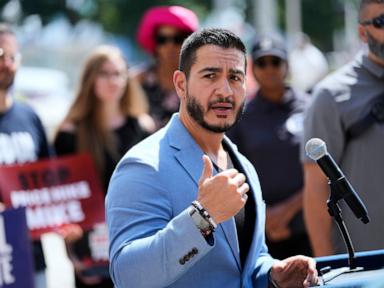
We live in an era of ritualized contrition. Someone speaks, a mob reacts, a statement is drafted, and an apology is issued. Abdul El-Sayed’s recent apology regarding his response to an attack on a Michigan synagogue fits neatly into this predictable machinery. The mainstream narrative treats the apology as a moral milestone or a tactical necessity. They are wrong. It is a symptom of a deeper rot in public discourse, where words are weaponized, context is erased, and public figures are forced to prostrate themselves before an audience that demands submission, not clarity.
Let us dismantle the lazy consensus. The accepted wisdom tells us that swift apologies heal community divides, restore trust, and demonstrate accountability. That is a comforting fiction. In reality, modern political apologies do none of those things. They are grease for the outrage machine. They validate bad-faith interpretations and signal weakness to political opponents who smell blood in the water.
The Mechanics of Manufactured Outrage
Every time a public figure steps into a cultural or political minefield, a set of invisible gears starts turning. The playbook is older than social media, but algorithms have supercharged it.
- The Decontextualization Trap: A statement is stripped of its qualifying clauses.
- The Amplification Loop: Bad-faith actors amplify the mutilated quote across partisan channels.
- The Pressure Point: Institutional allies panic, fearing reputational damage or donor flight.
- The Capitulation: The apology is released, satisfying no one and emboldening everyone who manufactured the crisis in the first place.
I have watched strategists spend decades trying to manage this cycle. They treat public relations like a damage control exercise, when it is actually a war of attrition. When you apologize for a nuanced position because a slogan-chasing crowd misunderstood it, you concede the premise that complexity is a crime.
Look closely at what happens after the ink dries on these forced statements of regret. Does the outrage dissipate? Rarely. The goalposts simply move. The apology becomes an admission of guilt rather than an act of de-escalation.
The Myth of the Clean Slate
The primary misconception driving the reaction to El-Sayed's remarks is that words can be walked back cleanly like a car in reverse gear. They cannot. In the digital public square, an apology is not an eraser; it is an exhibit. It gets entered into the permanent record as proof that the original critique was valid, even if the critique itself was built on quicksand.
Imagine a scenario where a public official speaks about complex foreign policy or local civil rights, weaving a careful needle through a minefield of historic grievances. Someone with an axe to grind isolates a subordinate clause. They slap a partisan label on it. Suddenly, the official is no longer defending a policy or addressing a community tragedy; they are defending their own character against a caricature.
The standard playbook dictates surrender. I argue for stubborn adherence to context.
If your initial statement was accurate, backing down validates the mob's right to police language. If your initial statement was genuinely malicious or poorly constructed, own the friction without hiding behind focus-grouped corporate prose. The middle ground—the forced, defensive apology—is the worst of both worlds. It trades integrity for temporary quiet, buying peace on credit at an exorbitant interest rate.
Why Nuance Dies in the Public Square
We have engineered a cultural ecosystem that punishes precision. Simple ideas travel fast; complex realities get stuck in traffic. When a place of worship is attacked, the public demands an immediate, emotionally flattened response. Grief must be broadcasted in approved tones; solidarity must be signaled with pre-approved keywords.
When a political figure steps outside those narrow boundaries to offer a systemic analysis or a broader historical observation, the system rejects it like an incompatible organ transplant.
Abdul El-Sayed is not the first, nor will he be the last, to discover that trying to inject thought into an environment designed for slogans is a losing game. But the solution is not to offer ritualistic penance. The solution is to stop playing the game on the opponent's terms.
Let us look at the alternative approach. What happens if a leader refuses to apologize for a misconstrued remark, choosing instead to double down on clarity?
- The initial noise is louder. The headlines are harsher for forty-eight hours.
- The superficial supporters scatter, revealing their lack of foundational loyalty.
- The core audience gains absolute clarity on where the leader actually stands, unvarnished by PR spin.
History shows us that leaders who endure the initial storm of non-apology often command more long-term respect than those who fold at the first sign of a trending hashtag. People respect backbone, even when they disagree with the underlying thesis. They smell fear and calculation instantly when an apology reads like it was co-authored by a crisis management firm and a legal team.
The Real Cost of Perpetual Contrition
When every controversy ends in a forced apology, language loses its value. Words become disposable currency. If an apology for a poorly interpreted sentence carries the same weight as an admission of a catastrophic moral failure, then true moral failures lose their sting. We create a flat landscape of outrage where a misspoken phrase and an indefensible act occupy the exact same emotional real estate.
This degradation of discourse harms minority voices and progressive politicians most of all. They are held to impossible standards of linguistic purity, where a single out-of-place syllable can trigger a public flaying. Meanwhile, political operators on the opposing side treat apologies as optional decorations, weaponizing their refusal to back down as a badge of strength.
Stop expecting public figures to be saints who never bruise a sentiment. Stop demanding contrition every time a statement requires more than an eighth-grade reading level to unpack. And above all, stop treating apologies as solutions when they are merely surrenders disguised as grace.
The next time a controversy erupts over a misinterpreted comment, remember what is actually happening. It is not a moral reckoning. It is a compliance test. Pass it by refusing to bow.


