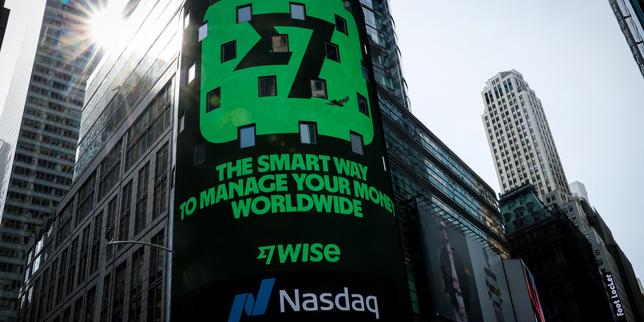
The financial press loves a good David becomes Goliath, Goliath gets corrupted story. When news broke that Belgian regulators launched an investigation into fintech darling Wise—formerly TransferWise—over alleged Anti-Money Laundering (AML) deficiencies, the headlines practically wrote themselves. "Fintech Giant Caught in Money Laundering Probe." "The Danger of Borderless Accounts."
The mainstream narrative is predictable: an agile startup grew too fast, cut corners on compliance to juice its stock price, and is now getting a well-deserved slap on the wrist from adult regulators.
This view is completely wrong. It misses the fundamental mechanics of how modern financial compliance works, how legacy banks weaponize regulations, and why this probe actually proves Wise has finally graduated into the big leagues.
The lazy consensus views an AML probe as a sign of structural rot. In reality, for a cross-border payment processor handling over £100 billion annually, a regulatory audit is not a sign of failure. It is an inevitability. The true story here is not that Wise is a haven for criminal syndicates, but that the friction between legacy compliance frameworks and real-time digital architecture has reached a breaking point.
The Myth of the Ironclad Legacy Bank
Mainstream financial journalists operate under a flawed premise: that traditional brick-and-mortar banks are the gold standard of compliance, and fintechs are lawless cowboys.
Let us look at the actual data.
According to the United Nations Office on Drugs and Crime, between 2% and 5% of global GDP is laundered every single year. That is up to $2 trillion flowing through the global financial system undetected. Where is that money moving? It is not moving through £500 peer-to-peer transfers on Wise. It moves through the correspondent banking networks of global behemoths.
Consider the track record of the traditional institutions pointing fingers. HSBC paid a $1.9 billion fine for laundering cartel money. Danske Bank was embroiled in a €200 billion laundering scandal through its Estonian branch. Deutsche Bank has paid billions in penalties over mirror-trading schemes.
Traditional banks do not have better compliance; they have bigger legal budgets and a built-in structural advantage. Their systems are slow by design. When a traditional bank takes three days to clear an international wire, the market praises their "thorough risk assessment." When Wise clears a transaction in three seconds, regulators panic.
The legacy approach to AML relies on retroactive auditing—looking at transaction logs months after the cash has already been layered and integrated into the economy. Fintech infrastructure relies on real-time transaction monitoring algorithms. The Belgian probe is not a failure of intent; it is a clash of methodology. Regulators are trying to measure a supersonic jet using rules written for a steam train.
Why Instant Settlements Terrify Regulators
To understand why Wise is under the microscope, we have to look at the plumbing of the financial system.
Traditional international transfers rely on the SWIFT network. If you send money from Brussels to Bangkok via a traditional bank, the money moves through a chain of intermediary banks. Each link in the chain adds a layer of fees, delays, and bureaucratic box-checking.
Wise bypassed this by building a localized net settlement network. When you send Euros to Thailand via Wise, your Euros never actually cross the border. They go into Wise’s Belgian bank account. Simultaneously, Wise’s Thai entity pays out Baht to your recipient from their local Thai account.
This architecture reduces costs by up to 8x compared to traditional banks. But it also creates a massive headache for domestic regulators like the National Bank of Belgium.
Because the funds do not cross borders via traditional correspondent channels, domestic regulators lose visibility into the macro-flow of capital. They cannot rely on the usual cross-border reporting triggers. Instead, they must rely entirely on Wise’s internal compliance engine to vet both the sender in Europe and the receiver in Asia.
When a regulator opens an investigation into a fintech company, they are usually questioning the thresholds of these automated systems.
- Are the machine learning models catching structured transactions (splitting large sums into smaller amounts to avoid detection)?
- Is the Know Your Customer (KYC) onboarding rigorous enough to deter synthetic identities?
- Are the false-positive rates so high that human compliance officers are suffering from alert fatigue?
I have seen companies blow millions trying to build perfect compliance algorithms, only to realize that the cleaner the system, the more suspicious it looks to a regulator used to manual paperwork. If your algorithm flags fewer transactions than a legacy bank's bloated compliance department, regulators do not assume your tech is better; they assume you are looking the other way.
The Compliance Tax: Fintech's Ultimate Moat
Here is the counter-intuitive reality of this investigation: This is the best thing that could happen to Wise's long-term market dominance.
The market treats regulatory scrutiny as a threat to a fintech company’s survival. In the early stages, it can be. But for a publicly traded entity with deep pockets, heavy regulatory scrutiny creates an insurmountable moat.
Compliance is an economies-of-scale game. The cost of building a bank-grade compliance team, securing regulatory licenses in dozens of jurisdictions, and maintaining real-time transaction monitoring is astronomical. Small startups cannot afford it. If the regulatory bar for digital banking is set low, any team of engineers with an API can launch a competitor.
By forcing Wise to tighten its compliance frameworks, satisfy Belgian regulators, and implement even more stringent KYC protocols, the regulatory system is effectively raising the barrier to entry for anyone else trying to challenge Wise's market share.
Wise can afford to hire hundreds of compliance officers in Brussels, Tallinn, and London. A well-funded Series A startup cannot. The heavier the regulatory burden becomes, the more the market consolidates around the incumbent giants who can absorb the cost. Regulators think they are disciplining Wise; they are actually cementing its status as an untouchable market leader.
Dismantling the "Safe Haven" Premise
Look at the questions routinely asked by the public and financial analysts whenever a fintech firm faces a probe:
Is digital banking inherently less secure than traditional banking?
The premise of this question is fundamentally broken. Digital banking platforms track every single point of interaction. Every login IP address, every device fingerprint, every behavioral biometric, and every linked card or bank account is logged instantly. Traditional banks still accept cash deposits and physical paper checks—the ultimate tools for anonymous money laundering. A criminal attempting to launder money through a digital platform leaves a digital breadcrumb trail that is permanent, immutable, and easily accessible by law enforcement via a subpoena.
Why do fintech firms face so many more regulatory audits than traditional institutions?
They do not. Traditional banks face constant, rolling audits and pay billions in fines every single quarter as a standard cost of doing business. The difference is media framing. When Citigroup gets fined $400 million, it is buried on page 14 of the business section because it is routine. When a fintech company faces a preliminary inquiry, it hits the front page because it feeds the narrative that tech innovation is dangerous.
The Hidden Downside of Perfect Compliance
There is a dark side to this regulatory pressure that no one in the industry wants to admit publicly: The drive toward flawless AML metrics directly harms financial inclusion.
When regulators squeeze platforms like Wise, the corporate response is to tighten the algorithmic vice. They become hyper-conservative. If an account looks even slightly anomalous, the automated system freezes it.
Who gets caught in this net? It is not the sophisticated money launderers using shell companies in Panama and complex trust structures. It is the freelance graphic designer in Morocco trying to get paid by a client in Brussels. It is the migrant worker sending remittances home to family members who do not possess a standard utility bill for address verification.
When fintechs are forced to adopt the rigid, bureaucratic compliance structures of legacy banks, they lose the agility that allowed them to serve the unbanked and underbanked populations in the first place. The cost of a zero-tolerance regulatory environment is the systemic exclusion of legitimate users who do not fit cleanly into a Western European demographic box.
The Verdict
Stop viewing the Belgian investigation as a crisis for Wise. It is a corporate rite of passage.
Every disruptive financial technology in history has gone through this exact cycle. PayPal went through it in the early 2000s when state attorneys general tried to shut it down for operating as an unlicensed bank. Stripe went through it as it scaled global merchant processing.
The investigation will likely end in a settlement, a manageable fine, and a mutual agreement to upgrade internal monitoring software. Wise will absorb the cost, implement the changes, and emerge with a compliance apparatus that is stronger and more defensible than before.
The legacy banking sector hoping this probe will stall the secular shift toward digital-first platforms is completely delusional. The efficiency gains of localized net settlement networks are too massive to be reversed by bureaucratic friction. Wise is not dodging the rules; it is forcing the rules to adapt to the reality of instant, borderless commerce.
If you want to see where the real financial risk lies, look away from the automated platforms processing transparent digital trails, and look back toward the legacy institutions shuffling paper trails through offshore tax havens. That is where the real money is hiding. It always has been.