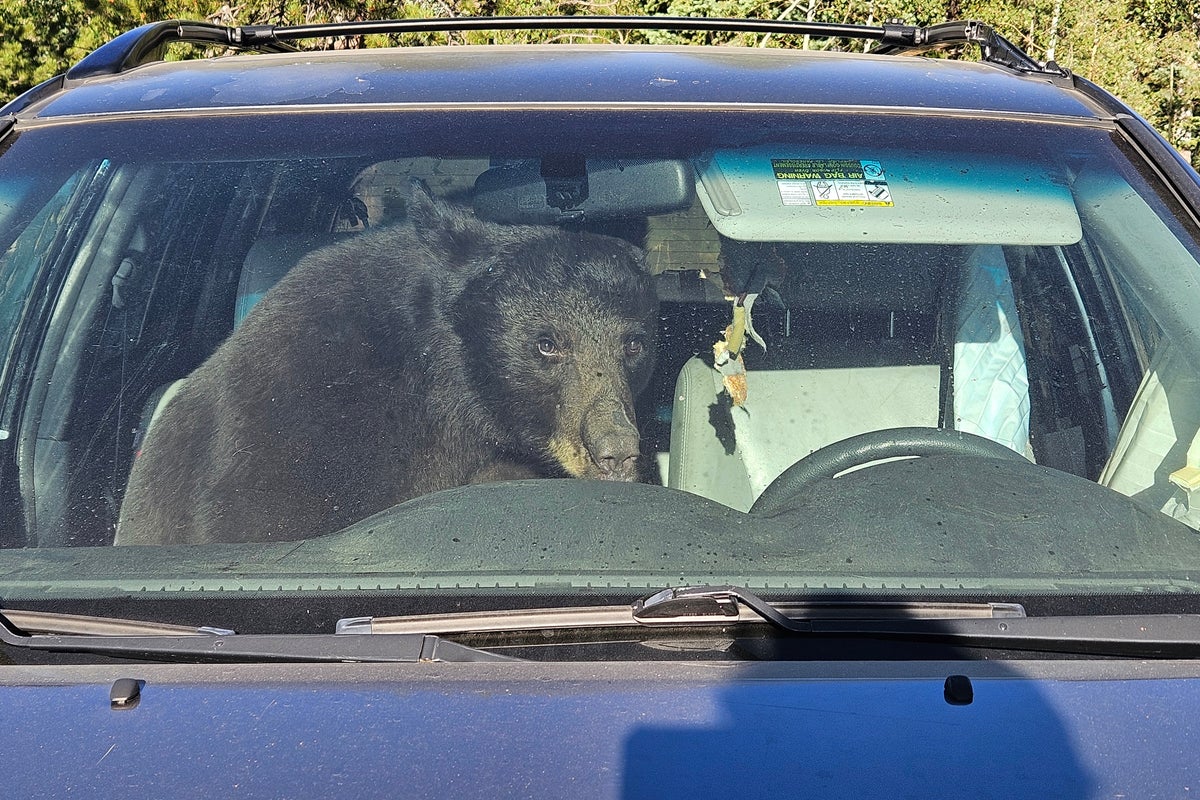
Anomalous regional aridity across the American West dictates a predictable ecological failure point: natural calorie baselines collapse, forcing apex generalists out of historical ranges and into municipal perimeters. When seasonal drought suppresses mast crops, soft mast like berries, and high-altitude vegetation, black bears face an immediate energetic deficit. To survive, these animals must reallocate foraging effort toward high-yield, anthropogenic nutrient sources. Residential waste streams, domestic poultry, fruit trees, and unsecured vehicular interiors represent predictable caloric bonanzas that override baseline wariness.
Wildlife management agency data from Colorado, Utah, and New Mexico confirm that sighting frequencies and property incursions double during severe drought cycles. This surge is not a manifestation of aberrant animal behavior, but a direct calculation of foraging efficiency.
The Energy Balance Equation
Understanding the escalation of urban intrusions requires evaluating the cost-benefit analysis driving ursine movement. A black bear operates on a strict metabolic optimization model.
- Natural foraging requires high physical expenditure for low caloric return during dry summers, as scattered berries and desiccated vegetation demand extensive movement across rugged terrain.
- Anthropogenic resources provide high caloric density with minimal expenditure. A single residential dumpster or accessible vehicle cabin yields thousands of calories for a fraction of the metabolic cost associated with foraging across miles of parched forest.
This dynamic creates an operational bottleneck for wildlife agencies. When bears successfully acquire human-sourced calories, they undergo rapid behavioral conditioning. The animal associates human infrastructure with sustenance, leading to chronic habituation. This learned pattern neutralizes natural spatial segregation between wild populations and human settlements.
The Structural Drivers of Encroachment
Human-wildlife friction points are governed by three primary variables: habitat fragmentation, caloric failure, and municipal waste management vulnerabilities.
[Drought Conditions] ---> [Suppression of Natural Mast] ---> [Energy Deficit]
                                                                    |
[Insecure Municipal Waste] <--- [Behavioral Shift toward Urban Core] <--+
As exurban development expands deeper into traditional wildlife corridors, the interface zone multiplies. Communities nestled in the foothills of the Rockies or the interior ranges of the Great Basin inherently intersect with established home ranges. When environmental stressors depress natural carrying capacities, these interface zones act as magnetic sinks.
Municipal policies regarding waste management dictate the severity of the intrusion wave. Jurisdictions utilizing unsecured plastic bins experience exponential increases in property damage and animal removals compared to municipalities enforcing strict containment mandates. The presence of accessible refuse acts as a primary catalyst, transforming transient wanderers into permanent urban residents.
Operational Mitigation Strategies
Mitigating urban incursions requires shifting from reactive animal removal to proactive attractant elimination. Wildlife management frameworks indicate that lethal interventions fail to solve root vulnerabilities. Eliminating a habituated individual simply leaves an ecological vacancy that subsequent animals quickly fill if the underlying caloric subsidy remains unprotected.
Municipalities must transition to structural containment models. This involves mandating bear-resistant commercial and residential waste infrastructure across entire counties rather than relying on voluntary compliance. Public outreach campaigns historically fail because individual behavioral modification remains inconsistent without legal and infrastructural enforcement mechanisms.
The baseline trajectory points toward intensified friction as seasonal aridity trends persist across the Western United States. Communities failing to harden their municipal perimeters against caloric exploitation will continue to experience elevated structural damage, compromised public safety incidents, and subsequent wildlife destructions. Long-term coexistence depends entirely on systematically severing the link between human waste and ursine nutrition.