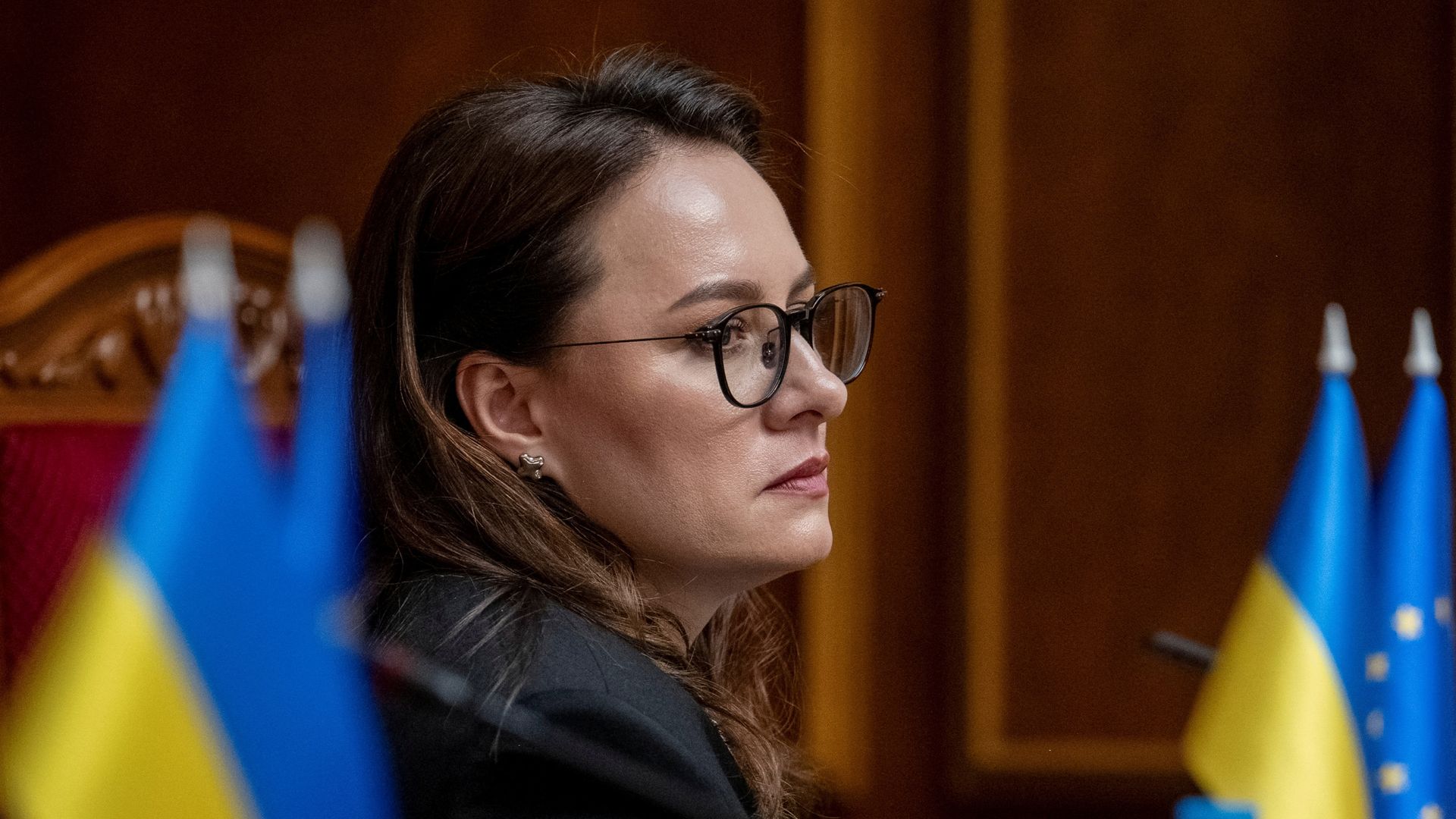
The restructuring of a state’s executive apparatus during an active, multi-year war of attrition is rarely a sign of internal collapse; instead, it is a calculation of resource allocation and strategic realignment. President Volodymyr Zelenskyy’s announcement of a sweeping government reshuffle, anchored by the departure of Prime Minister Yulia Svyrydenko after just one year in office, marks the fourth major cabinet reorganization since February 2022.
To understand this shift, one must look past the superficial narrative of political instability. The replacement of Svyrydenko represents a structural pivot from domestic economic consolidation to targeted, technocratic diplomacy aimed at stabilizing external supply chains, securing licensed defense manufacturing, and navigating bilateral relationships with Western partners. Under martial law, where democratic elections are legally prohibited, the cabinet functions less as a traditional political body and more as an agile operational board. When the primary constraints on the state change, the composition of the board shifts accordingly.
The Strategic Pivot: Foreign Policy Portfolios as a Fixed Asset
The core logic driving this reorganization is a transition from generalist governance to micro-targeted, individual-led foreign policy execution. Zelenskyy explicitly noted that Ukraine is modifying its political strategy by assigning specific, experienced individuals to distinct external portfolios.
This organizational model replicates corporate account management for geopolitical ends. Rather than routing all international engagements through a generalized ministry structure, specific executives will now own the delivery of explicit bilateral milestones. The prioritized portfolios outline the state’s critical vulnerabilities and ambitions:
- Licensed Defense Manufacturing: Deepening agreements to manufacture critical hardware, such as Patriot air defense systems, natively within Ukraine to bypass Western legislative bottlenecks.
- The European Anti-Ballistic Project: Integrating Ukraine’s airspace defense into broader continental frameworks.
- Economic Integration and Accession: Managing the complex technical compliance required for European Union membership.
- Thawing Complex Relationships: Cultivating ties with non-traditional partners in the Gulf region and managing delicate dynamics with China.
Svyrydenko’s reassignment to lead a dedicated vertical with an unnamed "key partner" fits this framework. A former economy minister, the 39-year-old built her political capital by orchestrating a critical minerals agreement between Kyiv and Washington. This transaction linked the United States’ long-term industrial asset requirements to Ukraine’s physical security. Removing her from the day-to-day administrative burdens of the prime minister’s office allows the presidency to deploy her specialized deal-making experience directly into deep-tier bilateral negotiations where personal trust and continuity are mandatory.
The Domestic Bottleneck: Energy Deficits and Infrastructure Vulnerability
While foreign policy dictates the long-term runway, the immediate domestic driver of the cabinet shakeup is structural survival. The reshuffle occurred against a backdrop of escalating technical and physical operational strains within Ukraine.
[Domestic Energy Shock] ──> [Economic Output Bottleneck] ──> [Need for Operational Technocrats]
                                                                        │
[Frontline Logistical Strains] ──> [Border Security Vulnerabilities] ───┘
The state faces a compounding energy crisis. Ukrainian long-range drone strikes targeting Russian oil refineries and fuel depots have successfully triggered fuel rationing and supply shortages inside the Russian Federation, functioning as a form of asymmetric kinetic sanction. However, the retaliatory mechanics deployed by Moscow—specifically intensified ballistic missile barrages targeting Ukrainian distribution grids and the port infrastructures of Odesa and Chornomorsk—have severely degraded Ukraine's domestic energy capacity.
The immediate domestic priorities outlined for the incoming cabinet emphasize this shift from policy design to raw infrastructure maintenance:
- Grid Fortification and Winter Preparation: Restoring and winterizing a heavily compromised energy grid before seasonal drops in temperature cause systemic urban failures.
- Frontline and Border Stabilization: Reinforcing defensive lines and logistics in vulnerable border regions.
- State-Owned Enterprise Transformation: Accelerating the commercialization and efficiency of state assets to maximize internal revenue generation.
To manage this operational environment, First Deputy Prime Minister Denys Shmyhal has been positioned to assume the acting premiership. Shmyhal, who also holds the energy portfolio, brings the exact technical and infrastructural background required to manage a grid under constant bombardment—a stark contrast to Svyrydenko’s macro-economic and diplomatic optimization skillset.
Constitutional Mechanics and Institutional Constraints
The execution of this reshuffle highlights the institutional friction inherent in Ukraine's mixed semi-presidential system, even under conditions of martial law. While the president initiates the strategy, the execution requires strict adherence to constitutional pathways to preserve domestic legitimacy and international trust.
Under Ukrainian law, the prime minister’s resignation is not an isolated event; it triggers the automatic resignation of the entire Cabinet of Ministers.
$$Wartime\ Reshuffle\ Process: [PM\ Resignation] \longrightarrow [Parliamentary\ Vote] \longrightarrow [Dissolution\ of\ Cabinet] \longrightarrow [New\ Approvals]$$
The Verkhovna Rada (Ukraine's parliament) must formally vote to accept Svyrydenko's departure. Once accepted, the entire cabinet transitions to an acting capacity until a new prime minister is nominated and a complete slate of ministers is approved.
While parliament has structurally coalesced around the presidency during the war, this process introduces short-term friction. The upcoming legislative sessions will test the alignment between the presidential administration and parliamentary factions, particularly regarding the concurrent changes announced for the upper echelons of Ukraine's law enforcement agencies. These law enforcement changes point toward an internal audit mechanism meant to assure Western donors that incoming financial aid and military hardware will be subject to rigorous domestic oversight.
The core limitation of this entire strategy lies in its reliance on a dwindling pool of battle-tested, high-tier technocrats. By constantly rotating top officials between domestic administration, defense procurement, and specialized diplomacy, the administration risks operational fatigue and a loss of institutional memory. The state is betting that structural agility and hyper-focused accountability can offset the disruption of perpetual structural reorganization.