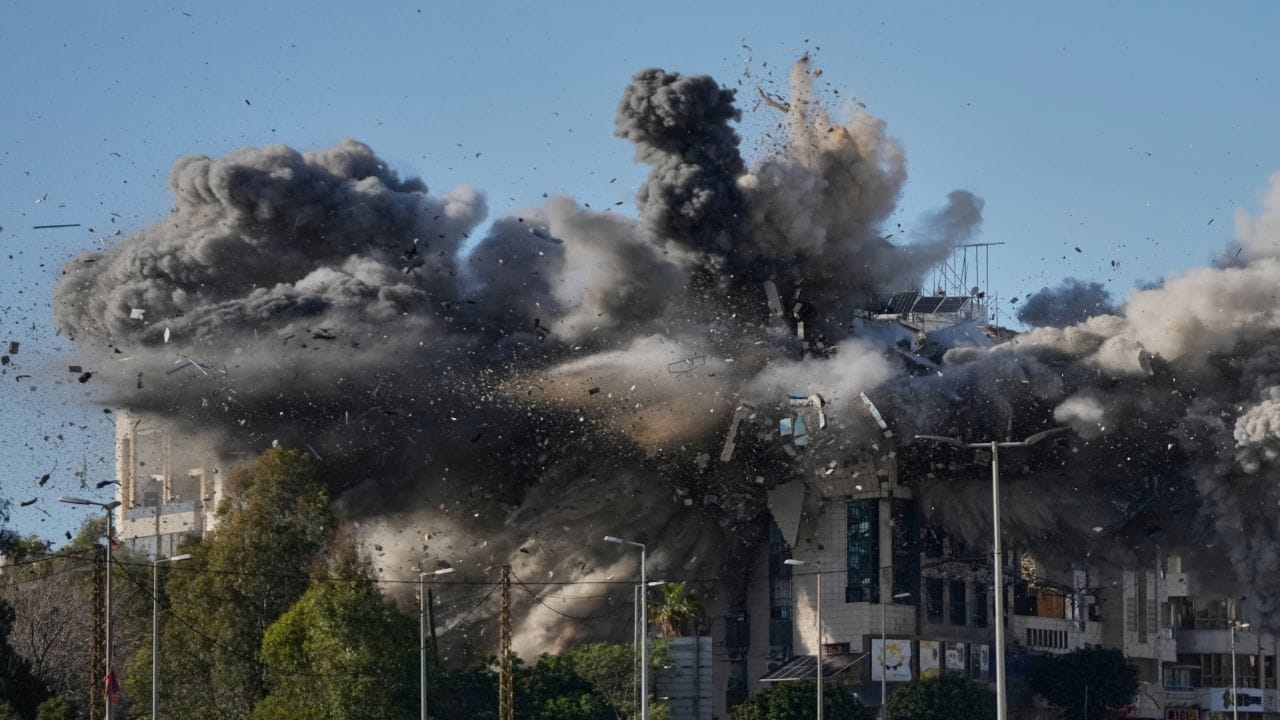
The announcements regarding a comprehensive cessation of hostilities between Israel and Hezbollah reveal a fundamental miscalculation in contemporary geopolitical risk modeling. The assertion that a localized arrangement can halt operational friction ignores the systemic linkage between the Levant theater and the broader conflict involving the United States and Iran. By treating the tactical maneuvers of non-state actors as independent variables, observers fail to see the structural limits of transactional diplomacy in highly integrated proxy warfare systems.
An examination of the strategic calculus of Jerusalem, Beirut, and Washington shows that the current pause in fighting is not a durable peace. Instead, it is a temporary operational alignment driven by competing tactical needs.
The Strategic Leverage Model: Why Localized Ceasefires Fail
The primary flaw in current diplomatic efforts is the assumption that the conflict between Israel and Hezbollah can be decoupled from the ongoing war involving Iran. This perspective overlooks the structural constraints that dictate the actions of both state and non-state actors. The interactions between these entities are governed by a distinct three-part logic.
1. The Proxy Asymmetry Function
For Hezbollah, a cessation of hostilities cannot be permanent if its primary state sponsor, Iran, remains under sustained military and economic pressure. The group’s operational utility to Tehran is to serve as a deterrent against direct threats to the Iranian mainland. Consequently, any agreement that demands Hezbollah halt its attacks while the broader conflict remains unresolved undermines Iran’s strategic posture.
This dynamic explains why initial agreements signed mid-April quickly collapsed; Hezbollah resumed strikes following what Israel described as self-defense operations, illustrating that the group's tactical behavior is tied to broader regional developments.
2. The Internal Security Mandate
From the perspective of Israeli defense planning, the presence of an armed, hostile actor along its northern border creates an unsustainable long-term security burden. The operational objective of the Israel Defense Forces (IDF) is not merely to stop cross-border rocket fire, but to alter the security geography of southern Lebanon permanently.
This goal is evident in recent military operations, including the capture of strategic high ground near Beaufort Castle and incursions north of the Litani River. A temporary pause in shooting does not address the underlying strategic requirement to remove Hezbollah's infrastructure from the border region, meaning any lull in fighting is highly unstable.
3. The Multi-Theater Diplomatic Strategy
Washington's diplomatic approach relies on using localized de-escalation as a tool to advance broader regional negotiations. By using intermediaries to secure a halt to strikes on Beirut's southern suburbs in exchange for a pause in Hezbollah's rocket attacks, the administration seeks to stabilize the Levant. The goal is to clear a path for wider talks with Tehran.
However, this strategy creates an inherent policy contradiction. It treats a highly dependent variable—Hezbollah's military operations—as an independent lever that can be manipulated without resolving the core issues driving the primary conflict.
Tactical Divergence on the Ground
The operational reality on the day of the announcement clearly illustrates the breakdown between diplomatic statements and actions on the battlefield. While political leaders announced an agreement to stop shooting, real-time telemetry and military movements showed a continued focus on securing tactical advantages.
| Actor | Stated Diplomatic Position | Observed Operational Action |
|---|---|---|
| United States | Brokered an immediate mutual de-escalation; stated that Israeli forces heading toward Beirut had been turned back. | Attempted to use the pause to restart broader regional talks, downplaying the ongoing friction as a secondary issue. |
| Israel | Agreed to a conditional halt of strikes on Beirut, provided all attacks against its citizens and northern towns cease. | Maintained deep defensive and offensive positions in southern Lebanon; launched immediate retaliatory strikes in the Dahiyeh suburb following cross-border missile launches. |
| Hezbollah | Indicated a willingness to accept a full ceasefire through intermediaries, provided it did not require a full retreat from southern Lebanon. | Continued launching projectiles at targets near Haifa and Tiberias; rejected partial truces that protected Beirut at the expense of its freedom of maneuver in the south. |
This tactical divergence shows that neither combatant view the arrangement as a binding framework. Instead, they treat it as a conditional protocol where any perceived violation justifies immediate, escalated retaliation. The structural flaw in the arrangement is that it lacks an independent verification mechanism or enforcement penalty. This leaves the stability of the deal entirely dependent on the self-restraint of two adversaries engaged in an existential border conflict.
The Iran-Lebanon Escalation Loop
The core bottleneck preventing any lasting stabilization of the Levant is the link between the Lebanon offensive and negotiations with Iran. Tehran’s diplomatic strategy treats the region as a single, connected theater. The Iranian foreign ministry has explicitly stated that a ceasefire must apply to Lebanon as well, declaring that a violation on one front constitutes a violation on all fronts.
This strategic linkage creates a self-reinforcing escalation loop:
[Israeli Military Operations in Southern Lebanon]
                       │
                       ▼
[Iran Suspends Diplomatic Talks with Mediators]
                       │
                       ▼
[Increased Economic/Military Restrictions on Iran]
                       │
                       ▼
[Hezbollah Launches Rockets to Alter Israel's Calculus]
                       │
                       ▼
[Israeli Retaliatory Strikes on Suburbs and Infrastructure]
By making a halt to operations in Lebanon a precondition for wider agreements, Iran effectively gives Hezbollah a veto over its own diplomatic engagements. Conversely, when the United States downplays the importance of these broader talks, it reduces Israel's incentive to show restraint in Lebanon. This dynamic leaves the localized ceasefire without the regional support needed to survive routine border friction.
Deficiencies in Current Risk Modeling
Standard geopolitical risk assessments frequently misinterpret these temporary pauses in fighting because they over-index on political statements and under-index on structural incentives. To build a more accurate model for predicting regional stability, analysts must replace vague political language with measurable security indicators.
The survival of any cessation of hostilities depends on three specific conditions:
- Strategic Depth Alignment: The degree to which the physical separation of forces prevents surprise attacks. Currently, the IDF's presence north of the Litani River and around key positions like Nabatiyeh keeps the two forces in close proximity, which inherently shortens the time needed to react to perceived threats and increases the likelihood of accidental escalation.
- Sponsor-Proxy Integration: The level of financial and military dependence of the non-state actor on its external backer. Because Hezbollah relies heavily on Iranian logistical support, its leadership cannot accept a long-term diplomatic framework that contradicts Tehran's broader defensive goals.
- Domestic Political Costs: The internal political penalties faced by state leaders for showing restraint. In Israel, the political necessity of safely returning displaced citizens to northern communities creates strong pressure to achieve a decisive military resolution, making any arrangement that leaves Hezbollah's border infrastructure intact difficult to sustain long-term.
Strategic Forecast
The current arrangement between Israel and Hezbollah will likely serve as a brief operational pause rather than a path to a lasting peace. Because the agreement fails to decouple the Levant theater from the broader confrontation with Iran, it remains highly vulnerable to disruption from minor tactical incidents on the ground.
Israel will likely continue its operations to dismantle military infrastructure in southern Lebanon, viewing any restriction on striking Beirut as a conditional concession rather than a total ban on operations. Hezbollah will maintain its defensive posture, using its remaining rocket inventory to signal that it can still impose costs on Israeli territory.
Consequently, defense planners and regional analysts should expect a return to active, high-intensity conflict along the border. The breakdown of this pause will likely happen when localized tactical exchanges cross the thresholds set for striking urban areas. This will trigger a renewed cycle of deep strikes and further complicate any broader diplomatic efforts in the region.