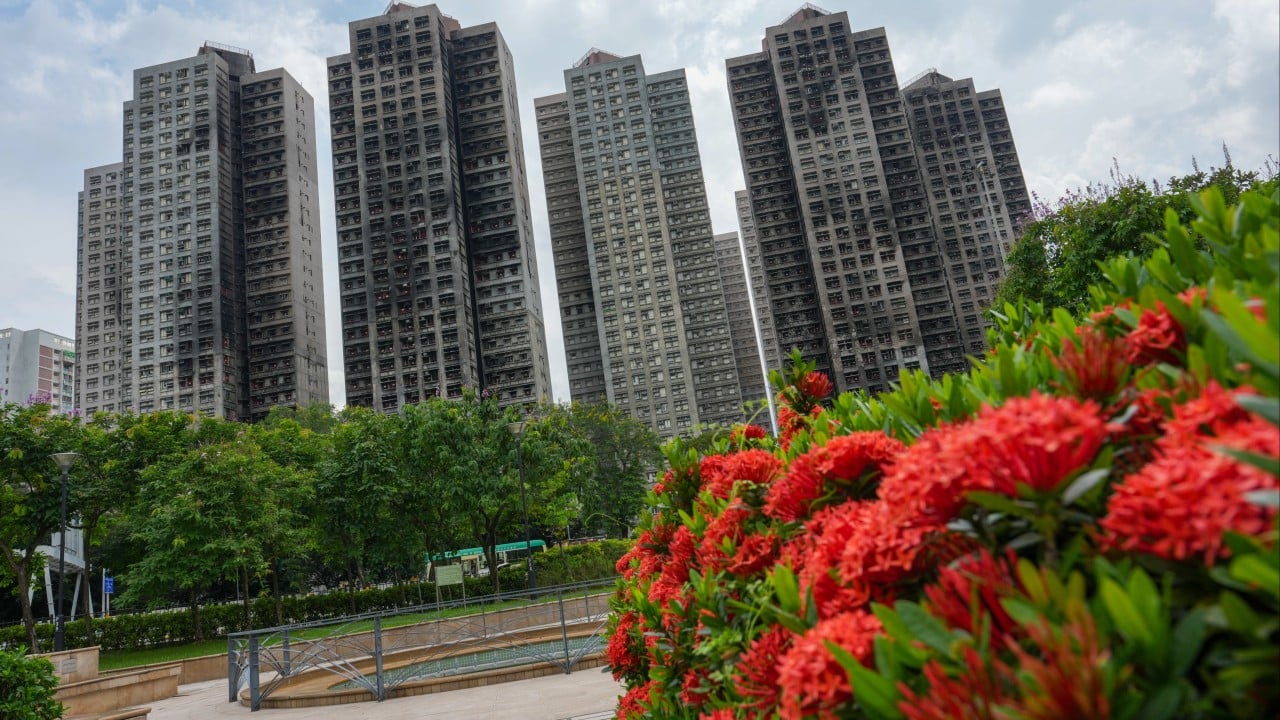
The catastrophic fire at Wang Fuk Court on November 26, 2025, which claimed 168 lives and gutted seven out of eight residential towers in Tai Po, Hong Kong, represents a profound convergence of engineering flaws, regulatory loopholes, and procurement corruption. While initial headlines labeled the 43-hour conflagration a vague byproduct of systemic failure, a precise mechanical and administrative audit reveals a predictable, sequential chain of events. The disaster was not an unpredictable anomaly; it was the inevitable mathematical output of an unmitigated fire load interacting with a high-velocity convective environment.
To understand why a single discarded cigarette butt in a stairwell could breach the exterior of a 31-storey housing complex and cause rapid, fatal vertical spread, the event must be deconstructed through three distinct vectors: architectural fluid dynamics, supply-chain degradation, and multi-agency regulatory paralysis.
The Physical Mechanics of Vertical Propagation
The extreme velocity of the fire spread across the exterior facade of Wang Cheong House (Block F) and its adjacent blocks cannot be explained by standard room-to-room flashover timelines. Instead, the building envelope acted as a highly efficient thermodynamic accelerator due to two specific physical properties.
The Re-Entrant Space Chimney Effect
Wang Fuk Court utilized a architectural design incorporating trapezoidal re-entrant spaces—recessed exterior areas enclosed on three sides and open to the atmosphere on only one narrow face. When the fire ignited the lower levels of the exterior scaffolding, these recessed cavities functioned exactly like commercial chimneys.
The geometric configuration created a rapid draft through simple buoyancy mechanics. As air inside the recess heated up, its density decreased relative to the surrounding ambient air, generating a localized low-pressure zone that pulled massive volumes of oxygen upward.
This convective current generated intense thermal feedback. Unlike an open-air facade fire where heat radiates away from the structure into the atmosphere, the three-walled concrete geometry of the re-entrant space absorbed the thermal radiation and reflected it directly back into the fuel source. This continuous loop raised the localized temperature within the shaft past the critical auto-ignition thresholds of adjacent materials, collapsing the standard time required for flashover from hours to mere minutes.
The Leap-Frog Displacement Loop
The upward movement of hot gases and flame fronts created a destructive phenomenon known as the leap-frog effect. As the fire traveled up the chimney-like recesses, the external thermal column shattered the single-pane glass windows of the apartments facing the shaft.
Once a window failed, the pressure differential between the pressurized external fire column and the lower-pressure interior apartment volume forced the flame front inside the residential units. The internal contents of the rooms served as secondary fuel beds. As these units ignited, the flames burst outward through the opposite windows, re-merging with the vertical exterior thermal column and accelerating the ignition of the floors immediately above. This looping mechanism effectively bypassed internal fire barriers and concrete floor slabs, rendering traditional internal compartmentalization useless.
[External Fire Column in Re-Entrant Cavity]
                 │
                 ▼
     [Shatters Single-Pane Window]
                 │
                 ▼
   [Flame Ingress via Pressure Drop]
                 │
                 ▼
    [Ignites Interior Fuel Load]
                 │
                 ▼
[Exits Unit -> Re-enforces Fire Column]
Supply Chain Degradation and the Combustible Envelope
The architectural acceleration was heavily compounded by the introduction of unauthorized, highly combustible materials across the entire surface area of the eight residential towers during an ongoing external renovation project.
- Non-Fire-Retardant Safety Netting: The entire bamboo scaffolding grid was draped in green polyethylene construction safety nets. Rather than acting as a fire-inhibiting barrier, the material possessed a high heat-release rate and melted into burning droplets, which cascaded down the scaffolding to create secondary ignition points on the lower floors.
- Polystyrene Window Sealing: During the external wall repairs, the contractors sealed the interior windows of each floor's elevator room and various exterior apartment windows with raw, un-plasticized polystyrene sheets. This material exhibits extremely poor fire performance, releasing toxic styrene gas and dense black smoke upon thermal decomposition, while rapidly burning out to open a clear path for external flames to enter public lobbies.
- Uncertified Bamboo Scaffolding Framework: The sheer volume of dried organic material wrapped around the perimeter of all eight blocks provided a continuous, interconnected fuel matrix that allowed the fire to jump horizontally between adjacent blocks, ultimately consuming seven towers.
The Failure Chain of Regulatory Oversight
The physical vulnerability of the estate was directly caused by a multi-tiered collapse in enforcement and verification by multiple government bodies. Evidence presented to the independent investigative committee presided over by Mr Justice David Lok outlines a clear breakdown in the accountability matrix.
The Inspection Deficit
The Labour Department conducted 16 distinct site inspections at the Wang Fuk Court renovation project between late 2024 and mid-2025 following reports from residents regarding workers systematically smoking and littering cigarette butts throughout the construction scaffolding. The department logged these complaints as "unsubstantiated," failing to issue single-work suspension notices or site remediation mandates. This lack of enforcement allowed a culture of non-compliance to persist, establishing the human error component—the discarded cigarette butt—that triggered the primary ignition.
Procurement Bid-Rigging and Anti-Corruption Gaps
The selection of the substandard, non-fire-retardant materials was rooted in financial malpractice within the project tendering phase. A resident escalated formal complaints to the Independent Commission Against Corruption (ICAC) twice in late 2024, detailing explicit evidence of bid-rigging and collusion between the project’s management consultant and the chosen construction contractor.
The ICAC systematically dismissed the complaints, categorizing the matter as a private "business dispute" rather than a criminal threat to public safety. This systemic refusal to intervene allowed the corrupt consortium to subvert standard material specifications, substituting high-grade, fire-resistant exterior netting and sealants with cheap, uncertified alternatives to maximize illicit profit margins.
The Operational Bottleneck in Fire Command
The escalation of the incident from a localized construction site fire into a Category 5 mega-disaster was exacerbated by tactical delays within the Fire Services Department's command structure.
The initial upgrade of the fire from a Category 4 to a Category 5 response was delayed by critical hours due to fragmented communication lines. When first-responder units arrived on-site within minutes of the 14:51 HKT alarm, they encountered an environment where the internal building fire alarms were non-functional because contractors had deactivated the zone sensors to avoid false alarms from renovation dust.
Because command units relied on visual assessment of internal smoke rather than tracking the vertical exterior velocity within the re-entrant spaces, the sheer volume of equipment and manpower required to establish defensive water curtains between the blocks was deployed too late. By the time regional reinforcements were called, the fire had already established multiple horizontal bridges via the contiguous scaffolding nets, overwhelming the municipal water supply pressure in the Tai Po district.
Structural and Regulatory Upgrades
To prevent a recurrence of the Wang Fuk Court disaster across Hong Kong’s vast inventory of high-density housing estates, immediate changes must be codified into the building regulations. The strategy must move away from retrospective penalties toward automated material enforcement and geometry-based risk insulation.
Reclassification of Architectural Facades
Buildings featuring recessed re-entrant cavities or enclosed lightwells must have these exterior areas legally reclassified as vertical shafts, subjecting them to the identical strict fire-separation codes applied to internal elevator shafts and stairwells. This requires the mandatory installation of fire-rated windows (minimum 60-minute integrity) for all rooms facing an external recess.
Absolute Material Prohibitions
The Building Authority must implement an outright ban on all combustible cladding, scaffolding wraps, and temporary insulation materials on any structure rising above 15 meters. Any safety netting utilized during public or private renovations must carry independent, third-party certification proving it meets international non-flammability benchmarks, such as BS EN 13501-1 Class A1 or A2.
Mandatory Inter-Agency Escalation Protocols
The operational framework of anti-corruption bodies and safety departments requires structural integration. When citizens submit whistleblowing reports regarding building procurement fraud or systemic site safety violations to the ICAC or the Home Affairs Department, these agencies must be legally mandated to cross-route the data to the Buildings Department and the Fire Services Department within 48 hours. A safety-oriented risk-scoring algorithm should automatically trigger mandatory, unannounced material-testing audits on any site flagged for financial corruption. Only by removing human discretion from the oversight process can the chain of systemic vulnerability be permanently broken.