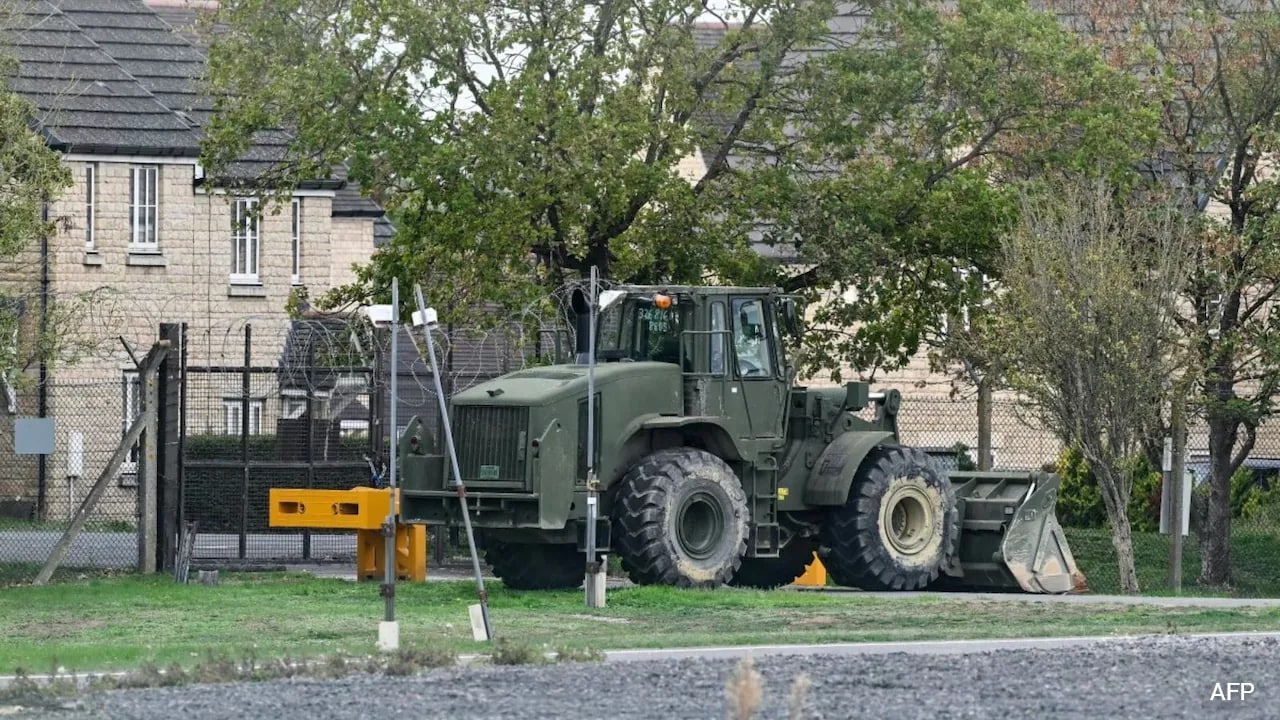
Modern asymmetric warfare relies on proxy integration, decentralized cell activation, and plausible deniability. When British counter-terrorism forces arrested five British nationals near RAF Fairford—a critical UK installation utilized by United States strategic bombers—the incident exposed the mechanics of modern state-sponsored power projection. While the Iranian embassy in London categorically dismissed involvement, intelligence assessments from Western authorities pointed toward direct operational coordination by the Islamic Revolutionary Guard Corps.
Analyzing this event requires moving past superficial denials to deconstruct the systemic vulnerabilities, operational cost functions, and strategic signaling inherent in attacks on dual-use allied infrastructure.
The Architecture of Proxy Infiltration
State actors engaging in strategic sabotage rarely deploy traditional military assets on foreign soil. Instead, intelligence apparatuses utilize a tiered network model that maximizes operational distance between the command center and the tactical execution cell.
The structural hierarchy functions through three distinct layers:
- The Strategic Command: State intelligence directorates—specifically units specializing in external operations—identify high-value targets based on operational utility. RAF Fairford functions as an active staging node for allied air operations in the Middle East, making it a high-priority asset for disruption.
- The Intermediary Network: Handlers utilize encrypted communications, transnational criminal networks, and proxy cutouts to recruit local operatives. In many European and domestic terror cells, operatives are recruited not from military intelligence backgrounds, but through compromised fringes, criminal affiliations, or ideological alignment.
- The Tactical Execution Cell: Local nationals or residents with legal right of entry are tasked with reconnaissance, surveillance, and material procurement. Because these operatives hold domestic citizenship, their baseline operational security footprint is lower than that of foreign intelligence officers operating under diplomatic cover.
This structural separation provides the sponsoring state with plausible deniability. If a cell is compromised, the operational friction stops at the local tier, insulating command structures from direct diplomatic retaliation.
The Strategic Cost Function of Attacking Dual-Use Bases
For a nation-state under severe economic sanctions and military pressure, targeting foreign installations involves a calculated risk-reward matrix.
The utility function of targeting a base like RAF Fairford is defined by two primary variables: operational disruption and strategic deterrence. By threatening or executing attacks on logistics and bomber staging grounds, Tehran aims to impose a political and security cost on European nations hosting American power projection assets. In March, Iranian foreign ministry officials explicitly warned London against permitting British bases to be used for operations targeting Iranian territory, establishing a clear causal link between host-nation policy and subsequent security incidents.
However, the cost side of the equation is steep. Direct or proxy kinetic action on NATO soil triggers immediate countermeasures:
- Intensified Counter-Intelligence Surveillance: Host nations deploy expanded electronic surveillance and human intelligence assets around critical military infrastructure.
- Strategic Relocation of Assets: As observed following the threat escalations, allied forces can execute rapid logistical shifts, including the evacuation of key aircraft to safer rear-echelon airbases, temporarily reducing the local footprint while increasing defensive postures.
- Diplomatic and Economic Isolation: Incidents of this magnitude provide justification for allied governments to tighten sanctions, expel diplomatic personnel, and close legal loopholes exploited by foreign intelligence networks.
The Mechanics of Plausible Deniability in Digital and Kinetic Operations
State-backed sabotage operates on the principle of asymmetric attribution. In the Fairford investigation, the use of domestic British nationals as field operatives mirrors a broader trend documented by the United States Department of Justice regarding transnational networks targeting Western military and civilian infrastructure.
When operations are channeled through decentralized cells, communication logs often reveal coded directives passed through intermediaries, prison networks, or encrypted messaging platforms. Even when intercepted, these communications frequently rely on colloquialisms and compartmentalized instructions designed to obscure the identity of the ultimate paymaster.
This creates an evidentiary bottleneck for intelligence agencies. While operational confidence regarding state sponsorship may be high among national security leadership—as reflected by public assertions from government executives—meeting the evidentiary standard required for open judicial prosecution or formal international retaliation remains difficult. State sponsors exploit this friction gap between intelligence certainty and judicial proof to absorb the operational benefits of disruption while officially maintaining clean hands.
Strategic Forecast and Defensive Adjustments
The escalation of hostile activity against allied military nodes in Europe signifies an evolution in modern deterrence theory. Traditional deterrence relied on the threat of massive retaliation against state territory. Asymmetric deterrence, by contrast, operates below the threshold of conventional war through gray-zone sabotage, infrastructure probing, and proxy-executed terror plots.
To neutralize this vector, security architectures around strategic installations must undergo a structural shift. Perimeter defense and local counter-terrorism responses are no longer sufficient when the threat vectors involve domestic radicalization combined with foreign remote direction.
Intelligence agencies must focus upstream on the financial and digital pipelines connecting state handlers to local cells. Disrupting the command-and-control network at the intermediary level remains the most effective mechanism for degrading the operational capacity of state-sponsored actors, forcing sponsoring regimes to recalculate the utility of deploying asymmetric threats against sovereign allied territory.


