Ink on paper matters less than the weight of the silence that follows.
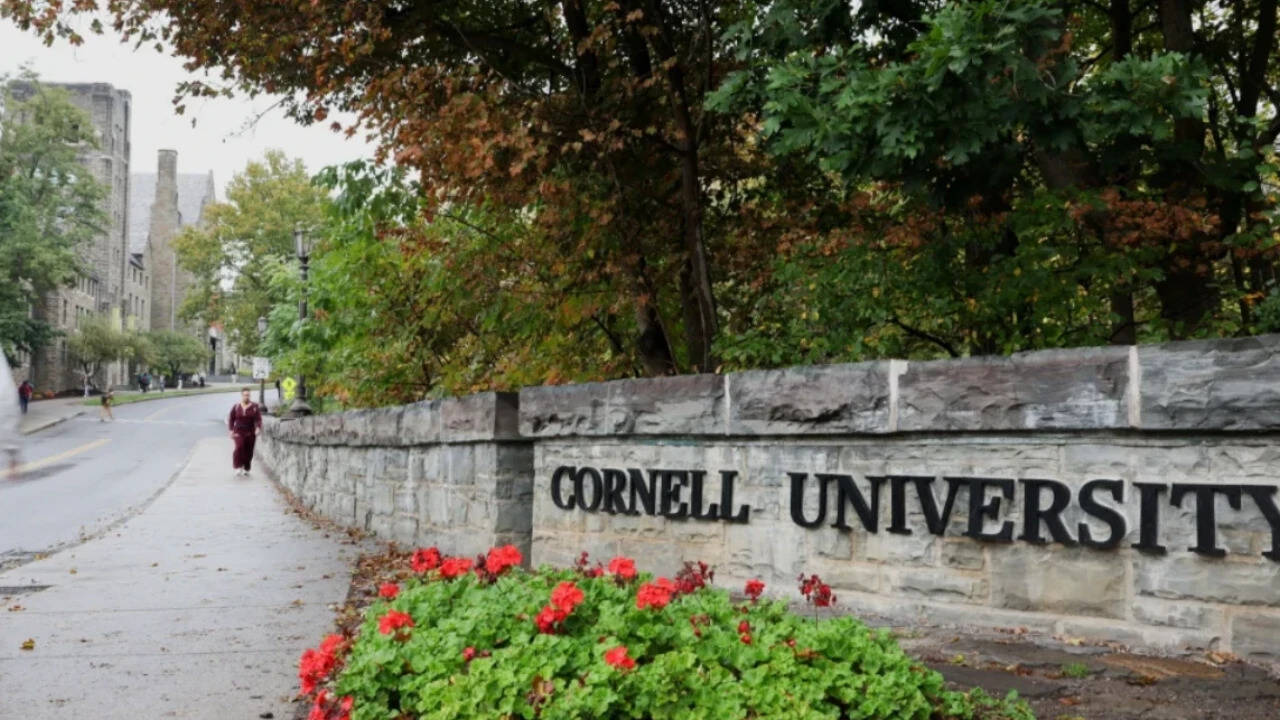
Imagine standing on the slope of a hill in upstate New York, watching the mist rise off Cayuga Lake as the university bells chime across the quad. For thousands of undergraduates, this campus is an idealized postcard of autumn leaves, ivy-covered brick, and the breathless anticipation of a brilliant future. But beneath the veneer of academic prestige and collegiate legacy lies a quieter, heavier reality. It is the reality of administrative hearings, whispered confidences in dorm hallways, and the stark, unyielding machinery of disciplinary justice. You might also find this connected article useful: Silence in the Timberlands The Norwegian Hunting Tragedy That Exposed Deep Vulnerabilities.
When a university announces that seven men have faced serious disciplinary actions—ranging from expulsion and suspension to the mandatory composition of reflection papers—for sexual assault, the headlines register as cold data points. Statistics. Administrative bullet points. A fleeting blip on a news ticker before the feed refreshes.
Yet numbers do not bleed. Bureaucracy does not carry the memory of a shattered night. As extensively documented in latest coverage by Associated Press, the results are significant.
To understand what happened at Cornell, one must step away from the impersonal press release and look closer at the human architecture of accountability. Behind every administrative decree sits a collision of lives, an erosion of trust, and a community forced to confront its own vulnerabilities.
The Weight of the Finding
Disciplinary committees operate in a shadowed space between criminal courts and academic boards. They do not wield handcuffs or prison cells. Instead, they wield transcripts, housing assignments, and the ultimate sanction of institutional exile. Expulsion strips away an identity carefully cultivated since high school, erasing an anticipated diploma in a single afternoon. Suspension pauses ambition, casting students back into their hometowns with a fractured reputation and a deferred future.
And then there are the reflection papers.
To the cynical observer, an assigned essay sounds almost quaint. A gentle slap on the wrist. A nostalgic nod to high school detention where a misbehaving student writes lines on a chalkboard. But in the context of institutional misconduct proceedings, the reflection paper occupies a strange, contested psychological space. It is designed to force introspection. It demands that an individual articulate their actions, acknowledge the impact of non-consensual behavior, and confront the boundaries they chose to cross.
Critics argue that asking someone found responsible for sexual assault to write an essay minimizes a profound violation. Survivors and advocates look at such measures and see a system insulating itself, opting for a therapeutic fiction over genuine deterrence. Defenders of these administrative pathways argue that education must run parallel to punishment, especially within an academic ecosystem ostensibly dedicated to growth and moral development.
The tension itself is the story. It is the friction between a university's desire to rehabilitate and its obligation to protect.
The Ripple Effect Across the Quad
Walk through Collegetown on a Friday night, and the atmosphere hums with youthful invulnerability. Music drifts from rented apartments; laughter echoes down stairwells. Yet underneath that collective high spirits runs an undercurrent of hyper-vigilance. Students know the statistics. They know that safety is not guaranteed by stone walls or blue-light emergency phones.
When Cornell's disciplinary outcomes became public record, the response was not a sudden explosion of outrage, but rather a heavy, exhausted confirmation. For many on campus, the revelation that seven men faced serious consequences confirmed what whispers had already communicated. It proved that investigations happen, that reports are filed, and that the university machinery grinds forward, however slowly, when boundaries are breached.
At the same time, it highlighted the deep anxiety surrounding the reporting process itself. Stepping forward to report an assault requires an extraordinary act of courage. It means laying bare one's trauma before a panel of strangers, subjecting personal memories to rigorous cross-examination, and enduring the psychological toll of an administrative investigation that can stretch across months.
Consider the emotional arithmetic involved. A student weighs the courage required to speak against the fear of disbelief, social ostracization, and institutional fatigue. When the process finally concludes with a sanction—whether it results in an expulsion or a suspended enrollment—the closure is rarely clean. Healing does not arrive neatly packaged in a university ruling.
Institutional Self-Reflection
Universities are microcosms of society, inheriting every cultural failing, every blind spot, and every systemic inequality. For generations, institutions of higher education mastered the art of concealment. Scandals were quieted, reputations were guarded, and the institution's brand took precedence over transparency.
The modern landscape, driven by federal guidelines, student activism, and public pressure, demands something different. It demands visibility. When Cornell publishes the outcomes of its judicial administrator's office, it is participating in a reluctant, highly scrutinized dance with accountability.
Publishing these outcomes is not merely an exercise in public relations; it is a deterrent signal. It tells the incoming freshman class, the faculty, and the broader community that certain behaviors will trigger severe institutional consequences. It draws a hard line in the academic dirt.
Yet transparency alone cannot alter the underlying cultural currents that make such disciplinary hearings necessary in the first place. Rules and tribunals address the symptom, not the root. They arrive after the damage is done, after the trust is broken, after the irrevocable harm has occurred.
Beyond the Verdict
What remains when the disciplinary hearings adjourn and the appeal windows close?
For the men removed from campus, there is the long, silent reckoning with a derailed life—a consequence of their own making, yet profoundly disruptive nonetheless. For the survivors, there is the arduous, nonlinear path toward reclaiming autonomy and peace of mind. And for the university, there is the perpetual, unfinished labor of trying to build a culture where safety is the baseline rather than an aspiration.
The measures taken by Cornell—whether severe expulsion or controversial restorative writing assignments—represent an institution grappling with human failure. They remind us that civilization is a thin veneer, maintained only by constant vigilance, honest conversations, and the courage to confront darkness when it breaches the gates of the ivory tower.
The bells on the hill continue to ring out across the lake, marking the hours for a community that must forever choose between looking away and bearing witness.


