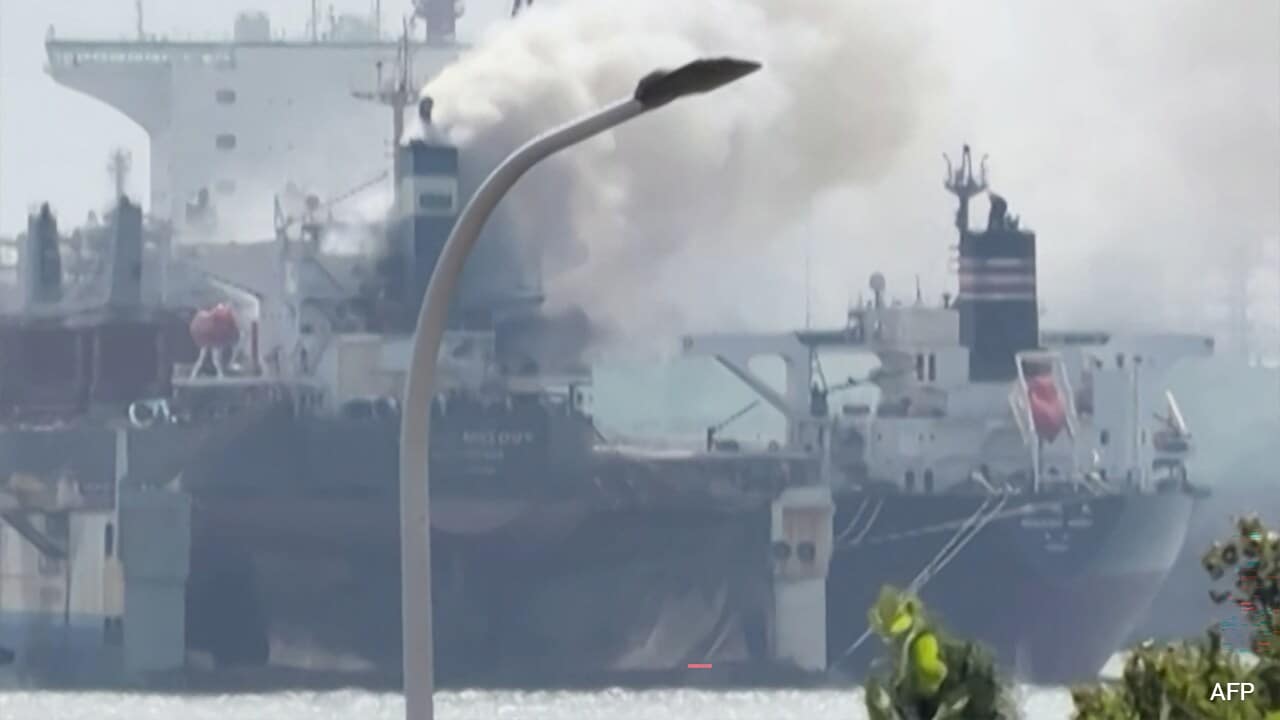
Maritime repair facilities operate as high-density industrial zones where hot work, heavy machinery, and compressed schedules intersect. When structural safety parameters collapse, the speed of failure often outpaces emergency response capabilities. The recent incident at the Beihai Shipbuilding facility in Qingdao, where a fire aboard a bulk carrier resulted in twenty-five fatalities among forty-two personnel on board, exposes systemic vulnerabilities inherent in commercial ship maintenance. Analyzing such catastrophes requires moving past surface-level descriptions to evaluate the mechanical, regulatory, and operational failure points that govern high-risk industrial environments.
The Operational Vulnerability Matrix of Ship Repair
Commercial vessels undergoing drydock or port maintenance present a uniquely volatile profile. Unlike active voyages where crew functions are strictly compartmentalized by watch rotations, repair periods introduce third-party contractors, temporary welding operations, and isolated internal spaces. You might also find this connected article interesting: Why the Ceuta Border Crisis Keeps Escalating on the Cliffs.
Three primary variables dictate the risk coefficient during a shipyard call:
- Spatial Confinement: Bulk carriers feature complex internal geometries, including cargo holds, ballast tanks, and engine rooms that restrict airflow and trap heat. When a combustion event occurs inside these volumes, smoke and toxic gases rapidly displace oxygen, transforming minor ignitions into fatal environments within minutes.
- Hot Work Clustering: Maintenance scopes frequently demand simultaneous cutting, welding, and grinding. Sparks or slag migrating through unsealed ventilation trunks or landing on combustible insulation materials provide the primary initiation energy for catastrophic fires.
- Multi-Employer Coordination Failures: Shipyards typically deploy a patchwork of specialized subcontractors alongside the vessel's resident crew. This fragmentation creates communication gaps regarding active work permits, isolation valves, and fire watch accountability.
When these factors converge without rigorous oversight, the probability of an uncontainable thermal event scales exponentially. The Qingdao incident, which involved the Liberian-flagged bulk carrier Ocean Melody, underscores how rapidly an active repair zone can transition from a controlled industrial space into a fatal hazard zone. As reported in latest coverage by The Guardian, the implications are widespread.
The Thermal Kinetics and Toxic Propagation of Marine Fires
Understanding why twenty-five individuals perished while seventeen others successfully evacuated requires an examination of material science and fluid dynamics within confined steel structures. Commercial cargo ships utilize vast quantities of synthetic polymers, electrical cabling insulation, heavy paints, and acoustic or thermal foams.
When exposed to an open flame or high-energy electric arc, these materials undergo rapid thermal decomposition. Pyrolysis releases dense clouds of carbon monoxide, hydrogen cyanide, and polycyclic aromatic hydrocarbons. In a closed hull, visibility drops to zero long before active flames reach a given compartment. Personnel are frequently incapacitated by asphyxiation or toxic inhalation before thermal burns become the primary cause of trauma.
Furthermore, steel is an exceptional thermal conductor. A localized fire in an auxiliary space rapidly superheats adjacent bulkheads, creating secondary ignition points on opposite sides of steel walls. Evacuation routes mapped out during standard operational layouts often become heat traps when structural steel buckles or acts as a radiant heater against narrow escape corridors.
Regulatory Oversight Gaps and Accountability Deficits
Industrial safety frameworks rely on redundant layers of protection, often conceptualized as the Swiss Cheese Model, where accidents occur only when holes in successive defense layers align. In major shipbuilding and repair nations, regulatory mandates exist on paper, but enforcement mechanisms at the operational coalface frequently suffer from systemic friction.
The regulatory failure points break down into distinct institutional layers:
- Permit-to-Work Efficacy: Hot work permits require gas-free testing and continuous fire watches. When schedule pressures mount to minimize port turnaround time, these verification steps are routinely shortened or treated as administrative checkboxes rather than hard operational gates.
- Emergency Egress Maintenance: During repairs, standard watertight doors, internal hatches, and emergency escape trunks are often blocked by staging equipment, ventilation ducts, or temporary power cables.
- Accountability Hierarchies: When foreign-flagged vessels undergo maintenance at state-controlled or commercial yards, jurisdictional ambiguities regarding safety compliance can delay immediate crisis management and obscure operational responsibility.
National directives demanding safety overhauls follow these disasters, yet enduring structural change requires replacing punitive post-hoc investigations with real-time digital monitoring of hot work zones and mandatory automated fire suppression deployment during structural retrofits.
Strategic Allocation of Risk Mitigation Resources
Mitigating future marine maintenance disasters requires a shift from reactive compliance to predictive hazard engineering. Shipyards and vessel operators must decouple scheduling incentives from safety protocols. Implementing mandatory thermal imaging surveillance during active maintenance shifts, enforcing strict spatial segregation of combustible materials, and establishing independent safety audit authorities that hold direct veto power over active repair schedules represent the minimum operational threshold required to eliminate preventable loss of life in industrial maritime environments.


