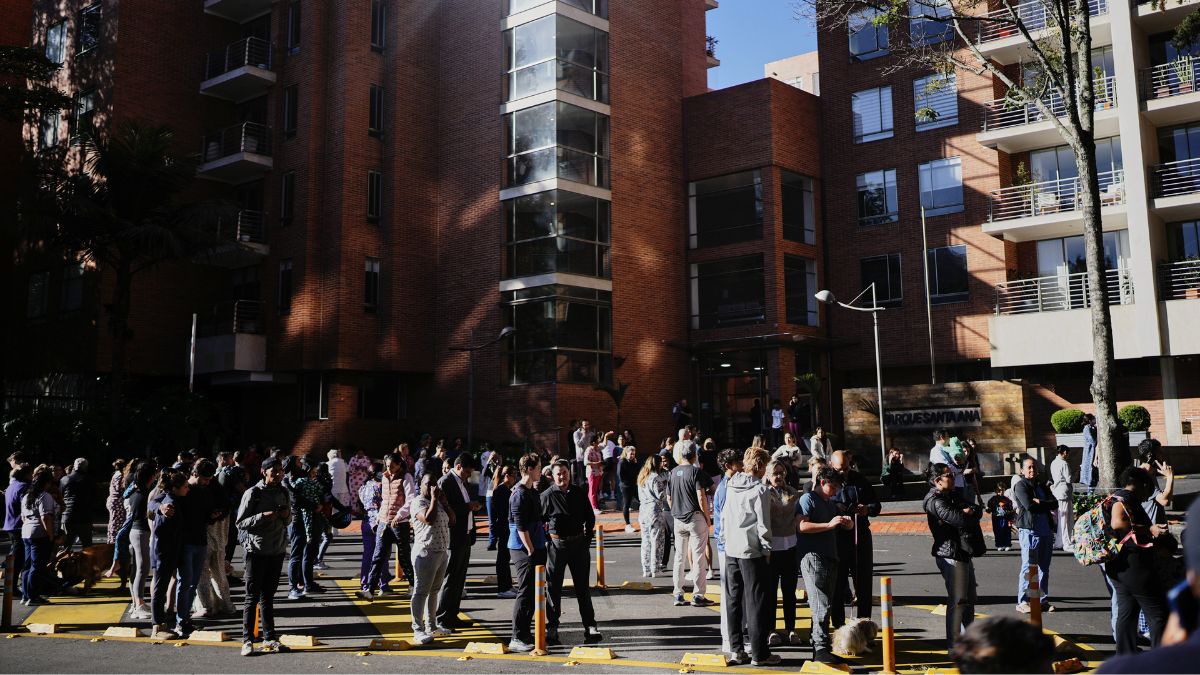
Seismic vulnerability in the Andean interior is a function of convergence rates, intermediate focal depths, and building stock resilience. On August 10, 2026, a 7.4 magnitude earthquake struck western Colombia, registering an epicenter near San José del Palmar in the Chocó department at a depth of approximately 107 kilometers. Rather than a localized surface rupture, this intermediate-depth event propagated shockwaves across multiple structural zones, affecting urban centers including Cali, Pereira, and Manizales while registering telemetry in neighboring Ecuador and Venezuela. Deconstructing the mechanics of this event reveals how regional geology intersects with urban vulnerability to produce catastrophic structural failure.
The Three Pillars of Regional Seismic Risk
To evaluate the impact of the Chocó earthquake, analysts must isolate the variables governing ground motion amplification and infrastructure response.
- Tectonic Convergence Mechanics: Western Colombia sits atop one of the most active geological convergence zones on the planet, where the Nazca Plate subducts beneath the South American Plate. While shallow crustal faults typically produce highly localized devastation, intermediate-depth earthquakes—such as this 107-kilometer deep event—attenuate high-frequency energy differently, allowing seismic waves to travel greater distances before surfacing with broad, rolling energy signatures that destabilize high-rises and unreinforced masonry alike.
- Asset Vulnerability Profiles: The built environment across the Andean coffee axis and western valleys features significant heterogeneity. While modern commercial assets in Bogotá and Medellín largely withstand moderate-to-high spectral accelerations, legacy residential structures and civic buildings utilizing unreinforced brick and concrete frames exhibit critical load-path deficiencies. When horizontal shear forces exceed design thresholds, progressive collapse mechanisms activate instantly.
- Logistical Response Bottlenecks: The geographic topography of Chocó and Valle del Cauca creates immediate logistical friction. Mountainous terrain restricts transit corridors, meaning that when regional airports—such as those serving Pereira, Manizales, and Quibdó—sustain structural damage or ceiling collapses, aerial triage is temporarily paralyzed, forcing rescue operations to rely exclusively on congested terrestrial routes.
The Cost Function of Urban Density
When a high-magnitude seismic event impacts densely populated municipalities like Cali, where over two million residents live within a complex urban grid, the cost function expands exponentially past simple property loss. The simultaneous structural failure of over twenty buildings in Cali and major losses in Risaralda exposes the economic trade-off of deferred structural retrofitting.
Urban density concentrates human exposure precisely where structural load capacities are often compromised by informal additions or aging materials. The immediate casualty toll—surpassing one hundred fatalities within the first operational window—directly mirrors the velocity of search-and-rescue deployment. In municipal nodes lacking localized heavy-extrication assets, survival probabilities for trapped occupants drop precipitously past the initial seventy-two-hour window, turning structural engineering oversight into a direct determinant of mortality rates.
Macro-Regional Context and Cross-Border Stress
The timing of this seismic release compounds regional emergency management strain. Occurring weeks after catastrophic, shallow seismic events in northern Venezuela that claimed thousands of lives, the Andean population centers were already operating under elevated psychological and civic anxiety. While the Venezuelan events were characterized by shallow crustal ruptures generating immense localized destruction, the Colombian event demonstrated the pervasive reach of intermediate-depth subduction dynamics.
State actors and federal emergency apparatuses, under the newly established executive administration of President Abelardo de la Espriella, faced an immediate test of command-and-control efficacy. The activation of a Unified Command Post and the centralization of disaster risk management protocols highlight the administrative pivot required when multi-departmental infrastructure fails simultaneously.
Strategic Deployment Priority
Establish decentralized, pre-positioned heavy-rescue caches and seismic isolation standards within secondary Andean urban centers to decouple regional survival rates from central corridor transit infrastructure.