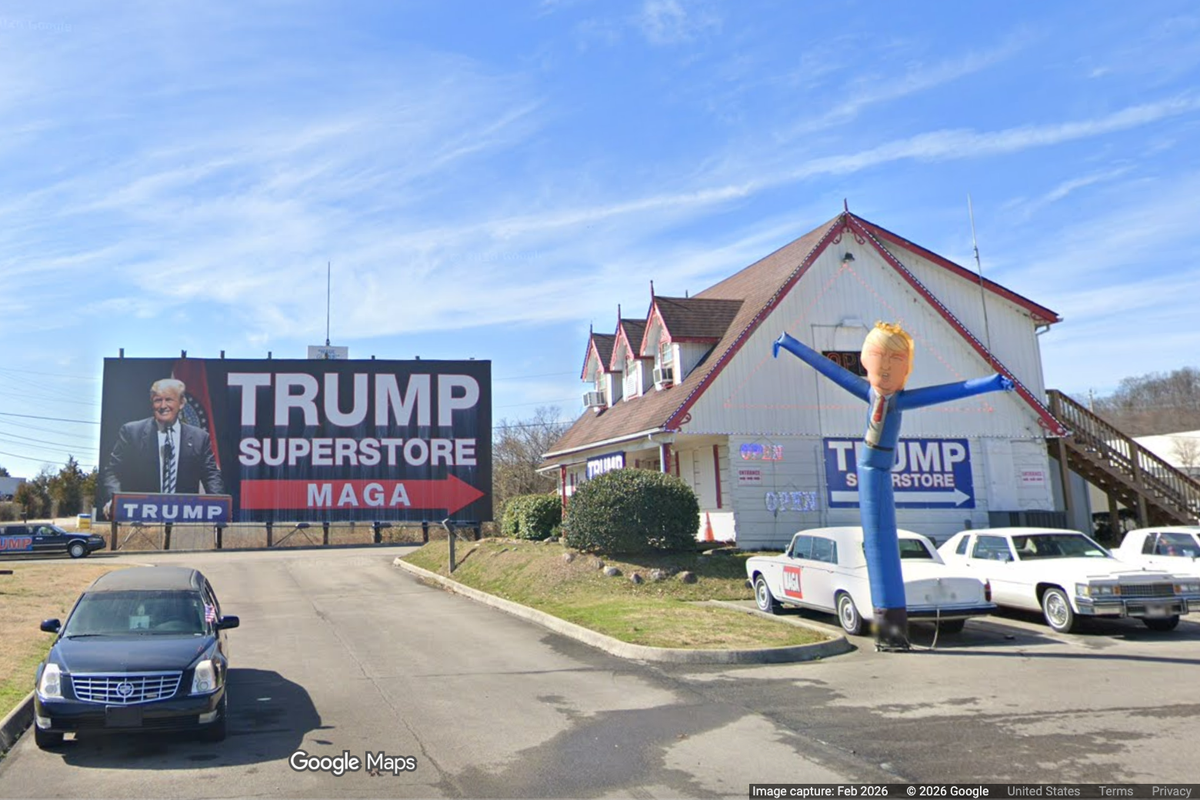
Political retail operates under a distinct set of economic distortions. When a high-profile merchandise storefront fails, observers often attribute the collapse to simple shifts in public sentiment. This explanation ignores the underlying mechanics of inventory management, margin structures, and customer acquisition costs. Commercial viability in niche partisan markets requires a delicate calibration of fixed overhead and volatile demand cycles. Without an understanding of these variables, retail ventures built around political figures frequently mistake temporary electoral enthusiasm for sustained consumer demand.
Retailers entering the partisan apparel space confront unique operational pressures. Standard retail logic dictates that high-visibility branding reduces customer acquisition costs. In political merchandise, however, high visibility often accelerates brand saturation while simultaneously alienating neutral consumer segments. The total addressable market is bounded by geographic concentration and demographic alignment, creating a ceiling that marketing spend cannot pierce.
The Fixed Cost Trap and Overhead Inflation
Physical retail spaces require upfront capital allocation for leases, build-outs, and localized staffing. Operators launching large-format merchandise stores during peak political cycles commit to long-term liabilities based on short-term traffic anomalies.
- Lease Commitments: Commercial landlords often demand multi-year commitments, locking operators into high square-footage rates regardless of foot traffic velocity.
- Inventory Carrying Costs: Custom apparel and branded novelties tie up working capital. When velocity stalls, storage and depreciation erode gross margins.
- Staffing Volatility: Managing cyclical surges requires flexible labor models. Fixed payroll structures drain liquidity during off-peak intervals.
This cost structure creates an inflexible baseline. When weekly revenue falls below the break-even threshold defined by fixed overhead, insolvency occurs rapidly. The absence of digital inventory smoothing exacerbates this vulnerability. Physical stores cannot easily pivot inventory lines or liquidate slow-moving SKUs without deeply discounting the brand value itself.
Demand Elasticity in Partisan Markets
Consumer behavior within political retail diverges sharply from traditional consumer packaged goods. Demand is rarely driven by utility or aesthetic value; instead, it acts as an expressive signal of tribal identity. This alters the standard pricing curve.
Expressive goods exhibit extreme sensitivity to external validation cycles. When the central figure of the brand maintains high media dominance, demand spikes independently of traditional economic indicators. Conversely, media fatigue or shifts in public discourse cause demand to contract precipitously. Price elasticity under these conditions behaves counterintuitively. Lowering prices does not stimulate volume because the barrier to purchase is rarely financial. The barrier is social and psychological relevance.
When the signal value of a commodity declines, discounting fails to clear inventory. Consumers do not want a discounted symbol of a fading narrative; they want active cultural relevance.
This dynamic explains why massive storefronts can sit empty while digital operators thrive with minimal overhead. Digital dropshipping and localized pop-up units mitigate inventory risk by aligning supply strictly with confirmed demand pulses. Massive permanent storefronts assume the opposite: that localized foot traffic will mirror national digital engagement.
Supply Chain Friction and Margin Compression
Sourcing political merchandise introduces distinct supply chain vulnerabilities. Production timelines are frequently compressed, forcing operators to pay premium rates for rapid turnaround on custom prints, signage, and imported novelties.
- Rapid Prototyping Overhead: Designing items around breaking news cycles requires agile manufacturing partners who charge premium fees for expedited runs.
- Global Sourcing Bottlenecks: Many baseline goods rely on overseas manufacturing, exposing operators to tariff shifts, shipping delays, and currency fluctuations.
- Return and Chargeback Rates: Partisan retail often experiences elevated friction in payment processing, with higher-than-average dispute rates from consumers experiencing buyer remorse or ideological shifts post-purchase.
These supply chain variables compress net margins long before rent is paid. Traditional retail relies on volume efficiency to absorb these friction points. Partisan mega-stores, constrained by a narrow customer base, cannot achieve the necessary inventory turnover to offset high unit acquisition costs.
The Miscalculation of Foot Traffic Metrics
A foundational error in retail strategy is equating spatial proximity to political strongholds with guaranteed foot traffic conversion. High-density areas with favorable voter demographics do not automatically translate into high-yield retail environments.
Tourists and local residents exhibit different purchasing motivations. Tourists purchase impulse souvenirs as trip memorabilia, whereas local residents view massive partisan storefronts as ideological statements rather than shopping destinations. Consequently, the conversion rate—the percentage of foot traffic that completes a financial transaction—drops significantly in large-format political retail compared to standard novelty gift shops.
Furthermore, physical security and ideological friction impose hidden operational taxes. Large stores in urban or suburban nodes often require private security, insurance riders for civil unrest, and maintenance for vandalism repair. These line items scale directly with the visibility of the enterprise, creating a perverse economic penalty for brand prominence.
Operational Pivot to Asset Light Models
The structural collapse of large-format partisan retail highlights the necessity of agile supply chains. Operators attempting to monetize political movements must decouple brand visibility from fixed real estate.
Future entrants in this segment rely on distributed micro-fulfillment networks, print-on-demand digital infrastructure, and event-based mobile units that dissolve when local demand saturates. Capital is preserved by eliminating long-term lease liabilities and maintaining zero-inventory postures until point-of-sale confirmation occurs. Real estate is a liability in a market defined by hyper-accelerated attention spans and volatile cultural cycles.