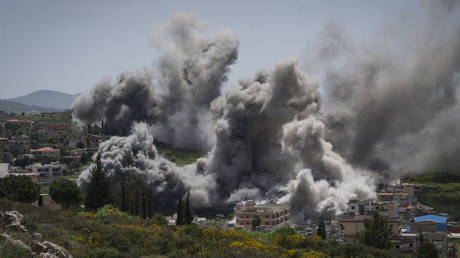
Introduction to Systemic Vulnerability
Modern armed conflict in hyper-dense environments operates on a principle of cascading systemic failure. When military operations intersect with highly urbanized civilian spaces, the primary point of impact is rarely limited to kinetic engagements between opposing forces. Instead, the friction points expand across intricate civil life support networks. Understanding how a society's operational foundations disintegrate requires examining infrastructure not as static concrete and steel, but as an interdependent vector of biological and economic survival. The degradation of these systems follows predictable mathematical models of decay, where the neutralization of a single node triggers exponential compounding deficits across water distribution, power generation, medical triage, and food security.
To evaluate this dynamic objectively, analysts must strip away rhetorical flourishes and examine the underlying mechanics of urban destruction. The friction between high-intensity military doctrine and civilian density creates a unique cost function where the primary casualties are the structural prerequisites of human habitability. This inquiry dissects the components of that collapse, mapping out the precise mechanisms through which institutional and physical lifelines are severed, and evaluating the long-term systemic fallout for the region.
The Functional Dependency Matrix
Civilian survival in any urban center relies upon a tightly coupled network of utility grids. In modern conflict zones, these utilities function as a single integrated matrix. Water treatment plants, electrical substations, municipal sewage networks, and communication grids do not operate in isolation. They form a closed-loop dependency cycle where the failure of one element inevitably cascades into the shutdown of the others.
Consider the primary vector of municipal water supply. Modern urban water networks require continuous electrical baseload power to drive high-pressure pumps, operate purification chemistry dosing units, and manage distribution telemetry. When localized power generation facilities are disabled—either directly through targeted kinetic strikes or indirectly through fuel shortages and supply chain blockades—the entire water delivery architecture halts within hours.
Without pressurized water, residential sanitation systems fail immediately. Sewage treatment plants, which rely on continuous aeration and pumping cycles to process organic waste, experience rapid overflow. This introduces pathogens into the local water table, turning residual stagnant water into a vector for epidemiological crisis. The mathematical relationship between power grid degradation and public health collapse is strictly linear in its initial phase, transitioning rapidly into an exponential curve once water-borne pathogens breach the threshold of herd immunity.
The dependency matrix extends further into telecommunications and computational logistics. Modern supply distribution is entirely electronic. When data centers, cell towers, and fiber-optic backbones lose power or sustain physical damage, the ability to coordinate emergency response, track humanitarian logistics, or manage retail food distribution vanishes. The breakdown of this matrix transforms an urban theater into isolated micro-pockets of scarcity, where administrative coordination becomes impossible.
The Economics of Medical Logistics
Healthcare infrastructure represents the most sensitive indicator of societal collapse during intense military campaigns. In a functioning state, hospitals operate as high-throughput logistical hubs requiring constant replenishment of pharmaceuticals, surgical consumables, diagnostic equipment parts, and specialized personnel. When an urban center faces kinetic bombardment and comprehensive blockade, the medical supply chain undergoes immediate contraction.
The degradation of healthcare facilities follows a distinct operational decay curve. The initial phase involves the triage bottleneck. As mass casualty events overwhelm emergency rooms, physical space and surgical personnel are consumed within hours. The second limitation is consumable depletion. Advanced trauma care relies on single-use items: sterile surgical drapes, intravenous fluids, blood plasma bags, orthopedic hardware, and broad-spectrum antibiotics. Once local stockpiles are exhausted, replacement options depend entirely on external humanitarian corridors.
When supply lines are severed, medical facilities shift from acute care centers to palliative holding units. Surgeons are forced to perform complex operations without anesthesia, clean water, or electric lighting. Power outages shut down intensive care units, halting mechanical ventilators and refrigerated blood storage.
Furthermore, the physical safety of medical personnel becomes a primary variable in institutional survival. Hospitals, clinics, and ambulances are designated protected sites under international humanitarian frameworks, but urban warfare doctrines often treat dense structures as potential cover for defensive combatants. When medical facilities sustain structural damage or forced evacuations, the institutional memory and specialized skill sets of the medical corps are permanently fractured. The loss of veteran physicians, pharmacologists, and lab technicians creates a generational deficit in human capital that outlasts the kinetic phase of the conflict by decades.
Supply Chain Interdiction and the Food Security Equation
Sustaining a civilian population of millions requires a continuous, high-volume caloric input stream. In densely populated urban zones dependent on imported agricultural commodities, local food production satisfies only a microscopic fraction of daily caloric requirements. Consequently, food security is directly tethered to the integrity of commercial supply chains, border crossings, port facilities, and internal transport networks.
The interdiction of these supply lines operates through several overlapping mechanisms:
- Physical destruction of transport infrastructure, including bridges, arterial highways, and rail links.
- Administrative blockades and rigid cargo inspections that throttle the volume of inbound commercial and humanitarian tonnage.
- Destruction of localized agricultural assets, including greenhouses, orchards, irrigation systems, and livestock feedmills.
- Depletion of commercial fuel reserves, making localized distribution and food preparation economically and logistically unviable.
When commercial importation drops below the baseline caloric threshold required by the populace, rapid market distortion occurs. Inflationary pressures on staple goods skyrocket, pricing out the working class within weeks. Black markets emerge, dominated by opportunistic cartels and armed networks that control remaining stockpiles. This economic transition shifts the population from market-based consumption to survival-based rationing.
The psychological and physiological impact of chronic food insecurity compounds over time. Malnutrition disproportionately targets developmental cohorts, leaving infants and children with irreversible cognitive and physical stunting. Pregnant and lactating women face severe health complications, creating a multi-generational public health burden. The disruption of the food security equation is therefore not merely a temporary supply deficit; it is a permanent structural downgrade of the population's biological baseline.
The Geopolitical Feedback Loop and Narrative Erosion
Military actions conducted within densely populated theaters do not occur in a diplomatic vacuum. Every kinetic strike, infrastructure failure, and humanitarian bottleneck generates an immediate informational output that feeds into global media networks and multilateral institutions. The strategic value of physical territory is frequently weighed against the reputational cost incurred on the international stage.
Historically, state actors relied on controlled information environments to manage military narratives. Today, decentralized digital media platforms ensure that real-time visual documentation of urban destruction circulates globally within seconds. This creates a severe strategic vulnerability for states engaged in protracted urban campaigns. The visual evidence of shattered neighborhoods, displaced populations, and overwhelmed medical facilities erodes the foundational goodwill and diplomatic cover provided by allied nations.
The feedback loop operates across three distinct tiers:
- Domestic political cohesion within the aggressor state, where prolonged conflict strains economic output, increases reserve military fatigue, and deepens social polarization.
- Bilateral and multilateral alliances, where partner states face domestic pressure to condition military aid, implement diplomatic sanctions, or support international legal accountability measures.
- Global institutional legitimacy, where international courts and deliberative bodies alter the legal and diplomatic standing of the state, restricting its freedom of maneuver in future geopolitical engagements.
When the narrative shifts from self-defense to systemic devastation, the strategic calculus changes entirely. The diplomatic capital required to maintain international support begins to outpace the tactical gains achieved on the ground. This structural divergence creates a permanent tension between short-term military objectives and long-term geopolitical survivability.
The Long-Term Recovery Deficit
Reconstructing a shattered urban environment is an exercise in staggering economic and logistical complexity. The financial cost of clearing rubble, neutralizing unexploded ordnance, rebuilding subterranean utility grids, and reconstructing residential housing runs into tens of billions of dollars per major urban center. However, financial capital is only one variable in the recovery equation.
The primary constraint on reconstruction is institutional capacity. Effective rebuilding requires stable municipal governance, transparent regulatory frameworks, reliable engineering corps, and secure property rights management. In zones where prior institutional authorities have been completely dismantled or heavily discredited, a profound governance vacuum emerges. This vacuum is frequently filled by decentralized militia factions, criminal syndicates, or competing political factions, rendering long-term structural investment virtually impossible.
Furthermore, environmental degradation poses a silent, long-term threat to habitability. Thousands of tons of pulverized concrete, heavy metals, industrial chemicals, and unexploded munitions contaminate the local soil and aquifer systems. The toxic dust generated by structural collapses settles across the urban basin, ensuring that respiratory illnesses and carcinogenic disorders remain prevalent long after active hostilities cease.
The demographic dimension of the recovery deficit is equally critical. Massive population displacement creates an enduring refugee diaspora. Educated professionals, skilled tradespeople, and entrepreneurial classes are often the first to flee across international borders, seeking stability and economic opportunity elsewhere. This "brain drain" deprives the post-conflict zone of the human capital required to drive economic revitalization and institutional reconstruction. Without a concerted, multi-decade international stabilization framework backed by massive capital injections, destroyed urban centers risk descending into permanent zones of humanitarian dependency and systemic instability.
Strategic Forecast and Operational Realities
The trajectory of modern urban warfare dictates that technological superiority in precision munitions does not translate into rapid or clean strategic outcomes. When military doctrine prioritizes total force application in densely populated spaces, the resulting collateral damage to civil life support systems generates a self-defeating strategic cycle. The physical destruction of infrastructure guarantees long-term instability, hardening ideological resistance and ensuring that tactical victories sow the seeds of future strategic defeat.
State actors and military planners must confront the reality that urban environments are not merely tactical obstacles to be cleared; they are complex socio-ecological systems whose destruction carries catastrophic long-term costs. The systemic breakdown of water, power, health, and economic networks creates an irreversible deficit that outlives any temporary military advantage. Future strategic doctrine must account for these non-kinetic variables, recognizing that the true cost of conflict is measured not only by immediate tactical gains, but by the permanent erosion of the foundational conditions required for human survival and societal continuity.
Strategic Play
Prioritize the immediate establishment of protected humanitarian corridors and independent municipal administration zones backed by multilateral guarantees to manage critical infrastructure independently of military command structures, thereby preventing total systemic collapse and preserving the baseline capacity for future institutional recovery.


