The kitchen was quiet. That is the detail that stays with you, long after the sirens have faded and the courtrooms have emptied of their heavy air. A house in Duxbury, Massachusetts, holds an ordinary kind of stillness on a winter evening. Dinner dishes stacked by the sink. Coat hooks crowded with small, brightly colored jackets. The predictable rhythm of an exhausted household winding down.
Then, the floor falls away.
Not metaphorically. For Patrick Clancy, the world as he knew it fractured into unnamable shapes on January 24, 2023. When he returned home, he found a scene that defies language—a tragedy so absolute that it threatens to swallow sanity whole. His three children—three-year-old Dawson, five-year-old Cora, and seven-year-old Patrick Jr.—were gone. Their mother, Lindsay Clancy, was severely injured after leaping from a second-story window.
In the immediate aftermath, the public did what frightened societies always do. It reached for pitchforks. It demanded a simple narrative of good versus evil. It looked for a monster to punish.
Months later, Patrick Clancy did something that stunned a culture addicted to outrage. He offered public, profound forgiveness.
To understand how a father can look at the person who took his entire world and say the words "I forgive you," we have to step into a dark room most people pretend does not exist. We have to look at the invisible architecture of the human mind when it is pushed past the absolute breaking point of biology. We have to talk about postpartum psychosis.
The Invisible Hurricane
Postpartum psychiatric illness is often casually conflated with the "baby blues" or standard postpartum depression. That is like confusing a mild spring rain with a Category 5 hurricane that flattens entire cities.
Standard depression whispers that you are tired, overwhelmed, inadequate. Psychosis screams that reality itself is a trap, that the world is ending, and that the only way to save your children from an unspeakable, approaching doom is to take them with you. It is a complete detachment from reality, fueled by hallucinations, terrifying delusions, and a brain chemistry so profoundly disrupted that the person experiencing it is no longer the person who walked into the delivery room.
Legal teams and medical experts would later detail Lindsay Clancy's harrowing descent. In the weeks preceding that January evening, she had been prescribed a staggering cocktail of psychiatric medications—twelve different drugs in a matter of months, adjusted, swapped, and layered on top of one another. Her brain was destabilizing. She sought help. She went to inpatient facilities. She told medical professionals she was experiencing frightening intrusive thoughts.
She was sent home anyway.
Imagine driving a car with a failing braking system down a steep mountain pass, while someone keeps pressing harder on the accelerator. That is what happens when severe psychiatric medication mismanagement collides with acute postpartum vulnerability. The system did not just fail; it sleepwalked toward a cliff.
The Burden of Forgiveness
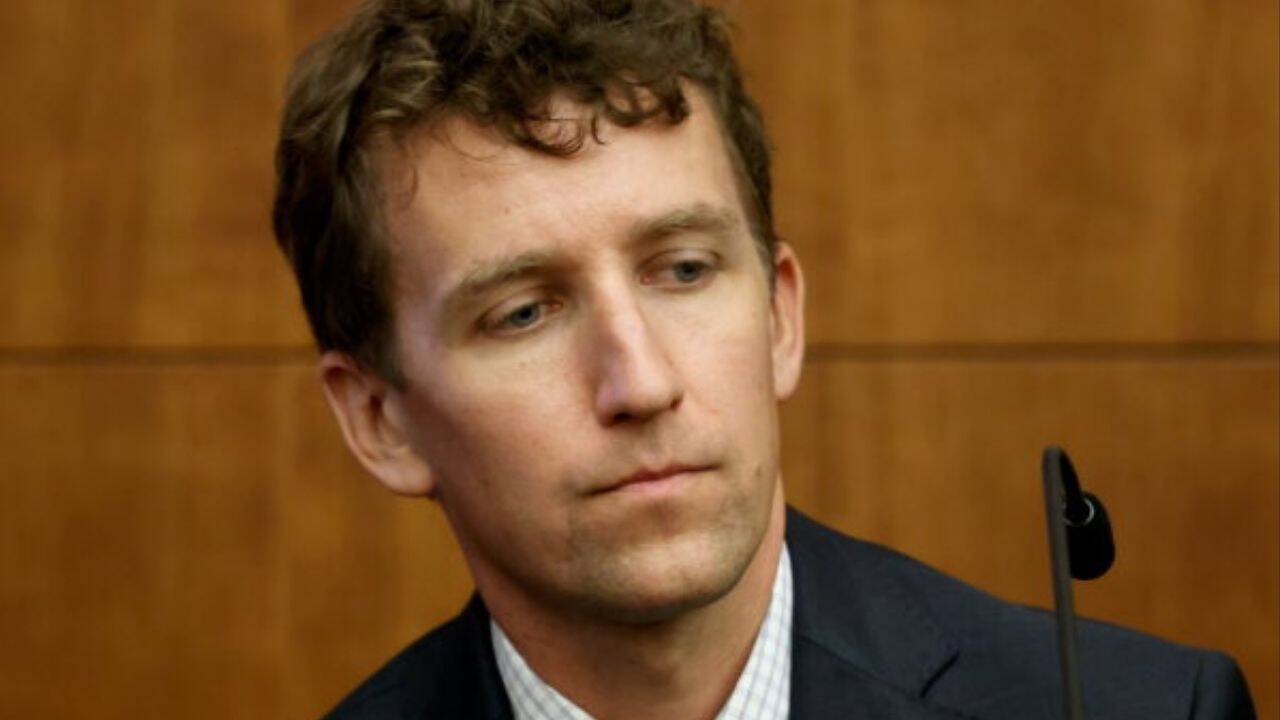
In his first television interview, Patrick Clancy sat across from the camera with the posture of a man carrying a mountain on his shoulders. He did not defend the incomprehensible. He did not minimize the horror. But he made a distinction that requires a terrifying amount of grace.
He separated the woman he married from the disease that consumed her.
"The Lindsay I knew was loving, compassionate, and devoted," he said, essentially translating a grief that has no dictionary. He realized, through agonizing reflection and medical documentation, that the person who committed those acts was a stranger hijacked by a physiological catastrophe.
Forgiveness, in this context, is not a gift given to the offender. It is an anchor thrown to oneself in the middle of an ocean of bitterness. If Patrick had chosen the path of perpetual, unyielding rage, he would have remained chained to the wreckage forever. By choosing forgiveness, he managed to reclaim his own humanity from the jaws of a tragedy.
Yet, society struggles with this. We prefer our villains one-dimensional. We want our tragedies neatly packaged into crimes of malice, because malice is something we understand how to punish. Mental illness—true, psychotic, terrifying mental illness—is scarier. It reminds us of how fragile our own cognitive scaffolding really is. It reminds us that any of us, under the right catastrophic storm of biology and circumstance, could lose our footing.
A Systemic Blind Spot
We must ask ourselves hard questions about how we treat maternal mental health. We live in a culture that treats pregnancy and childbirth as routine medical events, showering expectant parents with prenatal care while treating the postpartum period like an afterthought.
A woman's body undergoes the most drastic hormonal shift known to human biology the moment a child is born. Yet, follow-up care often consists of a single six-week checkup, where a tired mother is asked, "How are you feeling?" and expected to mutter, "Fine," so she can get back to the invisible labor of keeping an infant alive.
We do not screen aggressively enough. We do not monitor medication changes in vulnerable postpartum patients with the rigorous caution they demand. We whisper about postpartum depression behind closed doors, treating it as a shameful secret rather than a medical emergency that occasionally requires intensive, round-the-clock intervention.
When Lindsay Clancy stood on that second-story window ledge, she was not just falling; she had already been dropped by a safety net woven from threadbare resources and cultural stigma.
The Long Road After the Silence
Patrick Clancy now spends his days navigating a silence that used to be filled with the chaotic, beautiful noise of three small children. He has channeled his agony into advocacy, hoping to spare other families the nightmare that hollowed out his home.
His story forces us to look past the headlines of shock value and tabloid cruelty. It asks us to hold two opposing truths in our hands at the exact same time: that an unimaginable horror occurred, and that the person responsible was simultaneously a victim of a medical system and a brain disease that robbed her of her very self.
There are no neat resolutions here. No lessons that tie up the grief with a tidy bow. There is only the quiet kitchen, the memory of three small laughs echoing down a hallway, and a father who chose the harder, lonelier path of mercy in a world that would have completely understood his hatred.
The light outside the window fades into the blue dusk of Duxbury. The wind rattles the bare branches against the glass. And somewhere in the dark, the unanswerable questions remain, hanging heavy in the air, waiting for a society finally brave enough to answer them.