The mechanics of modern missing person investigations are dictated by rigid operational constraints, resource allocation formulas, and environmental mapping. When an individual disappears within a semi-urban university ecosystem, emergency response architecture shifts through distinct phases: initial containment, digital footprint analysis, large-scale physical sweeps, and public mobilization. Deconstructing the mechanics of such multi-agency search operations reveals how urban wilderness boundaries and tactical resource distribution govern recovery outcomes.
The Operational Phases of Campus Search Protocols
Emergency management responses to missing adults in campus environments follow a strict chronological hierarchy. The initial response window relies heavily on immediate surveillance triangulation. When subject tracking transitions past the twenty-four-hour threshold, operational planning expands from local university security departments to integrated municipal, county, and state task forces.
The structural blueprint of a missing person search operates on three core pillars:
- Intelligence Gathering and Digital Footprint Analysis: Mapping the final confirmed sightings via closed-circuit television infrastructure, electronic transaction logs, and device handshakes.
- Geographic Saturation and Perimeter Containment: Establishing grid boundaries based on environmental risk factors and terrain topography.
- Human Capital and Specialized Asset Deployment: Utilizing canine tracking units, thermal imaging technology, aerial drone coverage, and organized ground search parties.
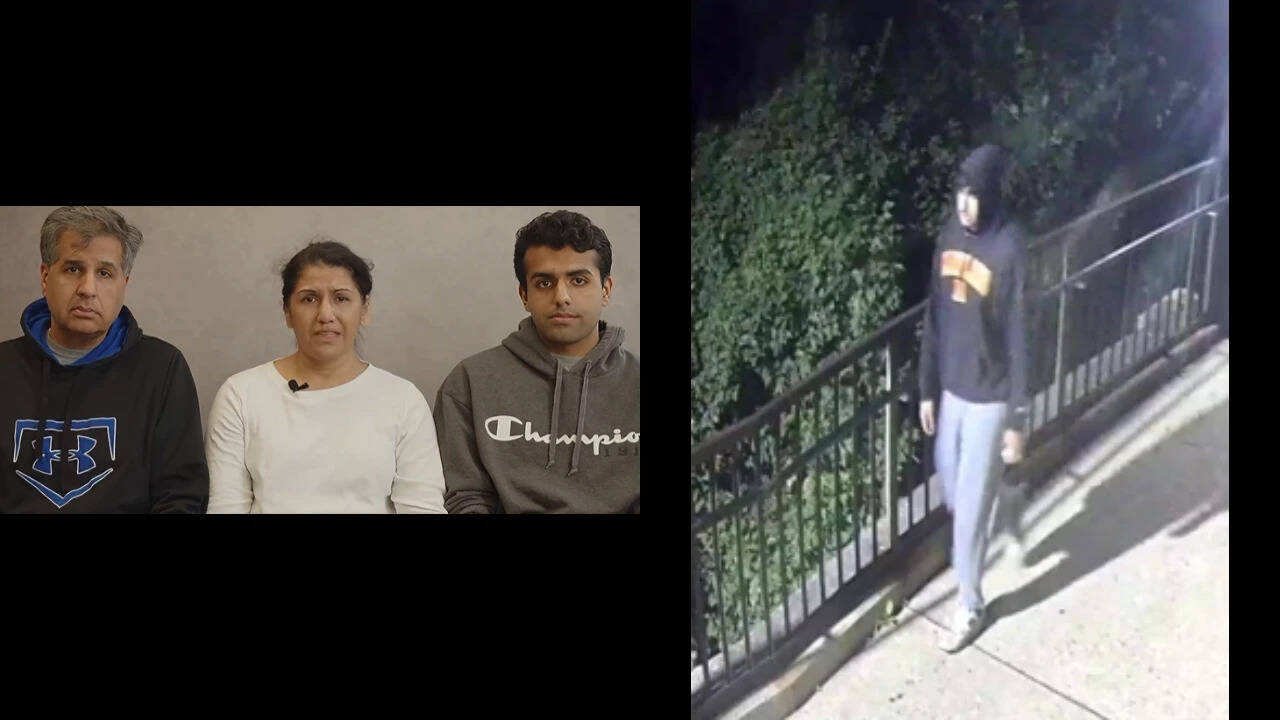
In the case of University of Maryland student Dilan Ashar, whose disappearance triggered a multi-day search across the College Park campus, operations concentrated heavily on the interface between structured asphalt parking structures and dense contiguous woodland. The Terrapin Trail Garage and its adjacent facilities management boundaries present a distinct tactical challenge: a high-density transit node immediately bordering complex, overgrown terrain.
Environmental Impediments and Ground Search Efficiency
The efficacy of a ground search is a direct function of terrain density and visibility metrics. When search parameters encompass over one hundred acres of mixed urban forestry, standard visual sweeps experience significant degradation. Dense brush, canopy cover, and topographical variations diminish the reliability of visual line-of-sight techniques, necessitating technological augmentation.
Thermal imaging and aerial drones serve to mitigate human visual limitations by detecting heat signatures through foliage, yet environmental variables—such as ambient temperature fluctuations and canopy density—can reduce their detection reliability. Consequently, operational doctrine relies on saturation mapping, dividing large geographical areas into discrete sectors assigned to specialized tactical units.
Despite systematic grid sweeps utilizing canine units and thermal technology, subjects in states of physical or psychological distress often locate themselves in micro-environments that escape standard sweep vectors. The psychological profile of a missing individual frequently dictates shelter-seeking behavior, leading them toward natural barriers, dense thickets, or peripheral boundaries away from high-traffic infrastructure. This behavioral tendency explains why initial wide-area sweeps can occasionally pass over subjects who remain hidden within the designated search perimeter.
The Role of Public Mobilization and Community Networks
When localized sweeps and technological assets reach saturation limits, the strategic calculus requires public engagement. Amplifying the search radius through community-driven visibility campaigns transforms local populations into distributed sensors. The dissemination of standardized physical descriptions—height, weight, clothing specifications, and last known trajectories—activates civic participation across a broader geographical expanse than law enforcement units can efficiently monitor alone.
Furthermore, public appeals issued by immediate family members alter the behavioral environment. While empirical measurement of familial appeal efficacy is complex, psychological vectors in missing person cases suggest that targeted public messaging can influence the subject's immediate environment or decision-making parameters, particularly when cognitive disorientation or exhaustion is a factor.
Resource Optimization and Recovery Mechanics
The resolution of missing person incidents in complex environments frequently underscores the limits of predictive modeling. Search dynamics rely on probability area reduction, yet physical exhaustion, dehydration, and cognitive overload can cause a missing individual to remain stationary within a previously searched sector.
The recovery phase often hinges on passive visibility rather than active detection. When a subject elects to re-engage with search infrastructure—such as approaching stationary command posts, rescue vehicles, or personnel checkpoints—the operational bottleneck shifts instantly from search execution to immediate medical triage. The integration of rapid physiological stabilization protocols ensures that upon contact, acute dehydration and metabolic depletion are addressed prior to psychological debriefing or familial reunification.
Future optimization of university and municipal search operations requires continuous refinement of geographic information systems, integration of autonomous aerial search algorithms, and the reduction of latency between digital intelligence collection and boots-on-the-ground deployment vectors.