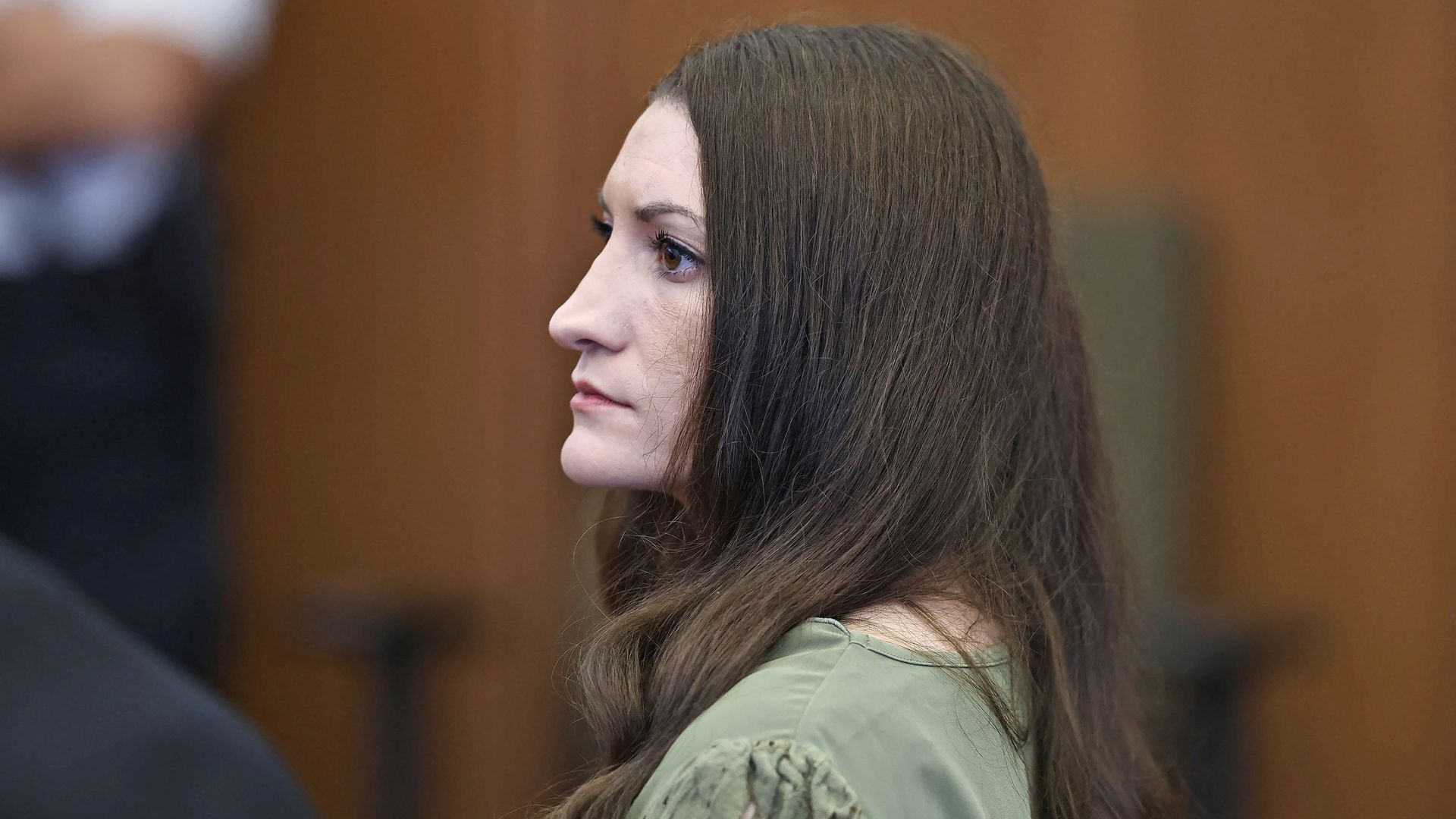
The collapse of the Lindsay Clancy murder trial into a mistrial offers a masterclass in how complex cognitive thresholds collide with rigid judicial requirements. When a jury deliberates for over thirty hours across six days only to deadlock on a single vote, the breakdown is rarely just a matter of stubborn personalities. It exposes deep fractures in how legal systems operationalize mental health, psychiatric nuance, and the strict mechanics of reasonable doubt.
Public disclosures by the jury foreperson and panel members revealed an extraordinary dynamic: a lone holdout juror reportedly admitted to experiencing reasonable doubt, yet refused to sign verdicts declaring the defendant not guilty by reason of insanity. This tension maps the exact fault line where clinical reality meets adversarial legal architecture. Understanding why this trial stalled requires examining the cognitive friction points embedded within high-stakes criminal deliberations.
The Bifurcated Burden of Proof and Psychiatric Realities
At the core of the deadlock lies an inherent mismatch between medical definitions of psychosis and legal definitions of criminal responsibility. The defense argued that Clancy suffered from severe postpartum psychosis, a rare medical condition characterized by a catastrophic break from reality, delusions, and command hallucinations. Expert witnesses presented starkly contrasting frameworks, leaving jurors to navigate an opaque scientific landscape.
When evaluating an insanity defense, a jury must execute a two-step cognitive process:
- Determine whether the defendant committed the physical acts constituting the crime, which in this case was undisputed.
- Assess whether mental disease or defect completely impaired the defendant's ability to appreciate the wrongfulness of their conduct or conform their behavior to the law at the precise time of the offense.
The friction occurs because physical evidence of a prior loving relationship clashes with the horrifying nature of the act itself. Jurors who voted to acquit reasoned that profound maternal devotion prior to the event served as proof that only an extreme psychological collapse could explain the tragedy. Conversely, holdout logic typically demands contemporaneous, undeniable proof of cognitive incapacity that overrides purposeful actions, such as sending a spouse out of the house to buy time. This creates an unresolvable evidentiary gap: internal psychiatric states cannot be measured with the empirical precision of forensic DNA.
The Mechanics of Jury Room Polarization
Deliberation rooms function as closed-loop psychological environments under intense pressure. When a jury divides unevenly—with eleven members leaning toward one outcome and a single holdout resisting—group dynamics shift from collaborative analysis to adversarial friction.
Interviews with the panel revealed that the majority attempted to compel compliance by repeatedly highlighting the legal definition of reasonable doubt and citing expert nurse testimony regarding medication timelines. However, institutional pressure often backfires in high-stakes environments. When a holdout perceives that the room is attempting to manage them rather than persuade them, psychological reactance sets in.
The threshold for reasonable doubt is subjective by design, yet it requires objective consensus. If a juror believes that severe mental illness contributed to the tragedy but remains unconvinced that the legal threshold for insanity has been fully satisfied, their refusal to acquit is technically consistent with their oath, even if it frustrates the majority. The confusion between doubting the prosecution's narrative and actively endorsing an insanity acquittal represents a critical logical distinction that standard jury instructions frequently fail to clarify.
Systemic Vulnerabilities in the Handling of Medical Evidence
The public commentary from jurors also illuminated how laypersons process highly technical psychiatric data. Panel members openly criticized aspects of the prosecution's clinical presentation while championing defense arguments that emphasized systemic failures within the healthcare and overmedication frameworks.
This reliance on systemic critique introduces an analytical hazard into criminal trials. The institutional failure of medical providers to adequately treat postpartum depression is a distinct variable from whether an individual patient experienced total cognitive collapse on a specific evening. When jurors conflate systemic medical negligence with individual criminal absolution, the trial ceases to be a strict examination of mens rea and transforms into a moral judgment on the healthcare system itself.
Furthermore, jurors attempting to decode complex pharmacological data without formal scientific training often resort to cognitive shortcuts. They rely on heuristics—such as the demeanor of counsel, the defendant's prior journal entries, or the perceived empathy of expert witnesses—to resolve ambiguities that the science leaves open.
Strategic Outlook and Retrial Variables
As prosecutors weigh whether to pursue a retrial, the blueprint of the first proceeding provides clear operational constraints for both legal teams. A second trial will not resolve the underlying scientific ambiguity; it will merely retest how effectively each side can translate psychiatric nuance into a compelling narrative for twelve new arbiters.
To secure a definitive verdict in future proceedings, the legal strategies must adapt to the structural limitations exposed by the deadlock:
- The defense must tighten the causal chain between specific command hallucinations and the execution of the act, minimizing reliance on general sympathy for healthcare system failures.
- The prosecution must establish clearer behavioral markers of rational planning that directly counter the medical definition of a complete psychotic break, stripping away emotional arguments from both sides.
- Judicial oversight must intervene earlier when deliberations stall over semantic confusions regarding the boundary between doubt and affirmative acquittal, ensuring that instructions target the exact cognitive traps that fuel deadlocks.
Until the legal framework reconciles the absolute demand for binary verdicts with the probabilistic nature of psychiatric disorders, high-profile trials involving severe mental health crises will remain inherently vulnerable to structural gridlock.